
Have you ever wondered why your aerial equipment seems to struggle when temperatures drop below freezing? The frosty months present unique challenges that can catch even seasoned operators off guard.
I’ve learned through my own experiences that capturing winter landscapes requires special preparation. The stunning snowy scenes come with risks that demand careful planning.
This comprehensive guide addresses the main obstacles you’ll face during colder operations. From battery performance issues to moisture concerns, we’ll cover everything you need for successful flights.
Whether you’re a professional surveyor or hobbyist photographer, these practical suggestions will help maintain your equipment’s condition. Following this advice ensures you capture the footage you need while prioritising safety.
We’ll explore battery management, equipment selection, and flight planning techniques. With proper knowledge, you can operate effectively regardless of what the weather brings.
Key Takeaways
- Winter conditions present unique challenges for aerial equipment operation
- Battery performance significantly decreases in cold temperatures
- Proper preparation is essential for safe and successful flights
- Moisture management becomes critical during frosty conditions
- Specialised techniques are needed for winter landscape capture
- Equipment maintenance requirements change with seasonal conditions
- Safety should always remain the top priority during colder months
Understanding Battery Challenges in Cold Weather
Many operators are surprised to discover just how sensitive their power sources become when the mercury drops. Lithium Polymer batteries experience reduced chemical activity in chilly conditions, potentially leading to unstable performance.
I always emphasise this critical rule: never charge batteries at or below 0°C. This causes permanent damage that compromises safety. Instead, ensure they reach room temperature (around 20°C) before charging or use.
Preparing and Warming Up Batteries
Proper storage makes a significant difference. Keep your batteries in warm places like your car or jacket pocket until moments before take-off. Insert them just before flight to maintain optimal temperature.
Once airborne, hover your equipment for 60 seconds to several minutes. This allows the battery to warm up gradually, acclimatising to operating conditions. Gentle control inputs help prevent sudden power demands that strain cold batteries.
Charging Guidelines and Avoiding Damage
Some models like the Mavic 2 Enterprise feature self-heating batteries that eliminate separate warm-up needs. Regardless of your equipment, monitor battery status closely throughout your session.
Cold temperatures accelerate discharge rates, reducing overall flight time. Remember that while cooler conditions can benefit long-term storage, they’re unsuitable for immediate use. Proper preparation ensures your batteries deliver reliable performance when you need them most.
Choosing the Right Drone and Equipment for Winter
Selecting appropriate equipment becomes crucial when operating during frosty conditions. Not every aerial system handles cold temperatures and high moisture levels effectively.
I always recommend checking your gear’s specifications before venturing out. The right choice ensures safety and performance when you need it most.
Evaluating IP Ratings and Redundant Systems
Look for equipment with an IP43 rating or higher. This provides protection against airborne moisture from rain, fog, and snow.
Multiple redundant systems are essential for safety. Dual batteries and flight control units reduce single point of failure risks.
High visibility LED lighting helps maintain visual contact. This is particularly important against snowy backgrounds or in poor light.
| Feature | Minimum Requirement | Ideal Specification | Benefit |
|---|---|---|---|
| Weather Resistance | IP43 rating | IP54 or higher | Safe operation in precipitation |
| Power Systems | Single battery | Dual redundant batteries | Backup power source |
| Flight Control | Basic FCU | Dual flight control units | System redundancy |
| Visibility | Standard LEDs | High-intensity beacons | Easy tracking in snow |
The DJI Matrice 210 exemplifies winter-capable equipment. Its robust construction and redundant systems handle challenging conditions reliably.
Consider your specific needs carefully. Agricultural mapping, surveying, and infrastructure inspection demand proper winter-rated gear.
Monitoring Weather and Environmental Conditions
Environmental awareness becomes your most valuable asset when working in unpredictable seasonal conditions. I’ve found that proper monitoring can mean the difference between a successful session and a complete cancellation.
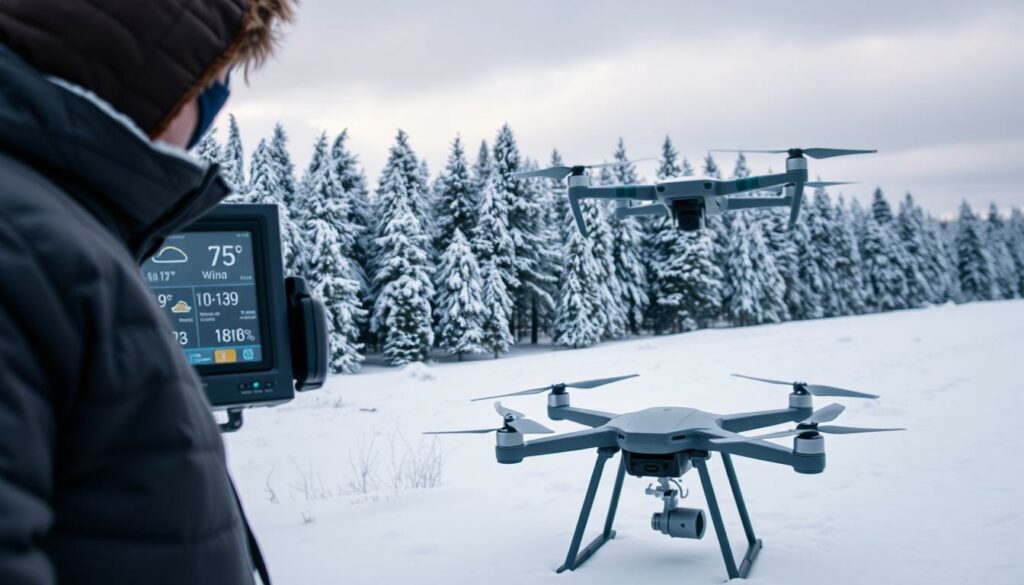
Using Reliable Weather Forecasts and Apps
I always check detailed forecasts before heading out. UK weather can change remarkably quickly, especially on higher ground where conditions deteriorate without warning.
My go-to resource is UAV Forecast, a free app providing accurate predictions up to 24 hours ahead. It also shows visible GPS satellites and solar flare activity that could affect your equipment’s performance.
Never attempt a flight if snow, hail, heavy winds, rain, or fog are forecast. Similarly, avoid operations when temperatures drop below 0°C, and stop immediately if they fall during your session.
Personal Protective Gear and Safe Operating Conditions
Don’t underestimate how cold weather affects your own capabilities. Reduced hand dexterity and tactile sensitivity significantly increase incident risks.
Always wear touchscreen-compatible gloves, a warm coat, and proper head protection. For agricultural or construction work, safety boots are essential.
Remember that exposure to cold makes you tired quickly. Even mild temperature drops can compromise your decision-making abilities during critical moments.
Check sunset times carefully during the darker months. Plan to complete all work before daylight fades, and ensure strong GPS signal to avoid problematic ATTI mode operation.
Mastering the Art of Flying Drone in Winter
Mastering gentle control inputs is absolutely essential when temperatures plummet and conditions turn challenging. I’ve learned that how you handle your equipment during these sessions determines your success rate more than any other factor.
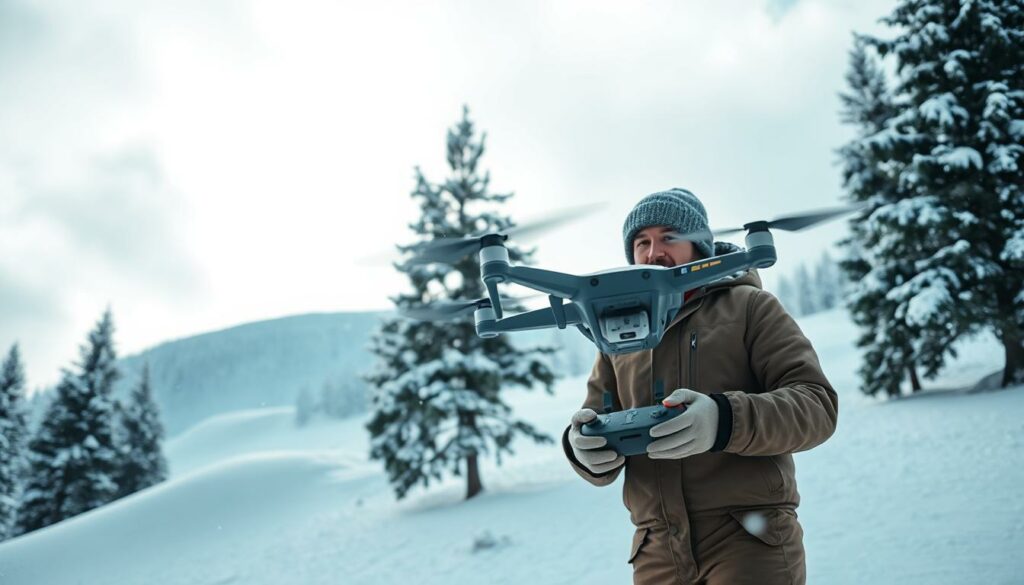
Achieving Smooth Control Inputs in the Cold
Apply light pressure on your control sticks rather than aggressive movements. Sudden power increases can cause dangerous voltage drops in chilly conditions.
Keep your inputs linear and smooth for stable performance. Your equipment’s batteries work much harder when it’s cold outside.
Managing Moisture, Icing, and Reduced Flight Times
Winter brings abundant airborne moisture from rain, fog, and snow. This moisture isn’t friendly to motors, sensitive electronics, or your camera lens.
Never fly through fog as you’ll lose visual contact. Land immediately if you encounter rain or snow during your session.
Propeller icing can occur even above 0°C due to high-speed rotation reducing temperature. Ice builds up from cold temperatures and moisture in the air.
Monitor your equipment continuously during operation. If you suspect icing, land immediately and dry everything thoroughly.
Use a landing pad to prevent contact with snow and moisture. This also provides level ground for take-offs and landings.
Be mindful of where you operate, as propellers can kick up considerable snow. Always wipe down your equipment and warm it up slowly before storage.
Planning Flight Paths and Pre-Flight Preparation
A well-planned flight path is your best defence against unpredictable seasonal conditions. I’ve found that thorough preparation makes the difference between a successful session and a frustrating one.
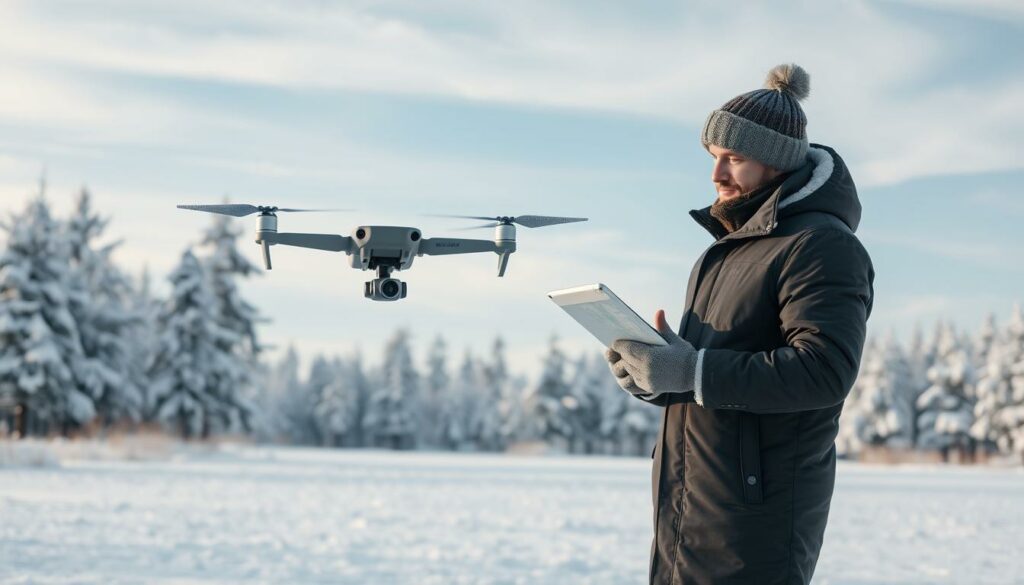
Selecting Safe Take-Off and Landing Spots
Before heading out, I always plan my location carefully. Choosing a clear, level area away from obstacles is essential.
I recommend identifying an alternative landing spot behind you before take-off. This provides a safe option if weather conditions change suddenly.
Using a landing pad prevents contact with snow and moisture. It also ensures stable ground for your equipment.
Creating a Detailed Flight Checklist
My pre-flight routine includes checking propellers for any damage. Cold weather puts extra pressure on them, so even minor issues matter.
I keep my aircraft’s weight minimal by removing unnecessary accessories. This helps maximise battery performance in cold conditions.
Always verify your equipment is compliant with European regulations. This includes having your operator number visible and maintaining visual contact.
Following these simple tips ensures you’re prepared for whatever the winter months bring. Proper planning lets you focus on capturing great footage safely.
Conclusion
To conclude, the principles for safe and effective operation in chilly conditions are refreshingly straightforward. It all comes down to applying common sense and the practical tips we’ve discussed.
Remember the key things: dress warmly, watch the weather closely, monitor your battery, and check your gear thoroughly before every session. These simple steps put you in control, even when faced with cold, rain, or reduced light.
Whether you’re on a professional job or capturing landscapes, this knowledge equips you for success. You can now tackle the unique opportunities the winter months provide with confidence.
Lots of fantastic aerial adventures await you this season. Stay safe, be prepared, and enjoy the spectacular views.
FAQ
How does the cold affect my drone’s battery?
Cold temperatures slow down the chemical reactions inside your battery, which can drastically reduce its performance and flight time. I always keep my batteries warm in an inside pocket before a flight to help maintain their power.
Can I fly my drone in snow or rain?
It’s a risky move. While some models like the DJI Mavic 3 have good water resistance, moisture from snow or rain can easily damage motors and electronics. I check the IP rating of my gear and avoid any precipitation to prevent short circuits.
What should I look for in a drone for winter use?
I prioritise drones with a high IP rating for weather sealing and features like redundant systems for safety. Brands like Autel Robotics often build robust models suitable for harsh conditions, giving me more confidence when the temperature drops.
How can I prevent my lenses from fogging up?
This is a common headache! The trick is to let your camera acclimatise gradually. I avoid taking my equipment directly from a warm car into the cold air. Letting it sit in its case for a while minimises condensation on the lens.
Is it safe to charge batteries outside in the cold?
Absolutely not. Charging a cold battery can cause permanent damage. I always bring my batteries back to room temperature before connecting them to the charger. This simple habit helps preserve their lifespan and ensures a safe charging process.
What kind of gloves are best for operating the controller?
You need a balance between warmth and dexterity. I use thin, touchscreen-compatible gloves that allow me to feel the controls properly. Bulky gloves make it difficult to achieve the smooth, precise inputs needed for stable flight.
How do I deal with ice on the propellers?
Ice formation is a serious hazard that can unbalance the propellers and cause a crash. I keep my flights shorter in very cold, moist air and visually inspect the propellers before take-off and landing. If I see any ice, I land immediately.
Why is my flight time so much shorter in winter?
This is directly linked to the battery’s reduced efficiency in the cold. I plan for much shorter missions and always keep a close eye on my battery levels. It’s better to land with plenty of power left than to risk a forced landing.