
Have you ever wondered if that gentle breeze could suddenly turn your expensive equipment into an uncontrollable projectile? I’ve faced this exact scenario more times than I care to remember, watching ideal conditions deteriorate in moments.
Wind remains the most unpredictable element that operators confront daily. While manufacturers provide resistance ratings, these are often tested in perfect laboratory settings. Real-world scenarios with turbulent gusts around buildings present far greater challenges.
I’ve learned through experience that respecting atmospheric limits isn’t about excessive caution—it’s about professional judgement. This protects both your investment and public safety. Whether you’re capturing stunning landscapes or conducting commercial surveys, understanding how air currents affect your craft is essential.
This guide will walk you through practical safety protocols, equipment choices, and emergency procedures specifically relevant to UK operators. Our variable weather patterns demand adaptable strategies that go beyond basic manufacturer specifications.
Key Takeaways
- Wind represents the most unpredictable environmental factor for unmanned aerial vehicle operators
- Manufacturers’ resistance ratings are typically tested under ideal, controlled circumstances
- Real-world conditions with turbulent gusts can significantly reduce actual performance limits
- Building personal safety margins beyond official ratings protects your equipment and ensures public safety
- Professional judgement calls are essential when assessing whether to operate in challenging atmospheric conditions
- UK operators must adapt strategies to accommodate our rapidly changing weather patterns
- Understanding wind effects is crucial for both recreational enthusiasts and commercial professionals
Understanding the Impact of Wind on Drone Performance
When gusts start pushing against your craft, you quickly realise laboratory ratings don’t translate to real-world reliability. The effects extend far beyond simple drifting—they challenge fundamental operational capabilities.
Effects on Stability and Control
Maintaining stable hovering becomes a constant battle against air pressure. Your equipment must make continuous corrections to counteract each gust. This stresses both the flight control system and your concentration.
Turbulence creates unpredictable movements that make smooth paths extremely challenging. Capturing quality footage or conducting precise surveys becomes nearly impossible under these conditions.
Influence on Battery Life and Flight Time
The motors work considerably harder to maintain position against air resistance. This significantly increases power consumption, reducing your available operational time.
I once watched a battery drain from 70% to 20% in minutes during a headwind return journey. The telemetry was alarming—it taught me to always land with at least 35% power remaining on breezy days.
Understanding these performance impacts is crucial before attempting any operation in challenging atmospheric conditions. It’s about protecting your investment and ensuring safety.
Preparing for Windy Flights: Pre-Flight Checklist
I’ve learned that the most critical safety decisions happen long before take-off, during careful planning. A thorough pre-flight routine can prevent most weather-related incidents.
Weather App Verification and Local Conditions
Never rely on a single weather source. I cross-reference multiple apps to get accurate wind speed data. UAV Forecast provides excellent altitude-specific information that standard weather services miss.
Pay close attention to gust speeds rather than average readings. Sudden gusts cause most stability issues. Conditions can change dramatically between ground level and higher altitudes.
Visual Wind Assessment and Terrain Considerations
Always verify forecasts with visual checks. Observe flags, trees, and smoke to confirm actual wind conditions. The environment provides reliable real-time data.
Terrain significantly affects air movement. Buildings, cliffs, and large structures create unpredictable turbulence. Choose open spaces for take-off and landing to avoid these obstacles.
| Weather App | Altitude Data | Gust Information | Update Frequency |
|---|---|---|---|
| UAV Forecast | Yes | Detailed | Real-time |
| Aviation Weather Centre | Multiple levels | Basic | Hourly |
| Standard Weather Apps | Ground only | Limited | Varies |
Tips for Flying Drone in Wind Safely
Every experienced operator develops their own set of practical techniques for handling difficult weather scenarios. I’ve found that establishing clear boundaries based on skill level prevents most weather-related incidents.
| Experience Level | Maximum Recommended Wind Speed | Key Considerations |
|---|---|---|
| Beginner Pilots | 10-15 mph | Build confidence in calm conditions first |
| Intermediate Operators | 15-20 mph | Monitor gust speeds carefully |
| Advanced Professionals | 20+ mph | Requires specialised equipment and training |
The real challenge isn’t sustained wind speed but sudden gusts. These unpredictable bursts can destabilise your craft dramatically. Always check forecasts for blustery conditions that might exceed your comfort zone.
I plan my route to work with the elements, not against them. Starting into the breeze when my power source is full means the return journey enjoys tailwind assistance. This strategic approach conserves precious energy.
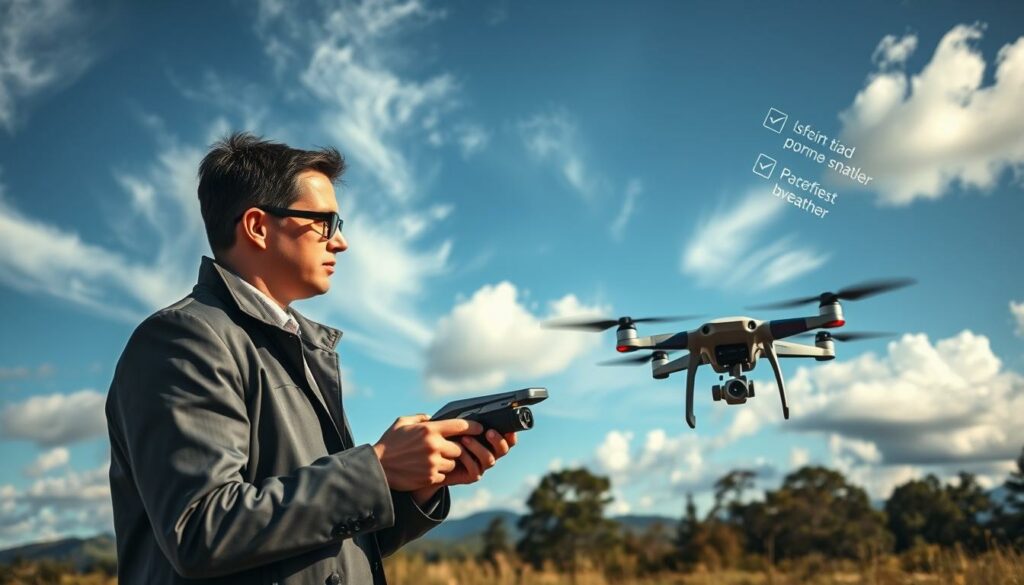
Battery monitoring becomes critical during challenging operations. Headwind returns consume significantly more power than calm flights. I adjust my Return-to-Home settings to trigger at 35-40% rather than standard levels.
Gentle control inputs maintain stability when gusts hit. Sudden movements can worsen turbulence effects. Remember that aborting a mission is always the safest choice when conditions exceed your skill level.
Choosing the Right Drone for Windy Conditions
The market offers a wide range of unmanned aerial vehicles with vastly different capabilities in breezy environments. Not all models handle atmospheric challenges equally well.
Evaluating Wind Resistance Ratings
Manufacturers specify maximum safe operating speeds using various measurement systems. Some use Beaufort Scale levels, while others list speeds in metres per second.
Lightweight consumer drones typically struggle beyond 10-15 mph. Professional equipment can handle gusts up to 25-35 mph. Always verify your specific model’s limits.
| Drone Type | Typical Wind Resistance | Key Features |
|---|---|---|
| Consumer Mini Drones | 10-15 mph | Basic stabilisation, lightweight design |
| Mid-Range Models | 15-20 mph | Improved motors, better GPS |
| Professional Equipment | 25-35 mph | Advanced systems, powerful motors |
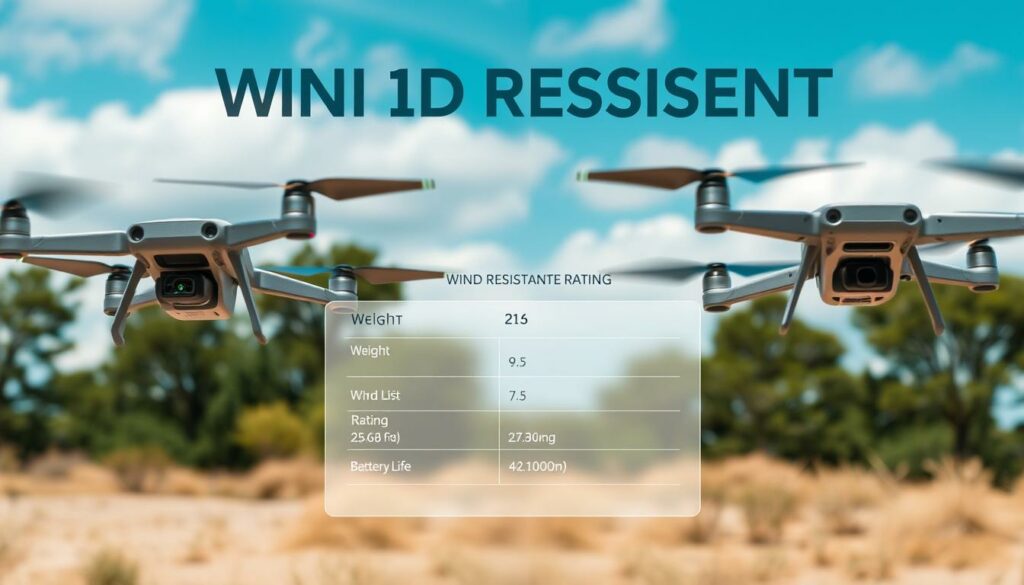
Manufacturer Guidelines and Model Comparisons
The DJI Mavic series represents popular consumer choices with decent performance. Higher-end models feature more powerful motors and sophisticated stabilisation systems.
These advanced components significantly improve handling during challenging operations. Always consult manufacturer specifications before purchasing equipment for breezy conditions.
I recommend checking official guidelines rather than assuming capabilities based on price or size. Proper research ensures you select equipment matching your operational needs.
Adjusting Flight Techniques in High Winds
Mastering flight control during gusty weather separates amateur pilots from true professionals. I’ve developed specific methods that maintain stability when atmospheric conditions become challenging.
Take-off and Landing Strategies
Always position your craft facing into the breeze during ascent. This allows the propellers to counter air pressure immediately. For landing, I recommend a shallow 20-degree approach angle.
Using a weighted landing pad prevents displacement by sudden gusts. Never hesitate to abort an attempt if conditions feel unsafe—multiple approaches beat a crash.
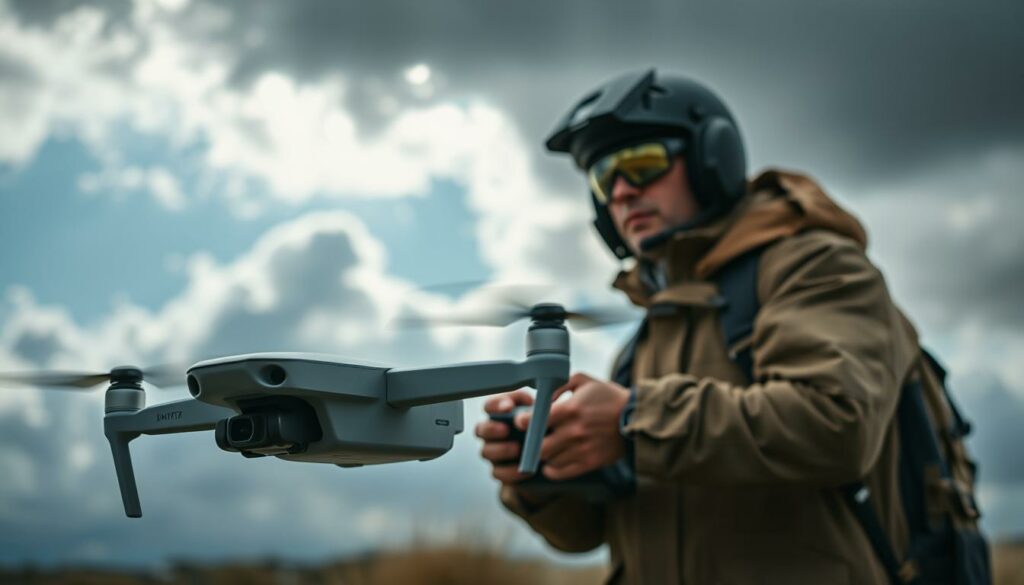
Managing Cockpit Controls and Smooth Movements
Wind intensity increases with altitude, so I typically operate at lower levels where control is easier. Gentle, deliberate stick movements prevent destabilisation.
Sport mode provides extra power to punch through gusts but drains your battery rapidly. Before capturing images, always stabilise your equipment for several seconds. Wobbly footage results in grainy, unusable content.
Keep visual contact with your craft at all times. Smooth flight paths and conservative manoeuvres ensure safer operations in difficult conditions.
Monitoring Wind Conditions and Weather Updates
Real-time weather monitoring represents the most overlooked aspect of safe aerial operations. Many operators check conditions once before launch, but atmospheric changes can occur rapidly throughout your mission.
I’ve learned that continuous assessment separates successful operations from unexpected emergencies. The conditions you face at different times of day can vary dramatically.
Utilising UAV Forecast and Local Weather Stations
Standard phone apps provide basic wind speed data, but they lack the specificity needed for aerial work. I always cross-reference with specialised tools like UAV Forecast, which offers altitude-specific information crucial for planning.
For accurate local measurements, I recommend using a handheld anemometer at your launch site. This gives you real numbers for current wind speeds rather than regional forecasts that might not reflect micro-climates.
Wind speeds at higher altitudes often differ significantly from ground level. Resources like the Aviation Weather Centre provide detailed data for various heights, helping you anticipate challenges before they occur.
Monitoring shouldn’t stop after take-off. I maintain a continuous feedback loop by watching live data from both my equipment’s sensors and weather apps. This allows me to adjust altitude or route immediately if conditions deteriorate.
Being prepared to land quickly when wind speeds exceed safe parameters has saved my equipment multiple times. Constant vigilance throughout your operation is the key to managing changing weather conditions effectively.
Emergency Procedures and Risk Management
Emergency protocols aren’t just theoretical concepts—they’re practical skills that every operator must master for challenging atmospheric situations. Knowing when to abort a mission has saved my equipment more times than any technical skill I’ve acquired.
Implementing a Personal Safety Margin
I always operate well below my craft’s maximum resistance rating. This personal buffer accounts for real-world variables that laboratory tests miss. When you struggle to maintain position or see rapid power depletion, it’s your signal to land immediately.
“The best pilots know their limits before the equipment reaches its breaking point.”
My emergency landing strategy prioritises safety over convenience. I identify multiple alternative zones before launch and save their GPS coordinates. If returning home becomes risky, I land at the nearest safe location.
| Warning Sign | Immediate Action | Long-term Strategy |
|---|---|---|
| Constant stick correction needed | Initiate emergency landing | Review personal wind limits |
| Rapid battery depletion | Land at nearest safe zone | Increase power reserve margin |
| Uncontrollable drifting | Adjust RTH altitude or cut motors | Practice recovery procedures |
Post-Flight Inspection and Repair Strategies
Challenging conditions put extra strain on components. After any difficult operation, I thoroughly check propellers for cracks or warping. Motor mounts and structural elements need careful examination too.
I always carry spare props and guards for critical missions. For professional work, having backup equipment ensures you can complete important tasks even if primary gear suffers damage. Regular maintenance prevents small issues from becoming major failures.
Advanced Tips for Optimising Drone Performance in Wind
Advanced camera settings and stabilisation technologies can dramatically improve your results when operating in breezy environments. Modern equipment offers sophisticated features that help maintain quality despite challenging conditions.
Object avoidance systems provide crucial protection when gusts push your craft off course. These intelligent features maintain safe distances from obstacles automatically. For capturing stable footage, I always adjust my camera settings specifically for the lighting conditions.
In bright sunlight, a Neural Density filter prevents washed-out video by reducing light intake. For low-light situations, I keep ISO settings as low as possible to avoid graininess. Aperture adjustments control how much light enters the camera—closing it down on bright days and opening wider when light is scarce.
Shutter speed management is equally important. Slower speeds capture more light but require careful handling to prevent motion blur. Advanced stabilisation systems with IMU technology react to gusts within milliseconds, providing exceptional stability.
Adding strategic weight can enhance your equipment’s resistance to air currents. Heavier craft typically handle breezy conditions better, though this may slightly reduce flight time. I recommend testing these optimisation techniques during low-risk missions before applying them to critical work.
“The right technical adjustments transform challenging conditions into manageable ones.”
Mastering these advanced settings significantly improves both safety and results. Each adjustment contributes to better performance when atmospheric conditions become demanding.
Conclusion
After years of experience, I can confidently say that responsible piloting means respecting both your equipment’s limits and nature’s power. No photograph or footage is worth risking expensive gear or personal safety.
Remember to stay well within your model’s capabilities and your own skill level. Watch for warning signs like reduced stability and rapid battery drain. On breezy days, shorten flight times and plan routes that work with the elements.
While consumer drones have improved, some conditions remain beyond their safe operating parameters. When challenges exceed your comfort zone, hiring professional pilots with appropriate equipment is the smart choice.
Understanding atmospheric dynamics and prioritising safety will lead to successful, stress-free operations over time. The best shots come from knowing when to fly—and when to wait.
FAQ
What is the maximum wind speed my drone can handle?
This depends heavily on your specific model. I always check my manufacturer’s guidelines first. For example, my DJI Mavic has a published maximum wind resistance, but I personally prefer to fly in conditions well below that limit for better control and safety.
How does strong wind affect my drone’s battery life?
It has a significant impact. When my equipment fights against gusts, the motors work much harder, draining the battery much faster. I’ve noticed my flight time can be considerably shorter on windy days compared to calm ones.
What’s the best way to check local wind speeds before I fly?
I rely on a combination of tools. I use dedicated apps like UAV Forecast to get real-time data on conditions and gusts at different altitudes. I also do a visual check, looking at trees and flags on the ground to assess the actual environment.
Are some drones better suited for windy conditions than others?
Absolutely. Heavier, more robust models generally offer greater stability. When I was choosing my last piece of consumer tech, I compared the wind resistance ratings of different models. It’s a key factor if you often face breezy weather.
What should I do if I get caught in unexpectedly strong winds during a flight?
My first rule is to stay calm. I reduce my altitude, as winds are often lighter closer to the ground. I then fly slowly and steadily back to my position, avoiding sudden movements. Having a pre-planned return path is part of my risk management strategy.
How can I land safely when it’s very windy?
I use a hand-landing technique for added control. I bring the aircraft down to a hover at chest height, then carefully grab it by the body, ensuring I keep my fingers well clear of the spinning propellers. It gives me much more stability than trying to land on a wobbly surface.