
What if the most breathtaking aerial footage you’ve ever captured could also be your most dangerous flight? I’ve often wondered why some pilots achieve spectacular results in rugged landscapes while others face equipment failure or worse.
The majestic peaks and valleys offer incredible photographic opportunities, but this environment presents unique challenges that differ dramatically from standard operations. The terrain introduces complex variables including altitude changes, unpredictable wind patterns, and rapidly shifting weather conditions.
Successful operations require understanding three critical factors: managing altitude limitations, navigating wind behaviour, and implementing comprehensive safety protocols. Throughout this guide, I’ll share how to develop the situational awareness and decision-making abilities needed for these challenging conditions. Whether you’re capturing landscape footage or conducting professional surveys, respecting both natural forces and regulatory requirements is essential.
Key Takeaways
- Mountainous terrain presents dramatically different challenges compared to flat-ground operations
- Altitude changes significantly affect equipment performance and flight characteristics
- Unpredictable wind patterns require advanced piloting skills and constant awareness
- Comprehensive safety protocols are non-negotiable in these demanding environments
- Successful mountain flying combines technical skills with strong decision-making abilities
- Rapidly changing weather conditions demand careful monitoring and quick adaptations
- Respect for natural forces and regulatory requirements ensures both safety and success
Pre-Flight Preparation & Safety Measures
Navigating the legal landscape is just as important as navigating the physical one when preparing for a mountain flight. Proper planning dramatically reduces risk and ensures you operate within the law. I always start with a detailed review of the UK’s Civil Aviation Authority rules.
Understanding UK Flight Regulations and No-Fly Zones
The most critical rule is the 120m height limit. This is measured from the nearest point of the ground, not your launch spot. Over changing terrain, you must constantly adjust your altitude to stay legal.
You must also keep a 50m distance from uninvolved people. This creates a cylindrical no-fly zone around them. Smaller drone models under 250g have different rules, but never fly over crowds.
Always check for Flight Restriction Zones (FRZ) around airports using NATS maps and drone apps. Be aware that smaller airfields might not show on apps, so stay vigilant for light aircraft.
Additional restrictions can apply near prisons, military areas, and government buildings. Your drone‘s geo-awareness system is helpful, but it must be kept updated. Always look for local byelaws that may not be digitally listed.
Assessing Weather Conditions and Terrain Hazards
Mountain weather changes fast. Before any flight, I check forecasts for wind speeds at different altitudes and visibility. Sudden shifts are common and can ground your operation.
Scout your location for hazards. Look for power lines, communication masts, and steep drop-offs that could block your signal or create a collision risk. Knowing the area well is a key part of a safe pre-flight check.
Understanding Drone Dynamics at Altitude
One of the most critical lessons I’ve learned is that performance doesn’t scale linearly as you climb higher into the peaks. The physics at play are dramatically different from flying at sea level.
Thinner air means your propellers get less bite. This forces the motors to spin faster to generate the same lift, drawing more power and stressing your battery. You must plan for significantly shorter flight times.
Effects of Reduced Air Density and Battery Life
At a high altitude, the reduced air density hits your equipment hard. The motors work at a higher RPM, which increases power draw and generates extra heat.
This directly shortens your battery life. I always calculate the density altitude before a mission. This figure combines elevation, temperature, and weight to predict real performance.
It shows you the effective level your drone ‘feels’ it’s operating at, which is often thousands of feet above the actual ground.
Interpreting Orographic Wind Patterns and Temperature Variations
Mountain weather is its own beast. The terrain itself creates unique wind patterns you won’t find on flat ground.
I constantly watch for anabatic winds that flow uphill during the day and catabatic winds that descend at night. When prevailing winds hit a ridge, they create dangerous orographic turbulence.
This means unpredictable updrafts and powerful downdrafts, especially on the lee side of peaks. These conditions can overwhelm your drone‘s ability to hold position.
Rapid weather changes are a hallmark of these environments. Orographic clouds can form in minutes, causing sudden visibility loss in narrow valleys.
Continuous monitoring and having pre-set abort conditions are essential for safety in the mountains. You cannot afford to make reactive decisions under pressure.
Essential Techniques for Flying Drone in Mountains
Crossing from one summit to another while staying compliant with regulations involves clever techniques that go beyond basic piloting. The constantly changing surface elevations demand constant awareness of your position relative to the terrain below.

Navigating Altitude Changes and Terrain Variations
I use a practical camera technique to maintain the legal 120m limit. Setting the camera to 0 degrees creates a level horizon reference. When I’m visually level with a peak, I note my current altitude and add 400ft to establish my maximum operating height.
This method ensures legal separation from terrain during transitions. Planning flight paths that account for sudden ground elevation changes prevents inadvertent regulation violations. Maintaining visual line of sight becomes challenging when ridges and valleys obscure your view.
Monitoring real-time telemetry data is crucial. I watch altitude AGL, battery consumption rates, and GPS signal strength constantly. This awareness helps anticipate issues before they become emergencies.
Managing Wind Patterns and Emergency Procedures
Sudden wind gusts and unexpected downdrafts require immediate action. I always maintain energy reserves in both battery and altitude. This provides crucial margin to execute emergency manoeuvres without ground contact.
Establishing safe return-to-home settings is vital. The aircraft must account for terrain between current position and launch point. I set these to avoid mountain strikes during autonomous return.
Recognising early warning signs of deteriorating conditions is a key skill. Increasing wind speeds, forming clouds, and dropping temperatures signal when to abort the flight. Safety always comes before capturing that perfect shot.
Operational Strategies in Mountainous Terrain
Mountainous operations demand a level of foresight that transforms potential hazards into manageable challenges. I approach each mission with systematic planning that accounts for the unique characteristics of high-altitude environments.
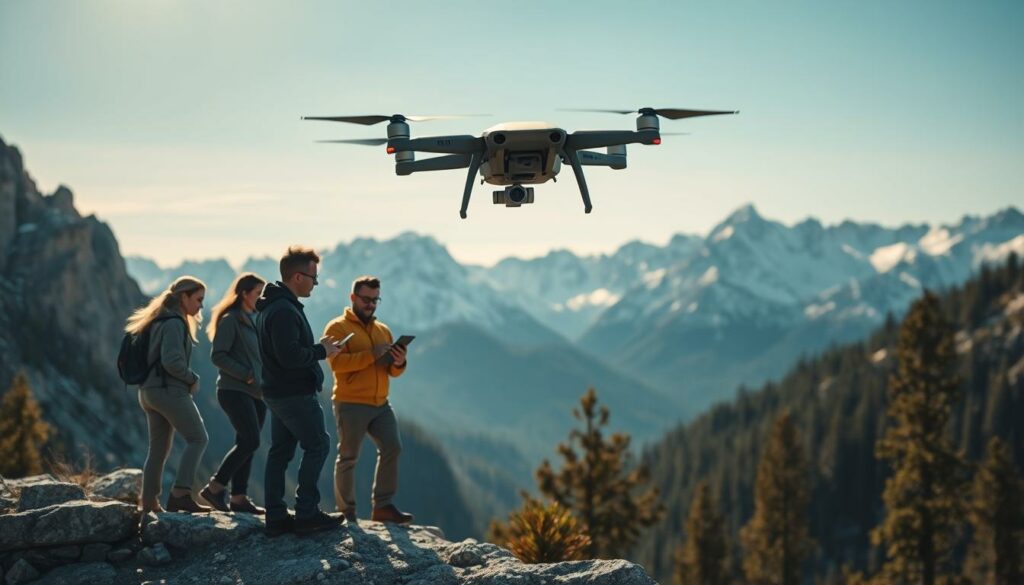
Utilising Geo-Awareness Systems and Real-Time Data
Modern geo-awareness technology provides crucial information about airspace restrictions and temporary flight limitations. I always verify this data against official sources before any operation in remote areas.
Real-time weather feeds help me monitor conditions that could affect my equipment. Sudden changes in wind patterns require immediate adjustments to maintain control.
Planning Safe Flight Paths and Escape Routes
I meticulously chart multiple escape routes for every phase of the mission. This ensures I always have safe alternatives if conditions deteriorate unexpectedly.
Maintaining adequate clearance above the ground level provides essential reaction time. I identify safe landing zones throughout the operational area rather than relying solely on returning to launch.
| Terrain Feature | Primary Risk | Operational Strategy | Safety Margin |
|---|---|---|---|
| Windward Slopes | Destabilising updrafts | Avoid direct ascent paths | +50% power reserve |
| Leeward Slopes | Violent downdrafts | Maintain higher altitude | +100ft minimum clearance |
| Narrow Valleys | Venturi effect acceleration | Plan lateral escape routes | 30% additional battery |
| Ridge Lines | GPS signal shadow | Pre-set visual landmarks | Manual control readiness |
Setting conservative operational limits for wind speed and battery levels ensures I terminate missions before reaching critical thresholds. This disciplined approach keeps every flight within safe parameters.
Advanced Skills & Equipment Considerations
The leap from recreational piloting to professional mountain work demands specialised equipment. I’ve found that standard consumer drones often struggle with the unique challenges of high-altitude environments.
Professional applications require robust systems designed for harsh conditions. These aircraft need enhanced wind resistance and extended battery capacity.
Leveraging Technology for Enhanced Navigation
Modern navigation systems provide crucial safety margins in complex terrain. Terrain-following sensors help maintain consistent ground clearance.
Obstacle avoidance technology becomes essential when operating near rock faces and vegetation. Redundant flight controllers offer backup systems if primary navigation fails.
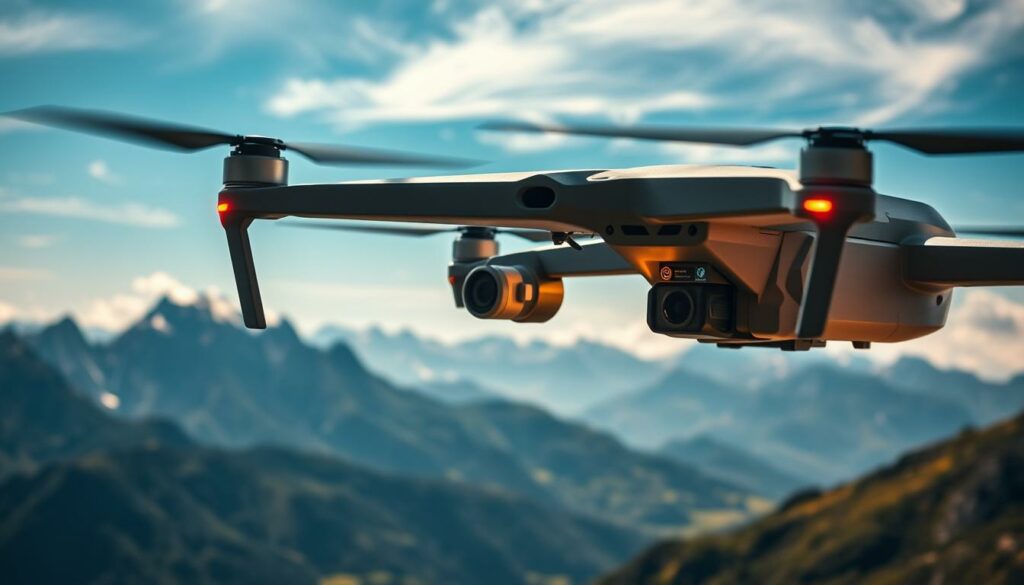
Advanced mission planning software allows me to visualise flight paths in 3D models. This helps identify potential radio shadow zones before they become problems.
Training and Specialised Mountain Flight Techniques
Specialised training programmes teach energy management in thin air. They cover interpretation of local wind phenomena and mountain-specific emergency procedures.
Understanding your equipment’s limitations at altitude is crucial. This includes maximum operating elevation and temperature operating ranges.
Professional applications like search-and-rescue operations require advanced competencies. Joining communities with mountain experience provides valuable learning opportunities.
Progressive experience development starts with simple operations. Gradually advance to more complex missions as skills improve.
Conclusion
Every mission among the peaks teaches me new lessons about the delicate balance between ambition and safety. Operating in these challenging areas demands respect for both natural forces and legal restrictions.
Remember the 120m limit measured from the nearest ground point. Keep proper distances from people, buildings, and aircraft traffic. These rules exist for good reason.
Success hinges on thorough planning, constant awareness of weather changes, and conservative decision-making. The reduced altitude performance and unpredictable wind patterns fundamentally alter how your equipment behaves.
Technology helps, but cannot replace proper training and sound judgement. Start with simple operations in good conditions before advancing. Check official websites for current airspace information.
Prioritise safety above all else. With the right preparation, you can capture remarkable results while managing risk effectively.
FAQ
What are the key rules I need to know before I fly my drone in the mountains?
The most important rules involve maintaining a safe distance from people and property, and staying within the visual line of sight. In the UK, you must follow the Civil Aviation Authority’s Drone Code, which includes a 120-metre height limit. You should also check for any specific local restrictions using tools like the NATS Drone Assist website before you take off.
How does the weather affect my aircraft’s performance at a high level?
Conditions like strong wind and lower temperatures can significantly impact your flight. The air is less dense at higher altitudes, which can reduce lift and put a strain on your battery life. I always check the forecast thoroughly for sudden changes in wind speed and visibility to minimise any risk.
What is the best way to handle the challenging terrain?
Planning is essential. I study maps to understand the ground variations and plan my route carefully, always having an escape route in mind. Using geo-awareness features on my DJI drone helps me stay aware of my position relative to the landscape. It’s also crucial to monitor your battery level closely, as ascending uses more power.
Are there any special techniques for dealing with wind patterns around peaks?
Absolutely. Wind can behave unpredictably around mountains, creating powerful updrafts and downdrafts. I’ve learned to fly cautiously, often keeping my drone lower to the ground to avoid the strongest gusts. If I encounter severe wind, my immediate procedure is to bring the aircraft down to a safe area as quickly as possible.
What extra equipment do you recommend for mountain flights?
I never go without spare batteries and a robust carrying case. A device with a bright screen for better visibility in sunlight is very helpful. For advanced navigation, some pilots use additional apps that provide real-time data on air traffic and weather conditions. Proper training for these specific scenarios is the best investment for safety.