
Have you ever wondered if it’s truly possible to capture breathtaking aerial footage in urban European landscapes without running afoul of the law? Many aspiring drone pilots assume that flying drones in metropolitan areas is either completely forbidden or so heavily restricted that it’s not worth attempting.
I’m here to show you that with the right knowledge, urban aerial photography is not only possible but can be incredibly rewarding. Having navigated the complex web of drone regulations across multiple European countries, I’ve learned that understanding civil aviation requirements is the key to successful operations.
This guide draws from my personal experiences to demystify the legal framework. I’ll walk you through everything from registration essentials to preparing for upcoming 2026 changes. Whether you’re a hobbyist or commercial operator, you’ll gain confidence in your drone flying activities.
Key Takeaways
- Understanding specific national regulations is essential for legal urban operations
- Proper registration and operator credentials form the foundation of compliance
- Remote ID technology represents a significant upcoming requirement for 2026
- Cross-border flying necessitates awareness of different European Union member states’ rules
- Safety protocols protect both the public and your investment in equipment
- Practical experience combined with legal knowledge creates successful urban aerial photography
- Staying informed about regulatory changes future-proofs your drone activities
Introduction: My Journey Into Urban Drone Flying
The moment my first quadcopter arrived, I realised the biggest challenge wasn’t the controls, but the rulebook. I felt completely overwhelmed by the sheer volume of regulations. It honestly seemed like I needed a law degree just to take off safely.
My journey began with this confusion and frustration. This is exactly why I’ve created this comprehensive guide. I want to help you avoid the same struggles I experienced.
Scope and Purpose of the Guide
The scope here is intentionally broad yet practical. I’ll cover UK drone laws in depth, as that’s my base. I’ll also provide insights into how these rules interact with broader European frameworks for those planning cross-border flights.
“Understanding the framework is not about restriction; it’s about unlocking potential safely.”
Throughout this guide, I’ll answer common questions in plain English. We’ll cover registration, legal flight zones, licensing, and the upcoming 2026 changes. Weight categories, Remote ID, and insurance will also be explained.
My Personal Experiences and Insights
I know firsthand how confusing it can be for new drone operators. Regulations change almost every year, making it a real challenge to keep up.
My experiences taught me that the difference between the open category and needing an operational authorisation isn’t always clear. I’ll break down these distinctions in a practical way.
| Guide Section | Key Focus | Practical Outcome |
|---|---|---|
| UK Regulations | Civil Aviation Authority Rules | Clarity on legal requirements |
| Registration & Licensing | Operator ID and Flyer ID | Correct credentials for flight |
| Future-Proofing | 2026 Changes & Remote ID | Long-term compliance |
This guide represents years of my learning, mistakes, and successes. It’s all distilled into actionable advice you can use immediately. My goal is for you to feel confident and empowered, not intimidated by a framework designed for safety.
Understanding Drone Regulations in the United Kingdom
My journey into understanding British airspace regulations taught me that compliance is actually about freedom, not restriction. The framework gives pilots considerable operational liberty while prioritising everyone’s safety.
Overview of Legal Requirements
I’ve found the UK’s drone regulations follow a sensible, risk-based approach. Your specific obligations depend on factors like aircraft weight and your purpose for operation.
Understanding these drone laws is essential. Adherence prevents accidents and avoids penalties that can reach £1,000 for registration issues.
The Role of the Civil Aviation Authority
The Civil Aviation Authority serves as our national aviation authority, overseeing all unmanned aircraft operations. Their role extends beyond enforcement to education and registration.
This civil aviation authority balances innovation with public safety. I always recommend checking their official Drone Code before you fly drone operations.
The Importance of Registration and Licensing
The registration process initially seemed daunting, but I quickly discovered it’s designed for accessibility. Getting your credentials sorted before operation isn’t just bureaucracy – it’s your foundation for legal and safe flights.
Proper drone registration consists of two distinct elements that work together. The system creates accountability while ensuring pilots understand essential safety principles.
Demystifying the Flyer ID Process
Your Flyer ID demonstrates your knowledge as a competent flyer operator. You obtain it by passing a free online theory test through the Civil Aviation Authority’s portal.
The assessment contains about 40 multiple-choice questions covering safety practices. I found this online theory examination straightforward and genuinely educational.
You need a 75% pass mark, with unlimited attempts available. Your successful result remains valid for five years, making this a worthwhile investment.
How to Secure Your Operator ID
As a drone operator, you must register separately for your Operator ID. This involves providing contact details and paying a small annual fee around £11.
This credential identifies who owns or is responsible for the aircraft. You must visibly display your unique Operator ID on every device you own.
Remember: flying without these IDs risks fines up to £1,000. I always complete registration before even charging my batteries – it’s that fundamental.
Complying with the Drone Code in Urban Settings
Urban operations demand heightened awareness of the Drone Code’s safety protocols and privacy considerations. This framework becomes my essential guide when navigating metropolitan environments across Britain.
Key Safety and Operational Rules
Maintaining visual line sight with my aircraft remains fundamental. I must see it clearly with my own eyes, not just through screens. Weather conditions should support clear visibility throughout each session.
The Code mandates staying below 120 metres altitude. This creates safe separation from manned aircraft operating at higher levels. I always respect this vertical boundary.
Safe distances from people and property are equally crucial. I maintain at least 50 metres from uninvolved individuals. I never operate over crowds or assemblies people gather.
Respecting Privacy and Local Bylaws
Privacy considerations form a critical part of responsible operations. I avoid private homes and gardens without explicit permission. Capturing imagery requires careful data protection awareness.
Buildings and obstacles challenge line sight maintenance in cities. I position myself strategically to maintain continuous visual contact. This ensures I can react immediately to changing conditions.
Local bylaws may impose additional restrictions beyond the national Code. I always research specific area requirements before planning any metropolitan flight.
Flying drone in cities: Key Considerations
Urban aerial photography presents a unique set of challenges that demand careful preparation and awareness. The transition from open countryside to built-up environments requires a complete shift in approach.
I’ve learned that metropolitan operations differ significantly from rural ones. Understanding these urban-specific factors becomes essential for safe and legal activities.
Determining Appropriate Flight Zones
When planning my aerial activities in urban settings, I always begin by identifying compliant locations. This means avoiding congested areas where buildings are closely spaced and numerous people might be present.
The Civil Aviation Authority defines these zones strictly. Minimum separation distances increase substantially to 150 metres near large public gatherings or densely populated recreational areas.
I rely on tools like the NATS Drone Assist app to identify no-fly zones and temporary restrictions. These resources help me plan safe routes that respect all regulatory boundaries.
Finding suitable locations requires balancing accessibility with compliance. Parks and open spaces can work well, but I always verify local bylaws first. Maintaining required distances from uninvolved people remains my top priority throughout every session.
Navigating Weight Categories and Class Markings
Many pilots overlook how dramatically their operational freedom changes based on a simple number: the aircraft’s mass. Understanding these weight classifications transformed my approach to choosing equipment.
Lightweight Drones Under 250g
The 250-gram threshold represents a major regulatory divide. Drones 250g or lighter, like the popular DJI Mini series, enjoy significant freedoms. Their reduced kinetic energy means less potential for damage.
I always recommend the DJI Mini for beginners. These sub-250g aircraft can operate closer to people without the 150-metre restriction. They’re perfect for urban environments where space is limited.
Restrictions for Heavier Drones
Once you cross the 250g mark, regulations tighten considerably. Heavier aircraft require mandatory registration and face stricter distance requirements. The take-off mass becomes critical for compliance.
When considering a new drone, I carefully check the take-off mass including accessories. Adding propeller guards or payloads can push you into a different category. This single specification dramatically affects your flexibility.
While class mark identifiers exist for standardized aircraft, many current models operate under transitional provisions. Understanding weight remains more immediately practical than chasing specific class mark certifications.
Preparing for Future Regulations Beyond 2026
The regulatory horizon is shifting dramatically, and staying informed about post-2026 requirements has become my priority. Understanding these upcoming changes ensures your continued compliance and may affect future equipment purchases.
Anticipating Lower Weight Thresholds
Currently, registration applies to aircraft weighing 250g or more. After 2026, this threshold drops to 100g for certain requirements. This change will bring more devices under regulatory oversight.
If you own drones 250g or lighter, pay close attention. The new rules will affect even lightweight models. Planning ahead prevents last-minute compliance issues.
Upcoming Changes in Remote ID Requirements
Remote ID becomes mandatory from January 2026. Newly manufactured devices with specific UK class marks must include this technology. The system broadcasts identification information during operation.
Legacy drones without UK class marks face requirements from 2028. Owners may need retrofit modules. This affects many current models in operation.
For complex missions requiring operational authorisation, additional documentation may be necessary. Staying current with CAA communications is essential.
| Date | Requirement | Affected Aircraft |
|---|---|---|
| 1 Jan 2026 | Remote ID mandatory | New drones with UK class marks |
| 1 Jan 2026 | Weight threshold changes | Devices over 100g |
| 1 Jan 2028 | Remote ID for legacy models | Existing legacy drones |
The UK CAA has proposed extending transitional periods. This could allow continued use of current equipment under existing rules. Final approval from the Department for Transport is pending.
Becoming a Responsible Drone Pilot
True pilot competency extends far beyond memorising regulations—it’s about cultivating a safety-first mindset that governs every decision. This approach has transformed my operations from simply legal to genuinely professional.
Being a responsible drone operator starts with personal readiness. I always ensure I’m fit to fly, meaning no alcohol or drugs that could impair judgement. Being well-rested and attentive is equally crucial when you’re the pilot in command.
Essential Pre-flight Checks
My systematic checks begin with the aircraft itself. I verify battery charge, inspect for physical damage, and ensure propellers are secure. Firmware updates are confirmed before every session.
Technical preparations are equally vital. I calibrate the compass in new locations and verify GPS signal strength. Controller pairing and Return-to-Home settings receive particular attention for emergency scenarios.
Weather conditions significantly influence safety outcomes. I check wind speeds, precipitation forecasts, and visibility thoroughly. Cancelling plans when conditions aren’t suitable demonstrates true pilot competency.
Maintaining a flight log helps me track maintenance needs and battery cycles. This documentation also evidences my commitment as a responsible drone operator. Every flight reflects on our community, so I approach each operation as a drone pilot representing the entire industry.
Best Practices for Flights Over People and Crowds
Getting the distance right when operating near the public is arguably the most important skill I’ve developed. These regulations exist specifically to protect uninvolved people who haven’t consented to participate in your activities.
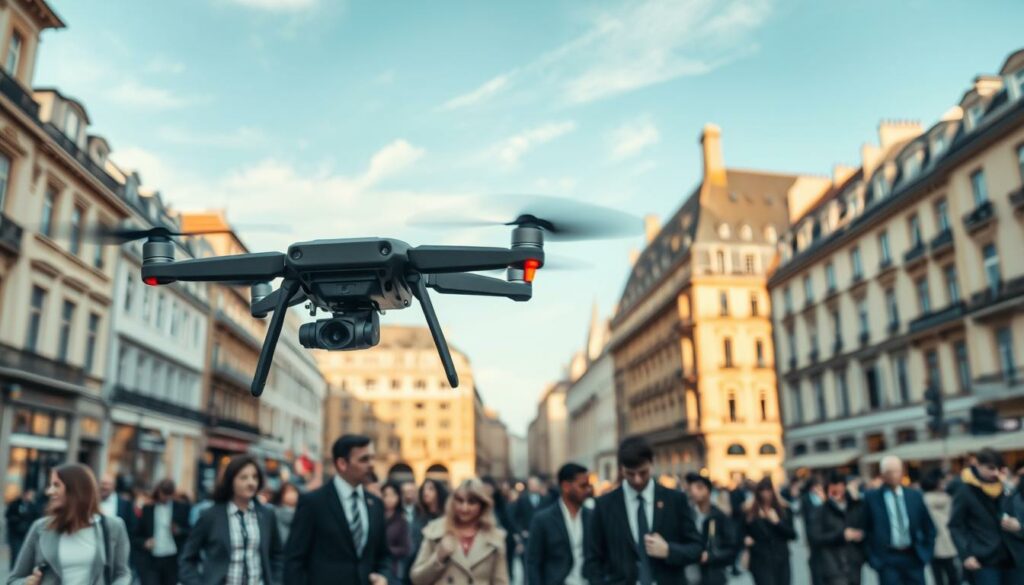
An uninvolved person is anyone not directly participating in your operation. You must maintain specific separation depending on your aircraft’s weight category.
Maintaining Safe Distances
For sub-250g models, you’re prohibited from flying over crowds. These assemblies people cannot quickly disperse, creating higher risk.
A1 Transitional aircraft (250g-500g) forbid intentional flight over uninvolved people. You must actively avoid overflying individuals during operations.
A2 Transitional models require at least 50 metres horizontal distance from uninvolved people. I constantly monitor my telemetry to maintain this separation.
UK law clearly states you must not fly uninvolved people closer than 50m horizontally. Never fly directly over them unless using compliant lightweight equipment.
When near large assemblies people gather, I simply avoid these situations entirely. The potential for panic and difficulty evacuating makes caution essential.
My practice is always erring on the side of greater horizontal distance. Protecting uninvolved people outweighs any photographic opportunity.
Remember: you should never fly uninvolved people directly overhead. These rules create the safe framework that enables our continued access to urban airspace.
Overcoming Challenges in Urban Airspace
Every successful urban flight begins with overcoming three critical challenges: restricted zones, weather, and environmental factors. I’ve developed specific strategies for navigating these obstacles while maintaining safe open category operations.
Metropolitan environments demand careful planning and constant awareness. The strategies I share here have kept my operations both legal and safe.
Managing Restricted and No-Fly Zones
Airspace restrictions represent the most serious urban challenge. It’s illegal and dangerous to operate near airports or manned aircraft. Endangering an aircraft carries severe penalties including prison time.
I always use the NATS Drone Assist app before any drone flights. This identifies Flight Restriction Zones around airports, which typically extend several kilometres. Other prohibited areas include prisons, military bases, and government sites.
| Restriction Type | Typical Distance | Tools for Verification |
|---|---|---|
| Airport Flight Zones | Several kilometres | NATS Drone Assist |
| Military Facilities | Variable by site | Online mapping services |
| Critical Infrastructure | Site-specific | Local authority guidance |
Handling Weather and Environmental Factors
Urban weather conditions differ dramatically from surrounding areas. Buildings create wind channels and microclimates that standard forecasts miss. I always assess conditions at the actual location before I fly drone operations.
Environmental factors include turbulence around structures and GPS interference from reflective surfaces. Even urban recreational areas like parks may have local restrictions beyond national rules.
My approach involves continuous monitoring and having backup landing spots ready. Being prepared to abort missions when conditions deteriorate ensures safe open category operations in challenging environments.
The Role of Remote Identification in Modern Drone Operations
The implementation of Remote ID technology marks a turning point in how authorities monitor and manage unmanned aircraft operations across the UK. This system represents a fundamental shift towards greater accountability and airspace safety.
Remote Identification enables aircraft to broadcast their location and identification details during operation. This allows authorities to distinguish between compliant operations and potentially illegal activities.
Understanding Direct Remote ID (DRID)
The UK is adopting Direct Remote ID as its primary system. DRID broadcasts information using common wireless signals like Wi-Fi or Bluetooth. Nearby smartphones can receive this data without internet connection.
From January 2026, all newly manufactured aircraft with UK class marks must include built-in DRID functionality. When considering a new drone purchase, I always verify its Remote ID capabilities.
Retrofit Options for Legacy Drones
Owners of legacy drones face different requirements starting January 2028. These older models will need add-on modules to achieve compliance. The additional weight could affect your aircraft’s classification.
Certain exemptions may apply through specific operational authorisation from the CAA. Flying club activities might also qualify for flexibility under special operational authorisation arrangements.
My advice for anyone with legacy drones is to research retrofit options early. Planning ahead ensures your favourite equipment remains airworthy when regulations take full effect.
Insurance and Liability Considerations for Drone Operators
Insurance often feels like an afterthought for many new pilots, but I learned its importance the hard way. Understanding your coverage needs protects you financially and ensures legal operation.

For recreational drone operators in the Open category, the CAA doesn’t mandate specific insurance. However, I strongly recommend public liability coverage regardless. The distinction between commercial and recreational requirements is critical.
Commercial Versus Recreational Requirements
If you receive payment for your work, insurance becomes a legal requirement. Commercial drone operators must hold third-party liability coverage starting around £750,000.
When operating under a specific category operational authorisation, valid insurance is mandatory. You cannot obtain or maintain this operational authorisation without adequate coverage.
Even for recreational flights, I carry insurance because uninsured incidents could be financially devastating. Specialist providers offer tailored policies for both recreational and commercial specific category operations.
Keeping Up With Evolving Drone Laws Across Europe
The assumption that one set of credentials works across the continent is perhaps the most common mistake I see pilots make. Being fully compliant with UK drone regulations gives you no automatic right to operate elsewhere.
Each nation maintains sovereign control over its airspace. Your UK Operator ID and Flyer ID remain valid primarily within Britain’s framework. Planning sessions in France, Germany, or Spain requires understanding their specific drone laws.
Insights Into Cross-Border Regulatory Nuances
Key requirements vary dramatically between countries. Registration processes, pilot qualifications, and altitude limits differ significantly. Privacy legislation and insurance demands also change at each border.
The European Union’s harmonisation efforts help, but implementation varies. Meanwhile, UK civil aviation rules continue diverging post-Brexit. This creates a genuinely complex landscape for travellers.
I always begin research with the destination country’s national aviation authority website. These provide the most current information about local requirements. Some nations demand foreign pilots obtain temporary operational authorisation.
Other countries might recognise certain EU qualifications. The table below highlights typical variations you’ll encounter.
| Country | Registration Threshold | Foreign Pilot Requirements | Maximum Altitude |
|---|---|---|---|
| France | All weights | Online declaration | 120m |
| Germany | Over 250g | Proof of competency | 100m |
| Spain | Over 250g | Possible operational authorisation | 120m |
My advice? Research several weeks before travel. Document your compliance efforts and carry all certificates. When uncertain, contact the local aviation authority directly rather than risking penalties.
Selecting the Right Equipment for City Flying
The equipment you select can dramatically influence your operational freedom when capturing urban landscapes from above. Understanding which models fit into specific regulatory categories transforms your metropolitan aerial photography experience.
Comparing Popular Models: DJI Mini, Mavic and More
I’ve found the DJI Mini series represents the ideal starting point for urban operations. These lightweight models fall under the A1 subcategory open category, offering relaxed distance requirements.
The entire DJI Mini series, along with DJI Neo and Flip models, operates in this favourable classification. Their sub-250g weight provides maximum flexibility around people and property.
Mid-weight options like the DJI Mavic Air and Avata series require A1 Transitional classification. These 250g-500g aircraft need an A2 Certificate of Competency for legal operation.
Professional DJI Mavic 3 series and heavier models operate under A2 Transitional rules. This subcategory open classification demands maintaining 50m distances from uninvolved individuals.
My philosophy prioritises staying under 250g when possible. Choosing models with excellent obstacle avoidance ensures safe navigation through complex metropolitan environments.
Educational Resources and Training Opportunities
Developing genuine pilot competency through proper training has transformed my approach to urban aerial operations more than any piece of equipment ever could. The availability of quality educational resources makes obtaining proper certifications more accessible than many realise.
My Experience With Online Theory Tests
My experience with online theory assessments has been overwhelmingly positive. The CAA’s basic Flyer ID theory test is well-designed and genuinely educational rather than just a regulatory hurdle.
For advanced operations, you’ll need an A2 certificate competency. This represents a higher level of pilot competency than the basic Flyer ID. Organisations like Heliguy offer complete online theory training followed by a remote theory test.
I appreciate that the A2 certificate competency doesn’t require a full Operations Manual. However, practical flight training ensures you can apply theoretical knowledge. This certificate competency remains valid for five years, providing excellent value.
For specific category work requiring Operational Authorisation, you’ll need a General Visual Line of Sight Certificate. This represents the highest level of training for specific category operations.
View training as an investment in your skills rather than a burden. Proper education through these programmes genuinely improves your understanding of aviation principles and risk management.
Conclusion
As we wrap up this journey through the regulatory landscape, my goal has been to equip you with practical knowledge that builds confidence rather than confusion. Understanding whether you operate in the open category or require operational authorisation for specific category work forms your foundation.
Maintaining visual line of sight remains non-negotiable for safety. This ensures you can always see your aircraft clearly. Responsible drone pilots must also respect distance requirements to fly far from people when necessary.
The civil aviation authority framework exists to protect everyone. Whether you’re a recreational enthusiast or professional drone operator, compliance unlocks amazing urban perspectives safely.
Remember that every flight reflects on our entire community. Stay informed, prioritise safety, and enjoy the incredible views responsibly.
FAQ
What is the most important rule for flying a drone in a city?
The most crucial rule is to always keep your unmanned aircraft within your direct visual line sight. This means you must be able to see it with your own eyes at all times, without relying on binoculars or the screen. It’s the foundation of safe operation, especially in complex urban environments.
Do I need to register my drone with the Civil Aviation Authority?
Yes, in most cases. If your device has a take-off mass of 250 grams or more, you must register as an operator and obtain an Operator ID, which needs to be displayed on the aircraft. You may also need to pass an online theory test to get a Flyer ID to prove your pilot competency.
Can I fly my drone over groups of people?
A: This depends on the subcategory and class mark of your device. Generally, for the open category, you should avoid flying directly over uninvolved people. If your drone is under 250g, like the DJI Mini series, you have more flexibility, but you must still not fly over assemblies of people. Always maintain a safe horizontal distance.
What is the difference between the Open and Specific categories?
The open category is for lower-risk activities, often with drones under 25kg, and doesn’t typically require an operational authorisation from the civil aviation authority. The specific category is for higher-risk operations, like flights closer to people, which usually require a certified certificate of competency and a formal authorisation.
My drone is old and doesn’t have a class mark. Can I still use it?
Yes, these are known as legacy drones. You can still fly them in the A1 subcategory until 1 January 2026, provided they weigh less than 500g. After that date, you may need to look into retrofit options for remote identification or consider upgrading to a newer model with a class mark.
Is insurance mandatory for flying my drone recreationally?
In the UK, if your drone weighs 250g or more, you are legally required to have third-party liability insurance. This protects you if your aircraft causes damage to property or injury to a person. It’s a key part of being a responsible drone operator, even for hobbyist drone flights.