
What if I told you that the stunning aerial footage you admire from top creators isn’t just about having the latest drone? As someone who’s spent years capturing Britain’s beautiful landscapes from above, I’ve learned that the real magic happens with the right supporting gear.
Having flown across everything from the Scottish Highlands to the Cornish coast, I understand the unique challenges we face here in the UK. Our unpredictable weather and specific regulations demand equipment that’s both resilient and compliant.
The landscape for aerial photography is evolving rapidly. By 2026, we’ll see innovations that directly address the pain points vloggers commonly experience. This guide reflects my hands-on testing with gear that truly enhances creative possibilities.
We’ll explore everything from power solutions that extend your flying time to visual enhancements that transform basic footage into professional content. Safety gear and data management tools will also feature prominently, ensuring you’re prepared for any filming scenario.
Key Takeaways
- The right supporting equipment dramatically improves aerial photography results
- UK flying conditions require specially adapted gear for optimal performance
- 2026 brings innovative solutions addressing common vlogging challenges
- Power management is crucial for extended filming sessions
- Visual enhancements can elevate basic footage to professional standards
- Safety equipment is non-negotiable for responsible drone operation
- Efficient data management streamlines your content creation workflow
Introduction to Drone Vlogging in 2026
Modern vlogging demands more than just ground-level shots – it requires the dynamic angles that only elevated perspectives can provide. The content landscape has evolved dramatically, with platforms rewarding creators who deliver cinematic, engaging visual experiences.
The Rise of Aerial Footage Trends
Statistics show UK creators are embracing aerial content at an unprecedented rate. YouTube, Instagram, and TikTok algorithms now prioritise dynamic footage that captures viewers’ attention immediately.
This shift means static camera work often falls short of audience expectations. The demand for professional-quality video has never been higher among British content consumers.
My Journey in Drone Vlogging
My first flight experiences taught me valuable lessons about what truly matters for successful aerial photography. Early mistakes with basic equipment highlighted the importance of proper supporting gear.
Through years of flying various models, I’ve learned that different drones suit different creative styles. Compact travel units work wonderfully for spontaneous adventures, while professional rigs excel in planned productions.
This experience as a remote pilot has shaped my understanding of what vloggers genuinely need. The right supporting equipment separates amateur footage from professional results that truly engage audiences.
Why Investing in Drone Accessories Matters
After years of filming across Britain’s diverse landscapes, I’ve learned that the right supporting equipment is what separates amateur footage from professional results. These additions have evolved from optional extras to fundamental components of any serious vlogger’s toolkit.
Enhancing Safety and Flight Performance
My early filming experiences taught me valuable lessons about equipment protection. A simple protective case prevented thousands of pounds worth of damage during travel to remote locations. Proper gear ensures both your investment and surrounding areas remain secure.
Flight stability improvements are equally crucial. The right additions can transform shaky footage into smooth, cinematic sequences. I’ve found this particularly valuable when filming in Britain’s unpredictable coastal conditions.
| Supporting Gear Type | Safety Impact | Footage Improvement | Creative Benefits |
|---|---|---|---|
| Protective Cases | Prevents transport damage | Ensures equipment reliability | Enables diverse location filming |
| Lens Filters | Reduces glare-related issues | Enhances color and exposure | Allows varied lighting shots |
| Extra Power Sources | Avoids emergency landings | Extends recording sessions | Enables complex shot sequences |
Boosting Footage Quality and Creativity
The relationship between proper gear and visual results became clear during my Lake District projects. Basic footage transformed dramatically with simple additions. Filters and stabilisation tools elevated content from acceptable to exceptional.
The right supporting equipment doesn’t just improve your footage—it expands your creative possibilities and confidence in challenging conditions.
Creative freedom blossoms when you have reliable gear. Challenging shots become achievable, and diverse locations feel within reach. This peace of mind allows focus on composition rather than equipment limitations.
While the main unit represents a significant investment, supporting gear offers excellent value. These modest additions dramatically multiply your filming capabilities and final results.
In-Depth Look at Essential Drone Accessories for Vlogging
Navigating the vast selection of add-ons available to drone pilots can feel overwhelming, especially with new products launching constantly. My aim is to simplify this process by sharing the items that have proven their worth through my extensive experience filming throughout the UK.
I categorise my kit into non-negotiable fundamentals and valuable upgrades. The fundamentals are those I simply wouldn’t fly without, as they directly impact safety and basic footage quality. The upgrades, while fantastic, can be acquired as your skills and projects evolve.
Must-Have Add-ons and Performance Upgrades
My evaluation process considers several factors. Build quality is paramount for withstanding British weather. Compatibility ensures seamless integration, and portability is key for vloggers on the move.
Your vlogging style significantly influences your priorities. An urban explorer’s needs differ from those of a nature documentarian.
| Vlogging Style | Top Priority | Secondary Focus |
|---|---|---|
| Travel & Adventure | Portable power solutions | Compact protective cases |
| Urban Exploration | Propeller guards | ND filters for light control |
| Nature Documentaries | Lens filters for colour | Extra memory storage |
Personal Recommendations from My Experience
The best items are those you’ll use consistently. It’s easy to be tempted by impressive-looking gear that ends up unused. Focus on additions that solve a specific problem you encounter regularly.
In the following sections, we’ll explore each category in detail. From power solutions to visual enhancements, you’ll see how each serves a distinct purpose in creating professional content.
Power Solutions for Extended Flight Time
The single most limiting factor in aerial photography isn’t your camera quality – it’s how long you can stay airborne. Having enough power determines whether you capture that golden hour magic or return home empty-handed.
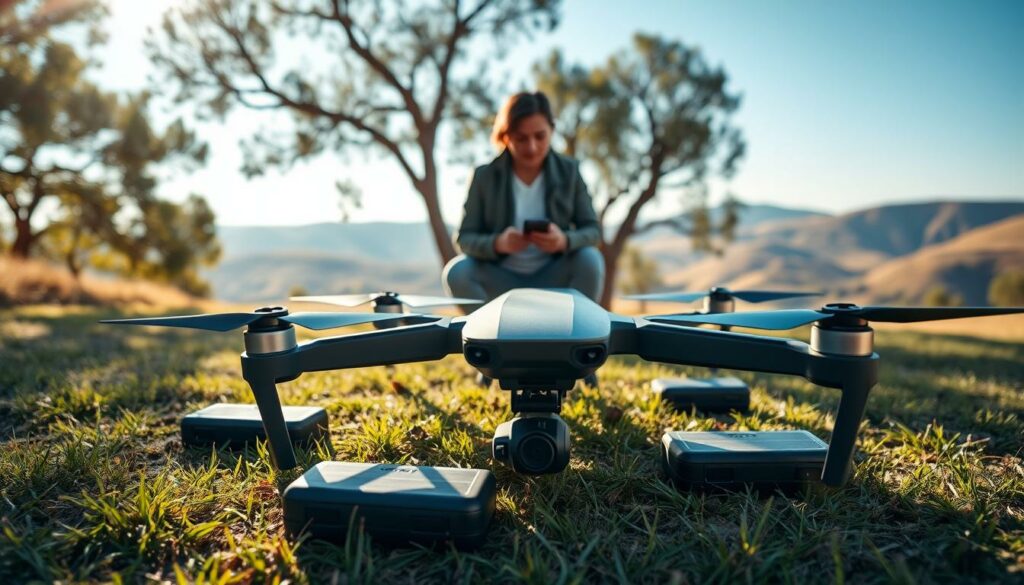
Through extensive filming across Britain’s varied landscapes, I’ve developed a reliable system for maximising shooting time. The right energy management approach makes all the difference.
Spare Batteries and Two-Way Charging Hubs
Carrying multiple spare batteries is non-negotiable for serious content creation. I recommend at least three to four batteries for full-day sessions. The DJI Air 3S Intelligent Flight Battery (£119) offers extended performance, while the DJI Neo 2 (£35) provides affordable options.
Two-way charging hubs revolutionise workflow efficiency. The DJI Neo 2 Two-Way Charging Hub (£29) handles multiple batteries sequentially and doubles as a power bank for controllers. This streamlined charging process saves precious filming time.
Portable Power Banks and Car Chargers
For remote UK locations like the Scottish Highlands, portable solutions are vital. Dedicated power banks keep your operation running throughout extended shoots. Car chargers maintain battery levels while travelling between locations.
Proper battery care extends lifespan significantly. Store at room temperature and monitor health regularly. These practices ensure your spare batteries deliver consistent performance flight after flight.
Visual Enhancements: Filters, Lenses and More
The difference between basic aerial shots and professional-grade video content frequently lies in the optical additions you incorporate. These tools transform ordinary footage into cinematic masterpieces.
My experience filming across Britain has shown me how vital these visual enhancements are. They separate amateur photography from polished results that captivate audiences.
ND Filters for Cinematic Shots
Neutral density filters are game-changers for aerial video work. They control light entering your lens, enabling proper shutter speed settings.
This creates smoother motion blur and consistent exposures. Bright British summer days particularly benefit from this technology.
| Filter Strength | Light Conditions | Best For |
|---|---|---|
| ND8 | Overcast days | General UK weather |
| ND16 | Partly cloudy | Variable conditions |
| ND32 | Bright sunlight | Summer filming |
| ND64 | Very bright conditions | Beach and snow scenes |
I recommend the DJI Mini 5 Pro ND Filters (£39) for consistent performance. The PolarPro Avata 2 Vivid Collection (£69.99) offers premium colour enhancement.
Wide-Angle Lens Options for Expansive Views
Wide-angle lenses dramatically expand your camera’s field of view. They create immersive perspectives perfect for landscape photography.
The DJI Mini 4 Pro Wide Angle Lens (£29) has transformed my architectural shots. It captures more expansive views without sacrificing quality.
These visual tools elevate your content from simple recordings to engaging storytelling. They’re worthwhile investments for serious creators.
Safety and Protective Gear: Essential Additions
The most valuable lesson I’ve learned from years of aerial filming is that prevention always beats repair when it comes to equipment protection. Investing in proper safety gear protects both your valuable equipment and the people around your filming locations.

Propeller Guards and Landing Pads
Propeller guards are vital additions, especially for beginners or when flying in confined spaces. The DJI Neo 2 Propeller Guard (£9) offers excellent protection against accidental contact.
Landing pads have become indispensable in my kit. They provide a clean, visible surface for takeoff and landing operations. This is particularly useful on Britain’s often muddy or uneven terrain.
Different landing pad options suit various environments. Compact foldable versions work well for travel, while weighted models handle windy conditions better.
| Landing Pad Type | Best For | Portability | Wind Resistance |
|---|---|---|---|
| Compact Foldable | Travel vlogging | Excellent | Basic |
| Medium Weighted | General UK use | Good | Moderate |
| Large Professional | Studio work | Limited | High |
Robust Cases for On-the-Go Protection
A quality protective case is non-negotiable for vloggers who travel frequently. The Shimoda Core Unit Drone Pro Black (£69) offers custom-moulded, water-resistant protection.
Organising your case efficiently ensures quick access to frequently used items while maintaining protection. Controller protectors like the PGYTECH DJI RC Pro Protector (£25) safeguard expensive remote controls from damage.
These protective additions give me confidence when filming in challenging locations across the UK. They’re worthwhile investments for any serious content creator.
Connectivity and Data Management Tools
Nothing ruins a perfect aerial sequence faster than storage failure or slow data transfer. While cameras get most attention, your data handling system supports the entire creative process.
High-resolution video files consume storage rapidly. Having reliable memory infrastructure prevents lost opportunities during critical filming moments.
High-Capacity Memory Cards and Fast SD Cards
I prioritise UHS Speed Class 3 (U3) or V30+ rated SD cards for smooth recording. These specifications prevent buffering issues that can ruin footage.
My experience with card failures taught me to invest in reputable brands. I now carry multiple 128GB cards rather than one large capacity option.
This approach minimises risk if one card develops problems. It also helps organise different projects separately during filming sessions.
External SSDs and Wireless Data Transfers
External solid-state drives have become indispensable for my workflow. Their fast transfer speeds and durability make them perfect for immediate backups.
When working on paid projects or unique content, having instant backup protection is crucial. SSDs dramatically reduce file management time between shoots.
Wireless transfer systems allow quick previews and social sharing directly from my equipment. This eliminates the need to remove memory cards constantly.
My field workflow involves organising, backing up, and verifying footage immediately after capture. This system ensures nothing gets lost during production.
Advanced Controls and Remote Solutions
The connection you feel with your flying machine can make or break a filming session. Upgrading your control system transforms the entire experience from fiddly to fluid.
Moving from a smartphone-tethered setup to a dedicated unit was a revelation for me. The improved ergonomics and instant responsiveness allowed me to focus purely on capturing the shot.

Integrated Display Controllers for Clarity
Controllers with built-in screens, like the DJI RC 2, eliminate phone dependency completely. You get a brighter, more responsive display that stays visible even on bright British days.
This integrated approach feels more professional and reliable. I found it particularly valuable during fast-moving situations where every second counts.
User-Friendly Remote Controllers for Precision
There’s a remote controller for every style of flying. The premium DJI RC Pro (£799) offers unparalleled customisation for professional work.
For more intuitive control, the DJI RC Motion 3 (£79) uses natural hand movements. It’s fantastic for creating dynamic, cinematic shots with minimal effort.
Here are some top options I’ve tested:
- DJI Remote Control (£199) – A superb all-rounder for most vloggers
- DJI FPV Remote Controller 3 (£139) – Perfect for immersive first-person view flying
- Screen protectors and cases – Vital for protecting your investment
Don’t underestimate proper protection for your controller. A simple case like the PGYTECH DJI RC Pro Protector (£25) can prevent expensive damage.
Customising your controller settings takes your flying to the next level. Small adjustments to stick sensitivity can dramatically improve your precision during complex manoeuvres.
Using Drone Accessories in Varied UK Locations
The true test of any aerial photography setup comes when you take it beyond your local park and into Britain’s diverse landscapes. Each location presents unique challenges that demand specific equipment considerations.
Today’s pilots rely heavily on mobile apps and digital tools for responsible flight planning. CAA-approved maps help us check restricted areas in real time, while specialised weather apps provide hyper-local forecasts.
Flying in Urban Versus Rural Settings
Urban flying in cities like London or Manchester requires particular attention to safety. Propeller guards become non-negotiable near buildings, and careful route planning using official apps is essential.
Rural settings across the UK present different challenges. Extended battery life and portable charging solutions become critical when power sources are limited. My experience in the Scottish Highlands taught me to always carry spare power banks.
Adapting to Local Weather Conditions
British weather dramatically affects which items you’ll need. Filters and lens protections are vital for bright summer days, while robust cases protect during unpredictable conditions.
Flight planning tools help pilots make informed decisions about when and where to fly safely. Monitoring ideal takeoff windows based on real-time data has transformed my approach to location photography.
Understanding local regulations ensures compliance while maximising creative opportunities. The growing UK pilot community shares valuable location-specific experiences that help us all prepare better kits.
Conclusion
Investing wisely in supplementary gear pays dividends in both creative freedom and technical results. The right supporting equipment transforms basic aerial footage into professional content that stands out.
From spare batteries and charging solutions to quality filters and safety gear, each addition serves a specific purpose. My experience has shown that building your kit gradually based on your vlogging style delivers the best value.
I encourage you to start with the fundamentals that address your most common challenges. The supportive UK community of pilots shares incredible resources, including Nigel Danson’s free photography webinar covering composition and flying techniques.
Remember that developing your skills alongside your equipment list creates the foundation for exceptional aerial photography. Experiment, learn, and watch your creative vision take flight.
FAQ
What are the most critical drone accessories for a beginner vlogger?
For someone just starting out, I’d prioritise a sturdy carry case, a set of spare batteries, and a high-speed memory card. These items protect your investment, extend your filming sessions, and ensure you never miss a shot due to a full card.
How do ND filters improve my aerial photography?
ND filters are like sunglasses for your camera. They reduce the amount of light entering the lens, allowing you to use slower shutter speeds. This creates motion blur, giving your video a smooth, cinematic look, especially on bright days.
Is a landing pad really necessary for my DJI Mini?
I find a landing pad incredibly useful. It provides a clean, visible spot for take-off and landing, protecting your gear from dust, sand, and grass. This is vital for keeping your motors and lenses clean, which directly impacts flight performance and image quality.
What should I look for in a memory card for 4K video?
You’ll need a card with a high write speed, indicated by a V30 or V60 rating. I always opt for cards from reputable brands like SanDisk or Samsung. A large capacity, such as 128GB or 256GB, is also key for storing long 4K recording sessions.
Can I use a standard power bank to charge my drone’s batteries?
It depends on your model. Many modern drones, like the DJI Mini 3 Pro, support USB-C charging, so a powerful power bank can work. However, for faster, more reliable power, I recommend a dedicated two-way charging hub designed specifically for your drone’s batteries.
How do I choose the right carry case for travelling with my gear?
Look for a hard-shell case with custom-cut foam that snugly fits your drone, remote controller, spare parts, and other items. I prefer cases with pressure-release valves for air travel and sturdy locks to keep everything secure while I’m on the move.