
Are you planning to capture breathtaking aerial footage across the Channel, but worried about navigating complex rules for your equipment? Many content producers share this concern, especially with rumours circulating about significant changes coming in 2026.
Let me clear up a common misunderstanding right away. The major regulatory shift everyone’s talking about already happened on 1st January 2024. This was when the European Union’s unified framework for unmanned aircraft became fully operational across all member states.
In this guide, I’ll walk you through how these European regulations are implemented in France by the DGAC, the French Civil Aviation Authority. This creates a harmonised system that affects everyone from hobbyist filmmakers to professional cinematographers.
My goal is to provide practical, actionable information specifically for UK-based video creators. Understanding this regulatory landscape is essential for planning your creative projects across the Channel with confidence.
Key Takeaways
- The significant regulatory changes for unmanned aircraft in France already took effect on 1st January 2024
- France operates under a harmonised European framework managed by the DGAC
- There are no major new rule changes anticipated for the year 2026
- Registration of operators and training of remote pilots are standard requirements
- Equipment must meet specific technical standards based on classification
- Understanding these rules is crucial for UK-based filmmakers planning projects in France
- This framework provides certainty for planning your aerial cinematography projects
Introduction and Overview
For UK-based filmmakers eyeing French locations, understanding the current regulatory landscape is essential. The European Union’s harmonised framework has transformed how we approach aerial filming across member states. This guide aims to demystify these changes specifically for content producers working internationally.
Purpose and Scope of the Guide
I created this resource because I’ve seen firsthand how confusing cross-border filming can be. My goal is to provide clear, practical information that helps you navigate the unified standards now in place.
The scope covers everything from equipment classifications to operational procedures. You’ll learn about the three main categories and what they mean for your projects. I’ll also explain specific French requirements that affect UK-based operators.
Relevance for Video Creators in the UK
If you’re planning shoots across the Channel, these regulations directly impact your work. The rules affect everything from wedding videography to commercial productions. Understanding them ensures you can capture stunning visuals without legal concerns.
I’ll focus particularly on how popular equipment fits within the framework. Many creators invest significantly in their gear, so it’s crucial to know what’s permitted. This knowledge empowers you to plan projects with confidence and creativity.
EU and French Regulatory Framework
The foundation of modern unmanned aircraft governance lies in a harmonised European approach that replaced fragmented national systems. This new European framework ensures consistent safety standards across member states.
European Union Regulations and Directives
Two key regulations form the cornerstone of this system. Regulation (EU) 2019/947 governs operational rules and procedures for flights. It defines where and how you can conduct aerial operations.
Complementing this is Regulation (EU) 2019/945, which sets technical standards for equipment. This product regulation establishes CE class markings from C0 to C6. Manufacturers must meet these requirements before selling in the European market.
The system introduces a risk-based approach categorising operations into Open, Specific, and Certified categories. This focuses on the actual risk level rather than arbitrary weight limits.
DGAC and National Adaptations in France
In France, the DGAC (Direction Générale de l’Aviation Civile) implements these European regulations. As the national civil aviation authority, they add France-specific adaptations where permitted.
France exercises national authority in areas like airspace management and security zones. The transition from old national scenarios to European standard scenarios affects professional creators significantly.
| Regulation | Type | Focus Area | Key Impact |
|---|---|---|---|
| (EU) 2019/947 | Implementing Regulation | Operational Procedures | Defines flight conditions and locations |
| (EU) 2019/945 | Delegated Regulation | Product Standards | Sets technical requirements for equipment |
| DGAC Adaptations | National Implementation | Local Variations | Addresses French airspace and security needs |
This dual-layer system provides clarity for cross-border operations. Fundamental safety rules remain consistent across Europe with only specific local variations to consider.
Drone Categories and Classifications
The entire European system for unmanned flight is built upon a simple but crucial concept: risk. Your equipment is sorted into one of three main categories based on the potential danger its operation presents.
This structure helps everyone, from hobbyists to professionals, understand their boundaries instantly.
Understanding Open, Specific and Certified Categories
Most video creators, including myself, will operate in the open category. This covers low-risk operations that don’t need special authorisation. It’s perfect for standard aerial photography and landscape shots.
This category is itself split into three sub-categories—A1, A2, and A3—which fine-tune your flying freedoms based on proximity to people.
If your project involves more complex work, like night filming or flying in busy urban areas, you move into the Specific category. This requires prior authorisation.
The Certified category is for high-risk operations, similar to manned aviation. It’s rarely relevant for content creators.
CE Marking, Class Designation and Technical Standards
Your aircraft’s CE class marking (C0 to C4) is your key to the open sub-categories. It confirms the equipment meets strict European technical standards.
This marking directly determines where you can fly. For instance, a C0 or C1 class model allows A1 sub-category flights over isolated individuals.
| Open Sub-Category | Key Permission | Typical CE Class |
|---|---|---|
| A1 | Fly over isolated people | C0, C1 |
| A2 | Fly near people (30m/5m distance) | C2 |
| A3 | Fly far from people & urban areas | C3, C4 |
Understanding this system is essential. It dictates your required training, permitted flight zones, and the type of projects you can undertake with confidence.
Operating in Urban Areas and Flight Restrictions
Urban environments offer incredible visual opportunities but come with some of the strictest operational limitations for aerial work. Understanding these boundaries is crucial for planning successful projects in metropolitan settings.
Urban Flight Limitations and Safety Distances
I need to be clear about a major restriction for creators. Flying over public spaces in built-up areas remains prohibited in the Open category. This applies regardless of your subcategory certification.
Safety distances are non-negotiable. In A3 operations, I must maintain 150 metres from residential and commercial areas. For A2 flights, the distance reduces to 30 metres, or 5 metres in slow mode.
The universal height limit of 120 metres applies to all my flights. This is measured from the ground directly below my equipment. Flying over gatherings of people is absolutely forbidden in all circumstances.
Identifying Permitted and Prohibited Areas
Before every flight, I consult official airspace restriction maps. The French government’s Géoportail service is my primary resource. Partner applications also provide real-time updates on restricted zones.
France maintains specific ZICAD zones prohibiting data capture. These cover sensitive sites like military installations and government buildings. Even flying near these areas to capture footage is illegal without proper authorisation.
Planning urban shoots requires either accepting severe limitations or obtaining Specific category approval. The latter involves substantial paperwork and waiting periods through the national aviation authority.
Registration and Training Requirements
Before my aircraft even leaves the ground, I must complete two essential legal steps. These are not suggestions but mandatory requirements for any serious video creator.
The process ensures I operate safely and responsibly. It centres on the official AlphaTango platform managed by the national aviation authority.
AlphaTango Registration Process Explained
My first task is registration as a UAS operator. This applies if my equipment weighs over 250 grams or has a camera, which covers most models.
After completing the online form, I receive a unique operator number. It starts with FRA and has 13 characters.
I must physically affix this number to each of my drones. For heavier models over 800 grams, I need to register each one individually and fit an electronic beacon.
A1/A3 and A2 Training Modules for Pilots
Next comes the mandatory training. The free online A1/A3 course is for any pilot operating equipment over 250g.
It involves learning modules and a 40-question exam. I need a 75% score to pass and get my certificate, which is valid for five years.
If I want to fly a C2-class model closer to people, I need the additional A2 certificate. This involves a more advanced theoretical exam.
Flying without the correct certificate can result in a substantial fine. Completing this training properly is a non-negotiable part of my preparation.
DJI Drone Specifics Under New Regulations
Choosing the right equipment is crucial for staying compliant with the latest European framework. As a world leader, DJI has proactively adapted its popular models to meet these requirements.
Many of their current ranges now carry the essential CE mark. This certification, with a C0, C1, or C2 class, directly determines where and how I can fly in the open category.
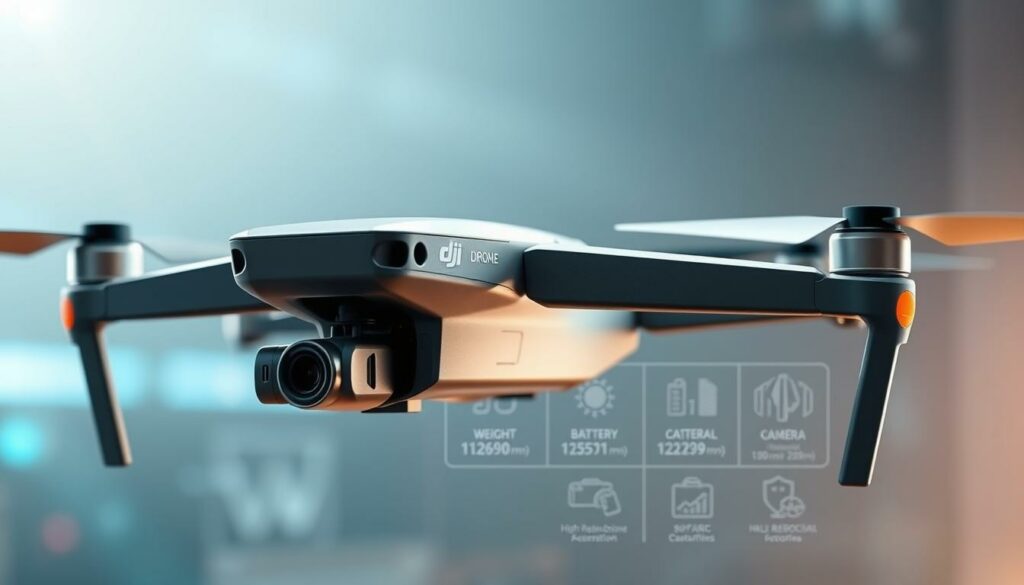
- DJI Mini 3 Pro (C0): Ideal for creators. It allows A1 subcategory flights near people without a heavy exam.
- DJI Mavic 3 (C1): Offers greater flexibility for A1 operations, perfect for advanced video work.
- DJI Mavic 4 Pro / Matrice (C2): For professional shoots requiring A2 permissions and advanced training.
Legacy versus Modern DJI Models
If you own a model purchased before 2024 without class marking, you can still use it. However, the rules are different.
A drone without a CE mark, like an original DJI Mini under 250g, can operate in A1. Heavier legacy models, such as a Phantom or Mavic 2, are restricted to A3 operations.
This means I must fly them far from people and urban areas. It significantly limits their use for urban video projects.
The good news is that certification isn’t always about hardware age. Some models, like the DJI Mavic 3 Classic, have received a class C1 rating through a simple firmware update.
Practical Safety Measures and Compliance
With the regulatory framework now settled, my attention has shifted to ensuring my equipment remains in perfect working order. Proper maintenance isn’t just about performance—it’s crucial for staying compliant with current standards.
Importance of Maintenance and Firmware Updates
I’ve learned that regular firmware updates serve a dual purpose. They introduce new features while maintaining essential safety and compliance functions. Manufacturers regularly release updates that address remote identification and geofencing requirements.
Before any important shoot, I always check for available updates. Outdated software can affect your equipment’s legal status and operational capabilities. This simple habit prevents potential compliance issues during inspections.
Approved Repairs and Authorised Service Centres
When my equipment needs repairs, I face a critical decision that affects its legal status. Using authorised service centres ensures genuine parts and proper installation techniques. This preserves the essential CE marking required for legal operation.
I’ve found specialised workshops across the Channel offering professional repair services. They handle everything from motor replacements to sensor calibrations. Choosing approved technicians protects my investment and maintains compliance.
The reality is clear: unauthorised repairs might save money initially but could ground your equipment entirely. Proper maintenance through certified channels ensures reliable performance and legal operation for years to come.
Risk Management and Flight Scenarios
For ambitious video projects that don’t fit neatly into standard categories, a thorough safety evaluation is essential. A significant change is approaching for professional operators. The national standard scenarios (S-1, S-2, and S-3) that many of us have used will conclude on 1 January 2026.
After this date, all operations must align with European standard scenarios or seek individual authorisation. The European STS-01 covers urban area flight, while STS-02 applies to sparsely populated regions.
Conducting a Comprehensive Risk Assessment
When my planned shoot involves complex elements like night filming or crowded areas, I must move beyond standard permissions. This requires a detailed risk evaluation using the SORA methodology.
The assessment examines ground and air risk, potential technical failures, and crew competency. It’s not just paperwork—it’s about genuinely planning for what could go wrong during demanding shoots.
| Scenario Type | Application Area | Equipment Class | Transition Deadline |
|---|---|---|---|
| National (S-1, S-2, S-3) | Various French operations | Legacy equipment | 1 January 2026 |
| European STS-01 | Low-altitude urban areas | C5 class | Currently applicable |
| European STS-02 | Sparsely populated areas | C6 class | Currently applicable |
For professionals, developing strong risk assessment skills leads to better authorisation outcomes and safer operations. It transforms compliance into genuine safety practice.
Future Trends in Drone Regulation
The landscape of unmanned aircraft governance continues to evolve, but the most significant changes have already taken place. Many creators I speak with are worried about supposed major shifts coming in 2026, but this concern is largely misplaced.
Upcoming Changes and the End of Transitional Periods
Let me clear up the biggest misunderstanding. The crucial transitional period actually concluded on 1st January 2024. This was when European regulations became fully mandatory across member states.
The real milestone date for 2026 is more specific. On 1st January 2026, France’s national standard scenarios (S-1, S-2, S-3) will come to an end. After this date, professional operators must use European standard scenarios or obtain individual authorisations.
Looking further ahead, I’m watching U-space development. This digital ecosystem for managing both manned and unmanned aircraft in designated airspace has been operational since January 2023. It will gradually expand across European airspace.
The European Commission plans a comprehensive package by 2030 to strengthen the entire ecosystem. For fellow creators, my advice is straightforward. Focus on mastering the current framework rather than waiting for hypothetical changes.
This stable foundation will serve you well regardless of future refinements. Understanding today’s rules properly is the best preparation for tomorrow’s opportunities.
In-Depth Look at drone laws france 2026
Creative compliance has become my guiding principle when planning complex video shoots across international borders. Rather than viewing regulations as restrictions, I see them as creative parameters that shape my artistic approach.
Implications for Video Creators and Operational Flexibility
My operational freedom depends heavily on strategic equipment choices. Selecting aircraft with appropriate CE class markings directly determines which subcategory I can operate within.
For urban video work, I prioritise models like the DJI Mavic 3 with C1 certification. This classification combined with proper training allows A1 subcategory flights closer to people than legacy equipment permits.
Ensuring Creative Compliance in Practice
Practical compliance centres on three fundamental pillars every video creator must maintain. Current registration through AlphaTango comes first, including updating records when selling or losing equipment over 800 grams.
Valid training certificates appropriate to my operations form the second pillar. The third involves properly maintained equipment with current firmware and compliant repairs.
I’ve developed a pre-flight checklist that ensures every shoot stays within legal boundaries. Some shots simply aren’t possible in the Open category, requiring either creative redesign or Specific category authorisation.
Conclusion
Navigating aerial filming regulations can seem complex, but the path to compliance is clearer than many creators realise. I hope this guide has shown that the framework represents continuity rather than disruptive change.
The key to successful operations lies in three pillars. Proper registration through AlphaTango comes first. Appropriate training and your certificate form the second essential element.
Understanding your operational category is crucial for planning. The open category covers most recreational work. More complex projects may need specific authorisation.
For both enthusiasts and professionals, viewing compliance as an enabler rather than a restriction creates sustainable growth. It ensures safety for people and builds public trust.
Looking ahead, I’m optimistic about unmanned aerial videography. The stable framework allows pilots to fly confidently within clear boundaries. This protects both your aircraft and our industry’s reputation.
FAQ
I’m a video creator from the UK planning to film in France. What’s the most important thing I need to know for 2026?
The most crucial point is that European Union regulations are fully in effect. This means you’ll need to register as a UAS operator in the UK and follow the EU-wide categories for your flights. The transitional period for older aircraft ends, so ensuring your equipment has the correct CE class marking is essential for a smooth filming experience.
My DJI Mini is under 250g. Do I still need any training or registration to use it in France?
A> Yes, you likely will. Even in the Open Category’s A1 subcategory, which is for the smallest aircraft, remote pilots generally need to complete a free online training course and pass a test. Operator registration is also mandatory if your device has a camera. It’s a simple process, but a vital one for compliance and safety.
How can I find out where I’m legally allowed to fly my drone for my video project in a French city?
I always recommend using official geospatial awareness applications, like the one provided by the French civil aviation authority (DGAC). These digital tools show real-time maps with zones where flight is prohibited, restricted, or requires prior authorisation. It takes the guesswork out of planning your shots and keeps your operations within the legal framework.
What happens if my drone doesn’t have a CE class label? Can I still use it after 2026?
After the final transitional period concludes, using an unlabelled aircraft becomes much more restricted. It would likely fall under the ‘legacy’ classification, limiting you to the A3 subcategory, which requires a large safety distance from people and urban areas. For most creative work, this isn’t practical, so upgrading to a modern, class-marked model is advisable.
As a professional, I sometimes need to fly closer to people than the Open Category allows. What are my options?
For those specific scenarios, you would need to operate in the Specific Category. This involves conducting a detailed risk assessment and typically obtaining an operational authorisation from the DGAC. For complex shoots, you might even need to submit a formal declaration. It’s more paperwork, but it grants the operational flexibility necessary for professional video production.