
What if your aerial filming session ended just as you found the perfect shot? That advertised 30-minute flight often vanishes much quicker in real-world conditions.
As a professional operator, I’ve learned that understanding your power source is the single most critical skill for capturing stunning footage. The numbers on the box are just the starting point.
In the UK, coastal winds and sudden temperature drops can slash your airtime significantly. A cold day can cause a terrifying power drop when you need stable power the most. This guide shares the strategies I use on paid assignments to make every single charge count.
Whether you’re filming a personal project or a client’s deadline, mastering these techniques is essential. We’ll cover everything from selecting the right equipment to in-flight practices that protect your gear and extend your creative window.
Key Takeaways
- Advertised flight times are often optimistic, with real-world filming time being considerably less.
- Environmental factors like wind and cold temperatures have a major impact on performance.
- Professional workflows and battery management are crucial for successful aerial video work.
- This guide provides actionable insights from real operational experience in British conditions.
- Effective power management is essential for both hobbyists and professional videographers.
- We will cover practical techniques to maximise the usable time from each charge.
Introduction to Maximising Drone Battery Life
The creative possibilities of aerial videography are incredible, but they’re entirely dependent on one crucial factor: reliable flight duration. Understanding how to extend your available airtime transforms your entire approach to capturing footage from above.
Why Battery Life Matters for Filming
Limited power directly shapes what you can achieve during each session. It affects shot composition, location coverage, and your ability to capture critical moments. Being strategic with every second becomes essential.
Poor planning leads to missed opportunities and incomplete projects. I’ve seen colleagues return to locations multiple times because they didn’t manage their power effectively. This costs time, money, and client satisfaction.
My Personal Approach to Drone Battery Management
My philosophy treats the final 20-30% of charge as an untouchable safety reserve. This isn’t extra filming time—it’s your guarantee of a safe return. Pushing limits risks equipment and compromises safety.
I use a systematic method involving pre-flight planning, multiple power cell rotation, and conservative flying practices. Understanding your equipment’s actual performance—not just advertised figures—is fundamental to professional work.
This mindset influences every decision from pre-production through post-flight procedures. It’s not just technical knowledge but a creative discipline that ensures successful outcomes.
Understanding Drone Battery Technology
The heart of every reliable aerial filming session lies in the sophisticated battery technology that keeps your equipment airborne. Getting to grips with this technology transforms how you approach each flight.
The Role of LiPo Batteries in Drones
Most modern aerial systems rely on Lithium Polymer (LiPo) power cells. These offer superior energy density compared to standard lithium-ion options.
This means they store substantial power while remaining lightweight. The technology enables rapid discharge rates needed for demanding manoeuvres.
However, this performance comes with trade-offs. LiPo units are sensitive to temperature extremes and require careful handling.
How Battery Capacity Influences Flight Time
Capacity measured in milliampere-hours (mAh) directly affects your available airtime. Higher numbers indicate larger energy reserves.
A 5,000mAh unit provides significantly longer operation than a 3,000mAh option. But there’s a crucial balance to consider.
Larger capacity adds weight that motors must lift. This can sometimes negate the advantage of extra power.
I often prefer multiple standard-capacity units over single extended options. This approach maintains optimal handling characteristics while providing redundancy.
Selecting the Right Battery for Your Drone
Making the right choice for your aircraft’s power supply can significantly impact your creative workflow and operational efficiency. I approach this selection with the same care I give to choosing camera lenses.
Comparing Battery Types and Their Performance
When evaluating power options, I always prioritise manufacturer specifications. Genuine units from brands like DJI are engineered specifically for your equipment’s requirements. They include sophisticated monitoring systems that third-party alternatives often lack.
Key features I consider include thermal stability for consistent performance in changing conditions. High capacity extends flight times, while fast charging capability reduces downtime between sessions. Intelligent monitoring through integrated BMS provides real-time safety data.
While cheaper third-party options might seem appealing, I’ve witnessed the risks firsthand. Inadequate quality control and missing safety features can lead to catastrophic failures. For professional work, reliability justifies the investment in genuine batteries.
My selection criteria balance flight time needs with weight considerations and charging speed. I never compromise on safety, as a single power failure could mean lost footage or equipment damage. The right choice ensures consistent performance across hundreds of flights.
Optimising Flight Time in British Conditions
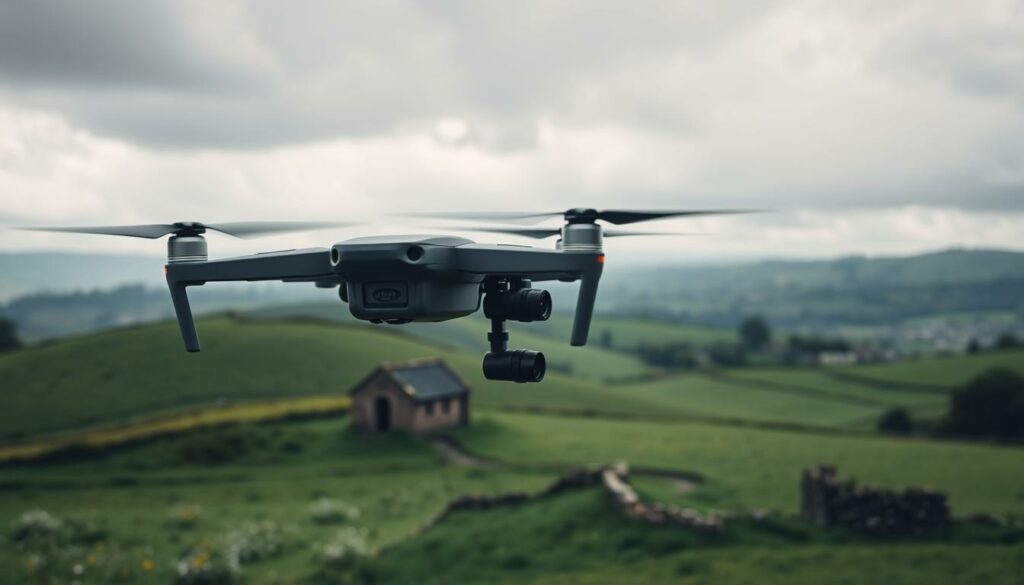
Mastering flight operations in British environmental conditions means anticipating how wind and temperature will impact your available airtime. Our changeable weather creates unique challenges that demand careful planning.
Impact of Weather and Temperature
Strong winds force your equipment to work much harder. The motors constantly adjust thrust to maintain position, increasing power consumption significantly.
Cold temperatures below 10°C cause noticeable voltage drops. I’ve seen planned 25-minute sessions cut to just 15 minutes due to unexpected coastal gusts.
| Weather Condition | Impact on Flight Time | Power Increase |
|---|---|---|
| Strong Wind (20+ mph) | Reduction of 25-30% | 10-30% more power needed |
| Cold Temperatures ( | Reduction of 15-20% | Voltage drops affect performance |
| Calm Conditions | Optimal performance | Standard power consumption |
Strategies for Flying in Windy and Cold Environments
I always fly with the wind on the outbound leg. This conserves precious power for the return journey against the breeze.
“A coastal filming session taught me to respect British weather—what should have been 25 minutes became a frantic 15-minute race against dropping power indicators.”
For cold weather operations, I store power cells inside my jacket. Body heat keeps them at optimal operating temperature before takeoff.
Brief hover tests after launch help warm the equipment to working temperatures. Monitoring voltage closely during winter operations is essential for safety.
Drone Battery Life for Filming: Tips and Techniques
Successful aerial projects require a systematic approach that transforms limited airtime into productive filming sessions. I’ve developed strategies that ensure every second counts when capturing footage from above.
Maximising Flight Durations with Effective Planning
My preparation begins days before any shoot. I study satellite maps and visit locations to plan efficient routes. This prevents wasted minutes searching for angles mid-air.
Creating detailed shot lists is essential. Knowing exactly what sequences I need allows for precise execution. This eliminates aimless flying that drains power unnecessarily.
| Planning Method | Time Saved | Efficiency Gain |
|---|---|---|
| Satellite Scouting | 3-5 minutes per flight | 15-20% more filming time |
| Detailed Shot List | 2-4 minutes per battery | 10-15% efficiency improvement |
| Weather Forecasting | 5-8 minutes in poor conditions | 25-30% power conservation |
Switching Batteries for Extended Sessions
For longer filming days, I carry multiple power units. Quick-swap systems allow replacements in under thirty seconds. This effectively multiplies available operation time.
I maintain a charging station on location to keep spare units ready. Rotating between three or four cells ensures continuous filming capability throughout the day.
“Professional work isn’t about squeezing every last second from a single charge—it’s about having enough resources to capture all required footage without power anxiety.”
This approach transforms stressful sessions into controlled, productive filming experiences. Proper preparation and resource management make all the difference.
Proper Charging Habits and Storage Practices
Your equipment’s longevity depends as much on what happens between flights as during them. I treat charging and storage as critical components of my workflow.
How to Charge Your Batteries Correctly
I always allow my units to cool completely before beginning any charging. This simple habit can add dozens of extra cycles to their usable life.
Smart charging hubs like the DJI Mini 4 Pro’s Two-Way Charging Hub revolutionise efficiency. They prioritise the unit with the highest remaining charge, getting one ready quickly for tight schedules.
LED status lights provide valuable feedback during charging. Different blinking patterns indicate progress or potential issues like temperature problems.
Storing Batteries for Long-Term Health
My cardinal rule: never store at 100% charge. If plans change, I discharge back to storage level using the equipment or hub.
For extended periods between use, I maintain 40-60% charge in cool, dry conditions. Temperature control is essential—I avoid extremes that accelerate degradation.
My personal routine includes fireproof LiPo bags and a simple log tracking idle times. These practices ensure reliability across hundreds of charge cycles.
Flight Techniques That Conserve Power
Many pilots don’t realise that their control inputs can make or break a filming session’s duration. I’ve learned that gentle handling preserves precious energy far more effectively than any technical specification.
Aggressive flying styles can reduce available airtime by 20-30% compared to smooth operation. Rapid acceleration forces motors to work harder, drawing substantial current that drains your power supply quickly.
Smooth Manoeuvres and Controlled Ascents
Hovering isn’t energy-free either. The equipment constantly adjusts to maintain position against wind and atmospheric changes. This continuous correction consumes more power than many anticipate.
My technique prioritises gradual movements and consistent speeds. I use intelligent flight modes that naturally limit acceleration, resulting in both smoother footage and better efficiency.
Takeoff and landing demand the most energy. I always launch from elevated surfaces when possible to reduce initial thrust requirements. Gradual descents prevent aggressive motor braking that wastes precious resources.
During critical low-power situations, I disable non-essential features like obstacle avoidance systems. This simple adjustment can provide those extra minutes needed to complete a shot safely.
Developing these habits doesn’t just extend flight time—it produces professional-looking footage and reduces wear on mechanical components. The benefits extend beyond mere power conservation.
Maintaining and Monitoring Battery Performance
Understanding when to replace your power source prevents unexpected failures during critical moments. Regular monitoring ensures your equipment performs reliably throughout its lifespan.
Tracking Charge Cycles and Voltage
Each complete charge cycle gradually reduces your battery capacity. Most LiPo units last 200-300 cycles before significant degradation occurs.
After 200 cycles, a power cell that once delivered 25 minutes might only manage 20. This performance drop continues with each additional use.
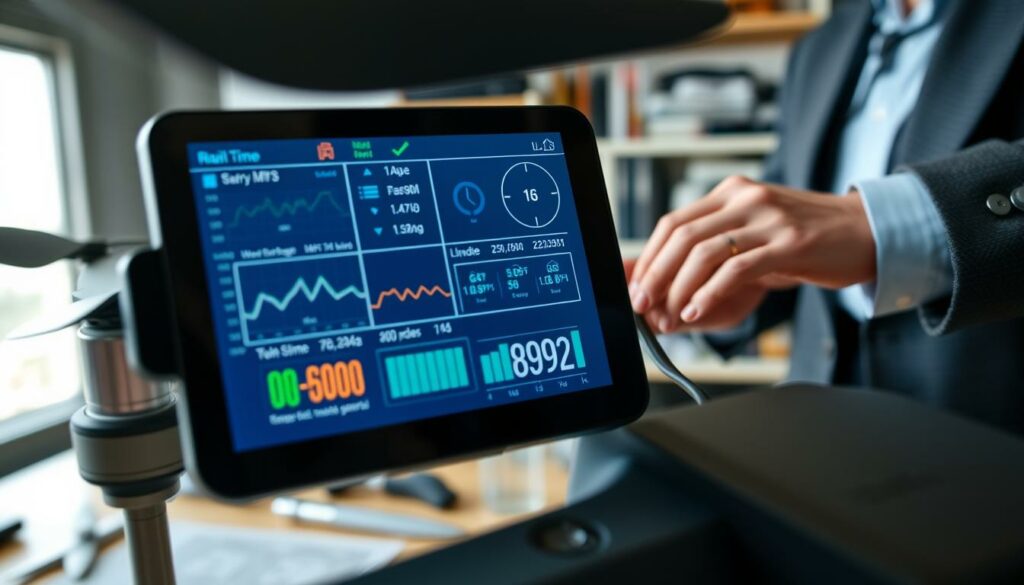
Modern companion apps display cycle counts and individual cell voltages. Consistent voltages across all cells indicate healthy battery performance.
When to Retire a Battery
I retire power cells after 150-200 cycles from professional work. They become practice units for testing or recreational flights.
Warning signs include reduced flight time, unusual warming, or physical swelling. Voltage inconsistencies between cells signal imminent failure.
Treating batteries as consumable items ensures safety. The cost of replacement is trivial compared to mid-air failure consequences.
Leveraging Technological Innovations and Accessories
Modern accessories have revolutionised how I manage power during location shoots. The right tools can dramatically increase your time in the air and overall workflow efficiency.
These innovations work alongside fundamental good practices. They provide data and flexibility for complex projects.
Utilising Smart Charging Hubs and Mobile Solutions
Intelligent hubs, like those from DJI, are game-changers. They charge multiple units sequentially and can even act as power banks.
Real-time monitoring apps offer incredible insight. You can track cell voltage and temperature during flight.
This data helps optimise your flying techniques for better performance. Reviewing it post-flight reveals valuable patterns.
| Accessory Type | Primary Benefit | Impact on Efficiency |
|---|---|---|
| Smart Charging Hub | Sequential charging & power bank function | Reduces downtime between sessions |
| Portable Power Station | Mains-power equivalent in the field | Enables unlimited swaps all day |
| Solar Panel Charger | Environmentally friendly remote charging | Ideal for multi-day expeditions |
For extended work, I always carry a portable power station. It provides unlimited charging capability on location.
Solar options are perfect for remote areas like UK national parks. My essential kit includes multiple batteries, a quality hub, and protective storage.
Remember, technology complements good habits. Proper planning and care remain the foundation of reliable operations.
Maximising Efficiency for Better Video Production
The most successful aerial shoots I’ve completed weren’t about having unlimited power, but about allocating limited resources with precision. This mindset shift transforms how you approach every project from conception to completion.
Efficiency begins long before you even power up your equipment. I treat each flight duration as a precious creative asset that must be strategically distributed across shots.
Planning Your Shots with Battery Life in Mind
My pre-production process always includes detailed location scouting using satellite imagery. This helps me identify optimal angles and flight paths in advance.
I create shot lists prioritised by importance, ensuring critical sequences get captured first. This prevents wasted moments searching for compositions mid-air.
| Planning Strategy | Time Saved Per Flight | Efficiency Improvement |
|---|---|---|
| Satellite Scouting | 3-5 minutes | 20% more filming time |
| Detailed Shot List | 2-4 minutes | 15% better resource use |
| Weather Planning | 5-8 minutes | 30% power conservation |
Grouping shots by location minimises unnecessary repositioning. This approach maximises creative output within each session’s constraints.
Integrating Battery Management into Your Workflow
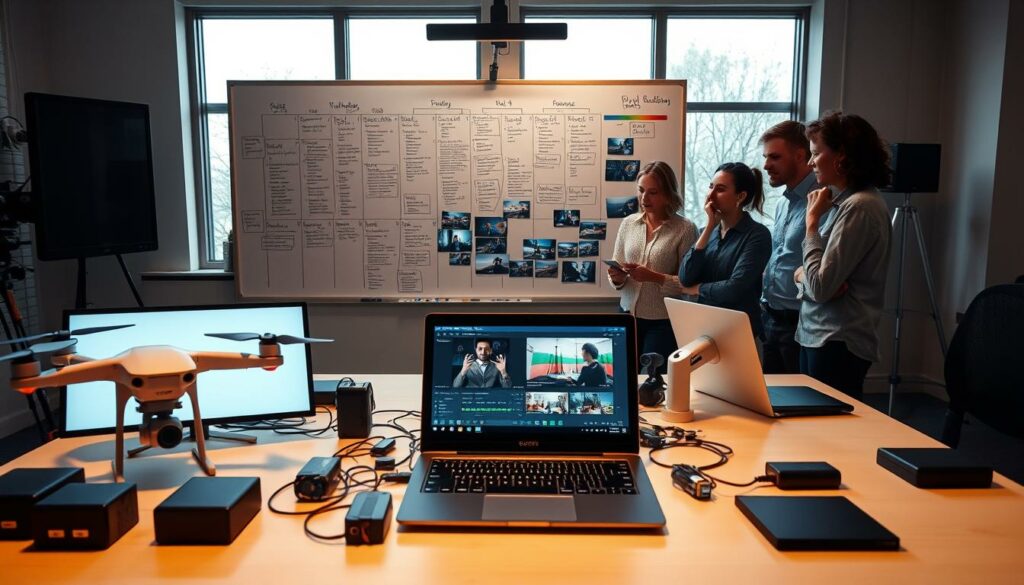
I structure filming days around power limitations, scheduling charging during natural breaks. Multiple units ensure continuous operation throughout complex projects.
Communication with clients about operational constraints manages expectations effectively. This professional approach ensures successful outcomes regardless of challenging conditions.
Modern equipment with extended capabilities, like certain compact models, provides enough airtime for complex sequences. Intelligent workflow integration turns limitations into creative advantages.
Conclusion
What separates amateur footage from professional results often comes down to intelligent power planning. Throughout this guide, I’ve shared the comprehensive approach that transforms limited airtime into reliable creative sessions.
The strategies we’ve covered—from understanding LiPo technology to optimising for British weather—work together to extend your operational window significantly. Conservative management with that crucial 20-30% safety reserve protects both your equipment and your results.
Whether you’re capturing landscapes or working on commercial projects, these techniques make every minute count. For complex assignments, services like HireDronePilot connect you with experts who bring professional power management to ensure project success.
Mastering these skills opens up incredible creative possibilities. Your next flight could capture that perfect shot you’ve been imagining—with the confidence that comes from proper preparation.
FAQ
How can I get the most minutes of flight time from my equipment?
I always start with careful planning. Mapping out my shots beforehand means less hovering and fewer wasted movements. I also make sure my aircraft is in top condition, with clean motors and propellers, to reduce the energy needed to stay aloft.
What is the single biggest factor that reduces performance?
In my experience, cold temperatures are the most significant drain. Lithium polymer cells, like those in my DJI models, lose capacity and voltage quickly in the cold. I keep my spares warm in an insulated case until just before use to combat this.
Is it better to fly until the power is nearly depleted?
Absolutely not. I never run my cells down to zero. Most manufacturers recommend landing when you have about 20-30% charge left. This prevents deep discharges that can permanently damage the internal chemistry and shorten its overall lifespan.
How should I store my equipment when not in use for extended periods?
For long-term storage, I always charge or discharge my cells to around 50-60% capacity. I then store them in a cool, dry place, away from direct sunlight. This “storage charge” level is ideal for maintaining cell health over weeks or months.
Can flying style really affect how long I can stay in the air?
Yes, dramatically. Aggressive manoeuvres, rapid ascents, and constant high-speed flying force the motors to work harder, consuming far more energy. I’ve found that smooth, controlled flying is the key to maximising my time filming.
Are there any accessories that can help extend my sessions?
I highly recommend a portable charging hub, like those from DJI. They allow me to charge multiple units from a car battery or a large power bank on location. This means I can quickly cycle through packs without needing a mains socket, which is perfect for all-day shoots.