
My journey with aerial photography began with the original compact flyer from this series. It was my first proper step into the world of flying cameras, and that little machine gave me the confidence to start creating. Now, after six months of daily use for my YouTube channel, I’ve formed some strong opinions about its latest evolution.
The question posed in our title is a bold one, and I want to address it head-on. Having tested this equipment extensively in real-world scenarios—from coastal shoots to urban environments—it has genuinely become my go-to choice for everyday content creation. The balance it strikes is quite remarkable.
What sets this model apart are some significant upgrades. The inclusion of omnidirectional obstacle sensing provides peace of mind, especially when filming in complex locations. Combined with enhanced camera capabilities, it feels specifically tailored for creators who need reliability and quality in a portable package.
While the image quality won’t rival cinema-grade rigs costing thousands more, it delivers an exceptional performance for its class and weight category. This makes it perfect for beginners seeking their first serious equipment, vloggers needing something lightweight, and enthusiasts wanting professional features without heavy costs or registration paperwork.
Key Takeaways
- This model represents a significant evolution in the sub-250g drone category
- After six months of testing, it has become my primary tool for content creation
- Key improvements include omnidirectional obstacle avoidance for enhanced safety
- The camera capabilities are notably enhanced compared to previous versions
- It offers an ideal balance of portability, features, and image quality for creators
- Perfect for beginners, vloggers, and hobbyists seeking professional results
- Provides excellent value without the need for official registration in the UK
Introduction and Overview
The moment I unpacked this newest addition to the lightweight drone family, several key improvements became immediately apparent. Holding the device for the first time, I noticed how the build quality felt surprisingly robust despite its featherlight construction.
This compact flyer measures just 148×94×64mm when folded, making it incredibly easy to slip into my camera bag. The small footprint means I can carry it everywhere without sacrificing space for other essential gear.
My initial impressions
What really stood out was the comprehensive obstacle avoidance system. Having full omnidirectional protection transforms the flying experience, especially for beginners or when shooting in tricky locations. This safety feature provides genuine peace of mind.
The camera specifications impressed me right away. With a 1/1.3-inch sensor offering 48 megapixels and a bright F1.7 lens, this equipment delivers serious imaging power. It captures 4K60 video in multiple profiles including HDR and D-Log M for creative flexibility.
Key features at a glance
Staying under 249 grams is a significant advantage here in the UK. This weight means no registration requirements, opening up more flying opportunities without bureaucratic hurdles. The dual aspect ratio capability is perfect for social media creators.
Intelligent flight modes like ActiveTrack 360 and Waypoints help achieve professional results with minimal piloting skill. The standard battery provides up to 34 minutes of flight time, while the Plus option extends this to 45 minutes.
Starting from £759, this model offers various controller choices and bundle configurations to suit different needs and budgets. It represents excellent value for content creators seeking professional features in a portable package.
Unboxing and First Impressions
The unboxing process felt premium from the moment I lifted the lid, with each component thoughtfully arranged. Everything was securely nestled in custom foam, showing careful attention to both protection and presentation.
Packaging and kit contents
I tested the Fly More Combo, which offers exceptional value for serious creators. The standard package includes the essential basics, but the combo transforms your flying experience.
“The sequential charging hub alone justifies the upgrade for anyone planning multiple flights in a day.”
| Component | Standard Kit | Fly More Combo |
|---|---|---|
| Flight Batteries | 1 | 3 |
| Spare Propellers | 2 pieces | 3 pairs |
| Charging Solution | USB-C cable | Multi-charger hub |
| Carry Case | Not included | Zippered shoulder bag |
Controller choice is crucial. The RC-N2 requires your smartphone, while the RC 2 has a built-in screen. I preferred the latter for its convenience during quick shooting sessions.
Setting up the drone
Getting started was remarkably straightforward. Unfolding the four arms revealed a well-designed compact frame. The improved gimbal cover slides on effortlessly, protecting both camera and forward sensors.
Inserting the battery and powering up took seconds. The DJI Fly app guided me through pairing and essential safety information. I immediately added a microSD card—the internal memory only stores about three minutes of footage.
The USB-C port handles both data transfer and charging, though I found the dedicated hub more efficient for multiple batteries. This mini pro model truly considers a creator’s practical needs.
DJI Mini 4 Pro review
Six months of daily flying has given me a comprehensive understanding of where this equipment truly excels. Having progressed from the Mini 2 through various other models, I can confidently assess this latest iteration’s place in my creative workflow.
The dji mini pro has secured its position as my everyday flying companion. It delivers professional results without the bulk or complexity of larger systems. This makes it perfect for creators who need quality footage on the go.
Some reviewers characterise this mini pro as a “smartphone camera with wings.” While the sensor size comparison is technically accurate, this description undersells its capabilities. The combination of intelligent flight modes and obstacle avoidance creates results that surpass simple mobile photography.
This model is genuinely ideal for three main groups. Beginners will appreciate the safety features and ease of use. Content creators benefit from the portability and social-media-friendly formats. Hobbyists get serious features without professional pricing.
However, commercial pilots and pixel-perfectionists should consider stepping up to the Air 3 or Mavic 3 series. Those requiring absolute image quality will find the limitations of smaller sensors noticeable at 100% zoom.
In the coming sections, I’ll detail the build quality, camera performance, and flight experience. I’ll also compare it with previous models and offer practical tips for UK flyers.
Set realistic expectations: this drone won’t replace high-end professional equipment. But it represents a significant narrowing of the gap between entry-level and pro-level drones. The sub-250g category has never been this capable.
Design, Build Quality and Ergonomics
The physical design of this compact aircraft demonstrates how careful engineering can overcome weight limitations. Every gram was considered to stay below critical regulatory thresholds.
Compact design and lightweight benefits
At exactly 249 grams, this mini pro model cleverly sits just below registration requirements. The folded size of 148×94×64mm means it occupies only two lens slots in my camera bag.
Lightweight plastic construction maintains the crucial weight limit. Despite this, the build quality has proven surprisingly durable over six months of regular use.
My drone survived a clip on a shingled roof and entanglement in thin branches. Both incidents resulted in only minor scuffing without functional damage.
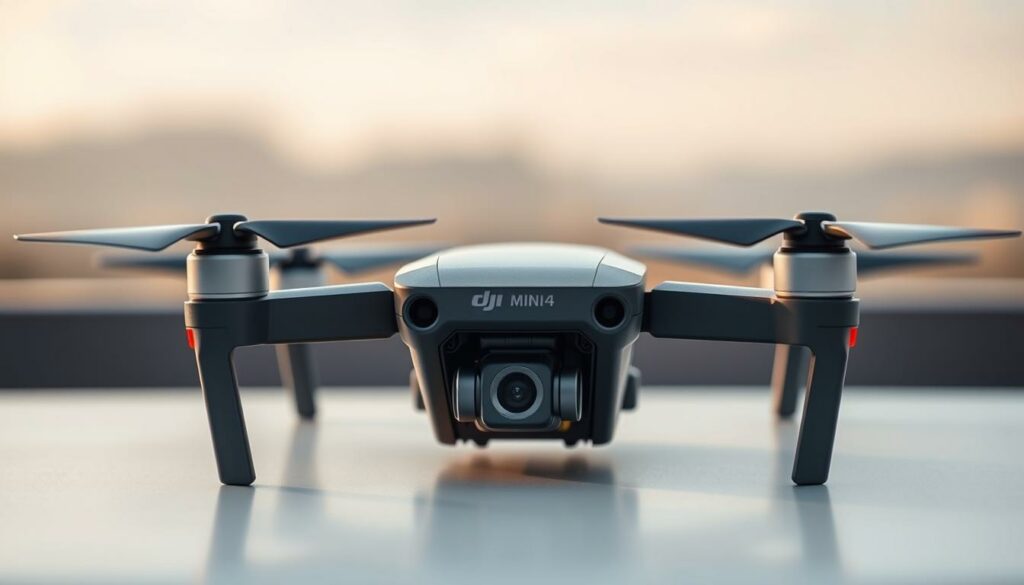
Enhanced sensor placements and gimbal improvements
Six obstacle avoidance sensors are strategically placed around the body. The forward, backward, side, upward, and downward sensor array provides comprehensive protection.
The improved gimbal cover slides on effortlessly. This contrasts with previous models where I rarely used the frustrating original design.
Cooling vents behind the gimbal prevent overheating. However, the open design means I avoid flying in rain or snow.
| Specification | Measurement | Benefit |
|---|---|---|
| Weight | 249g | No registration required |
| Folded Size | 148×94×64mm | Extreme portability |
| Unfolded Size | 298×373×101mm | Stable flight performance |
Staying under 249 grams requires compromises. Yet this mini pro makes intelligent choices about material usage. The result is a drone that balances performance with regulatory freedom.
Camera Performance and Image Quality
Testing the imaging capabilities revealed some fascinating strengths and practical limitations. The 1/1.3-inch Quad Bayer sensor is a clever piece of technology. It captures 12-megapixel images by default but can combine data for a 48-megapixel mode.
Straight-out-of-camera JPEGs are bright and colourful. They look excellent for social media when viewed at normal sizes. However, pixel-peeping at 100% reveals the small sensor’s limitations, with details appearing softer.
JPEGs vs. RAW file outputs
I strongly prefer the 12MP mode over the 48MP option. The higher resolution introduces more colour noise, making images look less sharp. For clean results, I keep the ISO at 400 or below, as noise increases significantly at ISO 800.
Shooting RAW provides more editing flexibility, but the files appear about one stop underexposed compared to JPEGs. You can recover about two stops from shadows, but blown highlights are difficult to fix. Getting the exposure right in-camera is crucial.
Low-light performance and colour reproduction
The bright F1.7 lens handles dim conditions reasonably well. Nighttime cityscapes come out surprisingly clean, though noise becomes visible faster than on larger-sensor systems.
For video, I always use the D-Log M flat profile with manual settings. This gives me the most control over colour grading in post-production. The results are consistently vibrant and match my creative vision.
Flight Experience and Intelligent Features
Flying with full omnidirectional protection gave me a level of confidence I hadn’t experienced with previous models. The comprehensive obstacle avoidance system truly transforms how you approach complex environments.
Omnidirectional obstacle avoidance
Testing the three avoidance modes revealed their practical applications. Brake mode provides simple stopping safety, while Bypass takes conservative detours. The Nifty Bypass option offers more nimble path adjustments.
However, this feature isn’t foolproof. Thin branches and high speed scenarios can challenge the sensors. Pilots must maintain visual awareness despite the advanced technology.
| Flight Mode | Maximum Speed | Sensor Status | Best Use Case |
|---|---|---|---|
| Sport | 36 mph | Disabled | Open areas only |
| Normal | 24 mph | Enabled | Balanced everyday use |
| Cine | 11 mph | Enabled | Smooth cinematic shots |
Intelligent flight modes and ActiveTrack 360
The intelligent flight systems impressed me during testing. ActiveTrack 360 maintained perfect following while cycling through wooded paths. The on-screen jog wheel allows precise control over tracking angles.
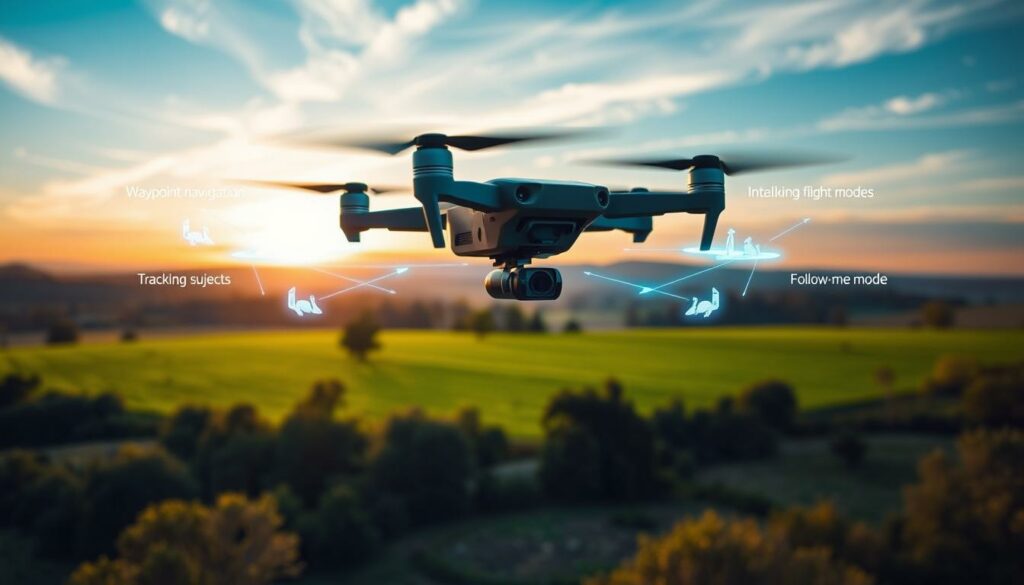
QuickShots and Waypoints provide creative flexibility for repeatable sequences. The GPS lock took about 45 seconds in my tests, with reliable hover stability. Return-to-home safety features provide peace of mind during longer flight sessions.
Battery Life and Flight Time
When planning my shooting sessions, battery performance always becomes a critical consideration that shapes my entire workflow. The standard Intelligent Flight Battery delivers up to 34 minutes of flying time while keeping the equipment under the crucial 249-gram limit.
In my real-world testing, I consistently achieved close to the advertised 34-minute flight time when operating in Normal mode with obstacle avoidance enabled. Calm conditions helped maximise this battery life significantly.
However, mixing Normal and Sport modes reduced my average flight time to around 25 minutes. The higher speeds and disabled sensors in Sport mode drained the flight battery much faster during aggressive flying.
The Intelligent Flight Battery Plus offers an extended 45-minute option but pushes the weight above registration thresholds. This Plus battery isn’t available in Europe, likely due to regulatory considerations.
For casual photography, one flight battery often sufficed. But dedicated video projects required multiple batteries. The Fly More Combo’s three batteries and sequential charger eliminated lengthy waits between flights.
Wind, temperature, and flying style all impact actual flight time. The operating range of -10° to 40°C proved reliable during UK winter conditions, though cold weather slightly reduced battery performance.
The DJI Fly app provides clear battery warnings and automatically initiates Return to Home when power gets critically low. This safety feature gives peace of mind during longer shooting sessions.
Comparisons with Previous Models and Competitors
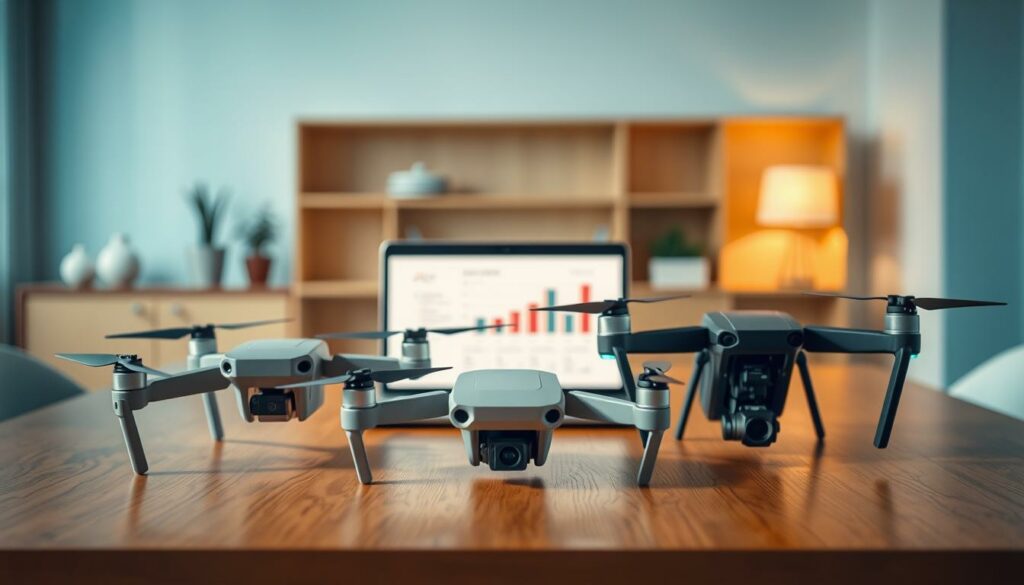
Deciding on the right drone often comes down to balancing features against budget and your specific needs. This section compares the mini pro with other popular drones to help you make the best choice.
Improvements over the Mini 3 Pro
The key upgrades from the previous model are significant. You get full omnidirectional obstacle sensing instead of just three-way protection.
New video profiles like HDR and D-Log M offer greater creative flexibility. The advanced ActiveTrack 360 is a major step up from standard tracking for following moving subjects.
If you are a careful pilot who flies in open spaces, the older model remains a great option. But for obstacle-rich environments or frequent tracking use, the new pro features are worth the investment.
Alternative options for different budgets
There are several other models to consider. The standard version of the previous series costs less but has no obstacle sensors, making it suitable only for experienced pilots.
The budget-friendly older SE model offers basic functionality for beginners. For a non-DJI alternative in the 249g class, the Autel Evo Nano+ is a capable but more expensive choice.
When you need better image quality, moving up to the dji mavic series or the Air 3 is the logical step. These drones feature larger sensors but require registration due to their higher weight.
| Drone Model | Key Feature | Best For |
|---|---|---|
| Mini 3 | Similar Camera | Experienced pilots in open areas |
| Mini 2 SE | Low Cost | Absolute beginners on a budget |
| Autel Evo Nano+ | No Geofencing | Pilots seeking a DJI alternative |
| DJI Air 3 | Dual-Camera System | Hobbyists wanting telephoto capability |
| Mavic 3 Series | Large Sensor | Professional-grade image quality |
Remember, all drones over 249g require registration. Commercial work needs a licence regardless of the model you choice.
Tips for UK Flyers and Safety Considerations
Flying responsibly in the UK requires more than just mastering the controls. The 249-gram weight places this equipment in the C0 category, meaning no registration is needed. However, you must still follow the Drone Code and respect local restrictions.
Registration exemptions and local regulations
The European C0 rating brings a 120-metre height limit. I rarely reach this ceiling during normal filming. Mountainous areas might challenge this restriction, but lower altitudes often yield better footage anyway.
Always check the DJI FlySafe map before takeoff. Airspace restrictions change frequently near airports and sensitive locations. New pilots should consider a safety course to understand these rules thoroughly.
Practical advice for safe flying
I strongly recommend DJI Care coverage. It replaced my damaged equipment for a small fee when electronics failed. This protection includes flyaway incidents where you completely lose your drone.
Essential safety practices include:
- Maintaining visual line of sight at all times
- Checking weather conditions before flight
- Inspecting propellers for damage
- Avoiding flights over crowds
Obstacle sensors can miss thin branches and power lines. Keep your drone within sight and don’t rely entirely on technology. Strong winds affect small drones more than heavier models, causing unstable footage.
ND filters help maintain proper shutter speeds for smooth video. My most-used filters are ND16 and ND32 for normal conditions. These simple accessories significantly improve results.
Join local flying communities to discover approved locations and share experiences. Being prepared to explain your activity politely addresses public concerns. Following these guidelines will keep your flying both legal and enjoyable.
Conclusion
After half a year of filming everything from coastal scenes to cityscapes, my verdict on this compact flyer is clear. This mini pro model has genuinely earned its place as my everyday drone.
The balance it strikes is remarkable. You get a capable camera for stunning video, full obstacle sensing for safety, and that crucial sub-250g weight. For beginners and content creators, it’s an exceptional pro choice.
Image quality won’t rival larger-sensor systems, and wind can be a challenge. But these are fair trade-offs for the portability and freedom it offers.
Small drones are no longer just compromises. This mini pro proves that entry-level gear can now deliver professional-looking results for most creators.
FAQ
Does its weight mean I don’t need to register it in the UK?
Yes, that’s one of its biggest advantages. Because it weighs under 250g, you’re exempt from the UK’s operator registration requirement. However, you must still follow the Drone Code, which includes flying responsibly and respecting privacy.
How does the camera compare to the Mini 3 Pro?
I found the image quality to be a noticeable step up. The main improvement is the ability to record in 4K at 60fps and 100fps for slow-motion, which the previous model couldn’t do. The colour science and dynamic range also feel more refined.
Is the omnidirectional obstacle avoidance reliable?
A> In my experience, it’s incredibly effective for a drone of this size. The sensors on all sides give me much more confidence when flying in complex environments, especially when using intelligent flight modes that control the drone’s movement automatically.
What is the real-world battery life like?
You can expect a solid 30 to 35 minutes of flight time per battery under normal conditions. This gives you ample opportunity to get the shots you need. I always recommend buying the Fly More Kit for extra batteries to extend your sessions.
Can I use my existing remote controller from an older model?
It depends. The new DJI RC 2 with the built-in screen is fantastic, but the drone is also compatible with the older RC-N1 controller. However, to access all the new features, using the latest controller is the best choice.
Are there any major flight restrictions I should know about?
Absolutely. Even with its lightweight profile, you must avoid flying near airports, over crowds of people, or above 120 metres (400 feet). Always check for local bylaws and use an app like NATS Drone Assist to plan your flights safely.