
What if the drone you’ve been told is the only worthwhile choice isn’t actually your best option? As aerial technology continues to evolve at a remarkable pace, many people are discovering that alternatives can offer surprising advantages.
I’ve spent considerable time flying various models from both leading manufacturers. The market has transformed dramatically from simple hobbyist gadgets to sophisticated tools for professional photography and videography. This evolution means there’s never been a better moment to explore what’s available beyond the usual suspects.
Understanding the differences between these technology giants is crucial for anyone making an investment. Whether you’re focused on camera quality, flight range, or intelligent features, each brand brings something unique to the table. My hands-on experience has revealed some compelling reasons why alternatives deserve serious consideration.
Throughout this comprehensive comparison, I’ll break down the key areas that matter most to users. We’ll examine design, camera capabilities, flight performance, and overall value. This will help you make an informed decision that matches your specific needs and budget.
Key Takeaways
- The drone market offers genuine alternatives to the dominant brand
- Technology advancements have created more competitive options
- Camera quality varies significantly between different models
- Flight range and performance should influence your purchasing decision
- Personal experience with both brands reveals important differences
- Understanding these distinctions helps photographers and videographers
- Now is an excellent time to explore non-mainstream alternatives
Introduction
The aerial technology landscape has shifted dramatically in recent years, opening up new possibilities beyond the mainstream options. I’ve watched this evolution firsthand as flying cameras became essential tools across various sectors.
Overview of Today’s Drone Market
These devices have transformed from niche hobbies into professional instruments. They now serve photography, agriculture, and surveillance needs with impressive capability.
The market leader has dominated for many years with consistent innovation. However, new competitors offer compelling alternatives with different strengths. This diversity benefits users seeking specific features.
Purpose of the Comparison
My goal is to provide an honest assessment of available options. I’ll examine camera quality, flight performance, and overall value. This helps people make informed decisions based on their unique requirements.
Understanding these differences is crucial whether you’re a beginner or experienced pilot. The right choice depends on your budget and intended use cases.
| Time Period | Primary Applications | User Base |
|---|---|---|
| 5+ Years Ago | Hobbyist photography, basic videography | Technology enthusiasts |
| Present Day | Professional filmmaking, agricultural monitoring | Commercial operators, content creators |
| Future Trends | Delivery services, advanced surveillance | Businesses, government agencies |
Brand Histories: Autel and DJI
Behind every successful aerial device lies a unique corporate history that shapes its development philosophy. I find it fascinating how different starting points lead to distinct approaches in this competitive field.
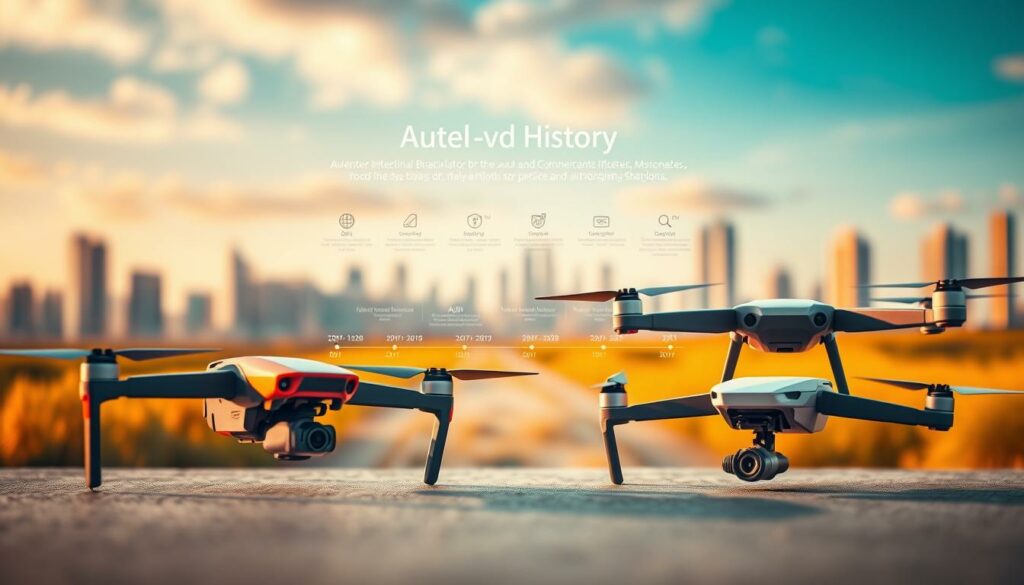
Each company brings its own engineering heritage to the table. This background significantly influences their current technological offerings and market positioning.
Autel Robotics: From Automotive Diagnostics to Drones
This manufacturer began as an automotive diagnostics specialist before entering the aerial market. Their engineering background gives them a practical approach to reliability.
They’ve focused on creating professional-grade equipment with advanced imaging capabilities. Many photographers appreciate their commitment to cutting-edge camera technology.
DJI: Pioneering Drone Technology Since 2006
Founded nearly two decades ago, this pioneer has consistently led the industry. Their extensive experience shows in their comprehensive product range.
Their expertise in stabilisation systems provides remarkably steady footage. This specialisation gives them a significant advantage in challenging conditions.
Both companies have evolved considerably over the years. While one built a vast ecosystem, the other concentrated on specific professional segments.
As an author who’s tested both brands, I appreciate how their histories influence current offerings. Understanding these backgrounds helps explain their different technological approaches.
Design & Build Quality Showdown
When it comes to physical construction, the two manufacturers take distinctly different approaches that reflect their core philosophies. I’ve found this difference becomes immediately apparent during hands-on use.
Sleek Portability vs. Rugged Durability
One brand prioritises compact, travel-friendly designs that fold down remarkably small. Their emphasis on sleek portability makes their products ideal for photographers who frequently move between locations.
The other manufacturer focuses on robust construction that can withstand challenging flying conditions. Their approach to build quality appeals to professionals who need extra durability for demanding work environments.
I’ve tested specific models like the 1187-gram foldable design against ultra-portable alternatives. The trade-offs between portability and durability are significant considerations for different users.
| Design Aspect | Portability-Focused Approach | Durability-Focused Approach |
|---|---|---|
| Weight & Size | Ultra-compact folding mechanisms | Mid-size with reinforced structure |
| Construction Materials | Lightweight alloys and composites | Heavy-duty plastics and metals |
| Intended Use Cases | Travel photography, casual flying | Professional work, harsh conditions |
| Long-Term Reliability | Excellent for careful users | Superior for demanding applications |
Your choice depends largely on your typical flying environment and transportation needs. Both design philosophies offer compelling advantages in their respective terms of use.
Camera Capabilities and Image Quality
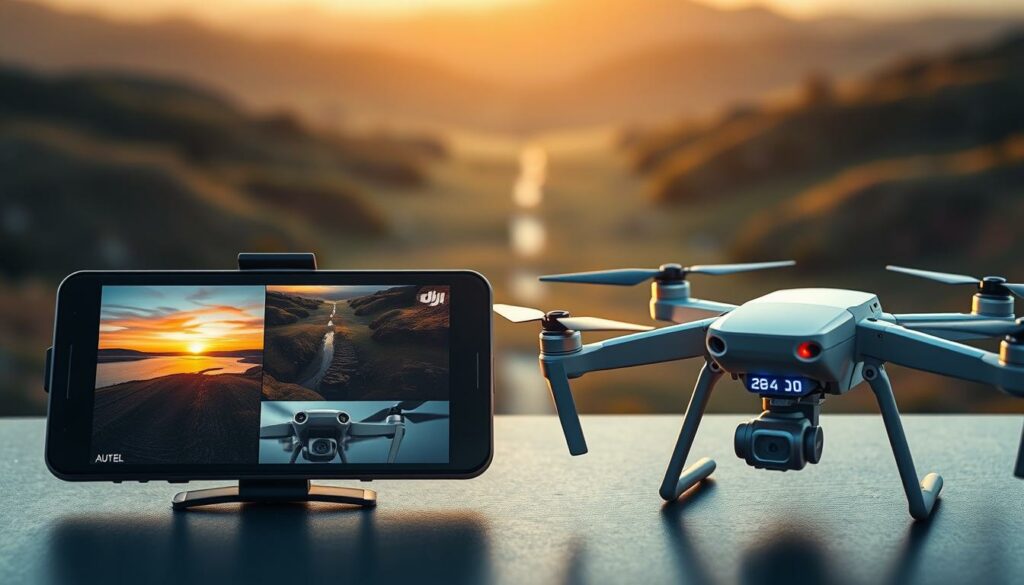
Image quality separates professional aerial work from amateur footage, making camera specifications a top priority. Through extensive testing, I’ve found significant differences in how each manufacturer approaches photographic performance.
Professional Image Quality and Sensor Advantages
One brand consistently prioritises larger sensors for superior detail capture. Their 1-inch type, 20-megapixel sensor with controllable aperture delivers exceptional results. The 29mm equivalent lens provides better corner quality than standard 24mm implementations.
This approach benefits photography enthusiasts who value image quality above all else. The larger sensor size ensures detailed shots with excellent dynamic range. For still photography, the RAW files offer impressive flexibility in post-processing.
Video Performance and Stabilisation Features
Video capabilities reveal some interesting trade-offs. The advertised “6K” resolution is actually 5.4K maximum, which still provides crystal-clear footage. However, limitations emerge at higher frame rates with significant crop factors.
Stabilisation technology shows another key difference. One manufacturer’s gimbal systems demonstrate superior expertise, producing remarkably steady footage in challenging conditions. This consistency across various lighting situations makes their cameras particularly versatile.
Creative modes like Dynamic Track and hyperlapse impose restrictions that affect flexibility. Understanding these limitations helps users choose the right system for their specific video needs.
Flight Performance: Time, Range and Safety Features
After extensive field testing, I’ve found that advertised specifications often differ significantly from real-world flight performance. This gap between marketing claims and actual results can impact your shooting schedule dramatically.
Battery Life and Real-World Flight Times
Battery performance is crucial for productive flying sessions. While one manufacturer claims 40 minutes of flight time, my testing yielded only 27 minutes under normal working conditions.
The controller’s battery life also affects workflow. Some controllers only last through three drone battery cycles, requiring frequent recharging during extended shoots.
Obstacle Avoidance and Other Safety Mechanisms
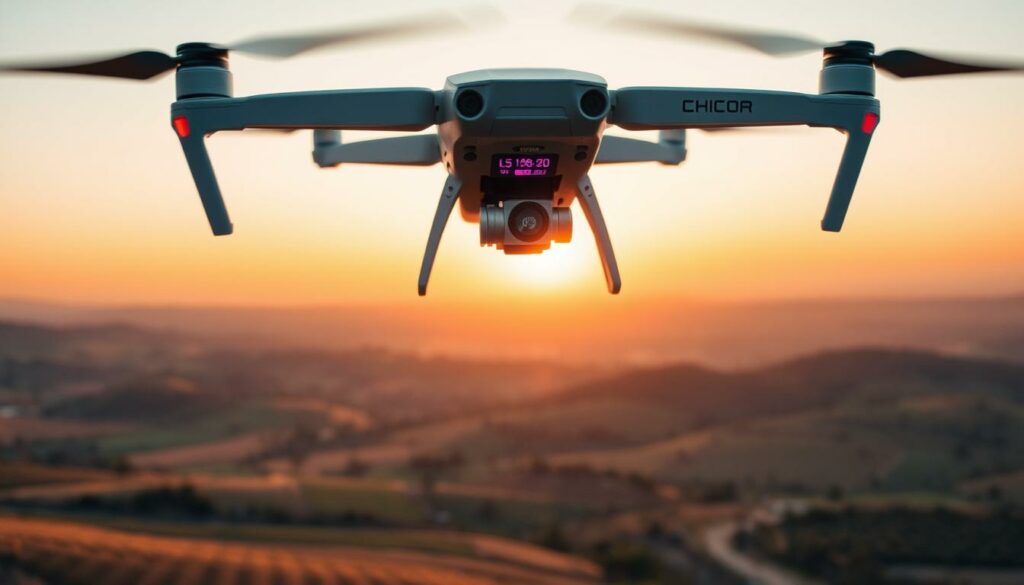
Safety features provide confidence when flying in complex environments. One brand’s 360-degree obstacle sensing successfully prevents accidents, though it can sometimes be overly cautious.
The other manufacturer offers advanced protocols including real-time alerts and automatic return-home functions. Both systems deliver reliable protection, but with different approaches to safety.
| Performance Aspect | Brand A Approach | Brand B Approach |
|---|---|---|
| Advertised Flight Time | 40 minutes maximum | Slightly less but more accurate |
| Real-World Duration | 27 minutes average | More consistent with claims |
| Obstacle Avoidance | 360-degree system | Advanced traffic alerts |
| Range Performance | Sufficient for most needs | Marginally better distance |
Understanding these practical differences helps you plan battery requirements and choose the right safety system for your flying environment.
Intelligent Flight Modes & Software Experience
The software experience often determines whether a drone feels intuitive or frustrating to operate. I’ve found this aspect separates casual users from serious photographers more than any hardware specification.
Overview of Intelligent Flight Features
Both platforms offer impressive automated shooting modes. The Autel Evo 2 Pro V3 includes Panorama, Hyperlapse, and Dynamic Track features. However, I noticed significant limitations when testing these functions.
Dynamic Track mode crops heavily and restricts video to 4K at 30fps. This limitation affects creative options compared to more flexible tracking systems. The hyperlapse modes also force a 16:9 crop, even in RAW format.
User Interface and Software Customisation
One brand’s software is renowned for its user-friendly approach, making it accessible for beginners. Their quality-of-life features like master shots and cruise control simplify complex manoeuvres.
The Autel system offers deeper customisation for experienced pilots. You can choose any exposure mode or colour profile for each capture. Their open SDK allows third-party development, which professional users appreciate.
Comparative Limitations and Strengths
The controller design reflects these different philosophies. One resembles a comfortable gaming device with fold-out kickstand. It has only five buttons and two dials, leaving unused space that could host more controls.
Each system serves different user needs effectively. Beginners benefit from intuitive interfaces, while professionals value the customisation options available in more advanced software versions.
Autel drones vs DJI: Detailed Comparative Analysis
When comparing these two leading brands, the price-to-performance ratio reveals some surprising truths. I’ve discovered that while one manufacturer offers competitive pricing, the other delivers a more polished overall experience that justifies its premium.
Affordability and Value for Money
The most challenging realisation came when testing the Evo 2 Pro V3 against the Mavic 3 Classic. Both sit at similar price points, yet the latter provides significantly better performance and fewer limitations.
Package deals highlight this difference clearly. For the same investment, you typically receive more accessories and batteries with one brand’s combo offerings. This creates better long-term value despite the initial similar cost.
User Experience: Ease of Use and Customisation
Flight characteristics show the most dramatic contrast. One model accelerates slowly, requiring over 150 metres to reach full speed even in its fastest mode. There’s noticeable input latency, particularly during ascent.
The other platform feels immediately responsive and agile. It inspires confidence with precise control and mature flight dynamics. This difference in handling quality significantly impacts the overall user experience.
Software approaches also diverge. Beginners appreciate intuitive interfaces with automated features, while advanced users value deeper customisation options. Your preference depends largely on your technical comfort level.
Conclusion
Making your final choice between these two industry leaders comes down to understanding your personal priorities. Both companies produce excellent products with distinct strengths that serve different user needs effectively.
While the Evo Pro models deliver impressive image quality with large sensors, they lack the polished flight experience and mature software of the Mavic series. For most users in 2026, DJI’s offerings provide better overall value with superior dynamics and fewer limitations.
However, Autel remains a compelling choice for specific scenarios. Their open SDK for custom development and built-in mission planning appeal to users needing specialised capabilities beyond standard photography.
Ultimately, your decision should weigh design, camera performance, battery life, and software features against your budget. Most people will find greater satisfaction with the more refined platform, but alternatives deserve consideration when specific requirements align with their unique advantages.
FAQ
Which brand offers better value for money?
In my experience, it depends on your priorities. Autel often provides competitive features, like a 1-inch sensor, at a more accessible price. However, you might find that the overall ecosystem and software polish from the other brand can justify its higher cost for professional work.
How does the flight time compare between the two?
I’ve found that both offer impressive battery life. Some Autel models boast longer official flight times, but real-world performance is very similar. Factors like wind and flying style will affect your actual time in the air with either brand.
Is one brand’s camera system definitively better?
A> Not definitively, no. Both produce stunning image quality. The other brand has a slight edge in video codecs and colour science, which many filmmakers prefer. Autel counters with fantastic stills photography capabilities and sometimes a wider aperture for better low-light shots.
Are Autel products a good alternative for professional photography?
Absolutely. I’ve been very impressed with the camera quality on models like the Evo Lite+. The large sensor and adjustable aperture give you great control, making them a solid choice for serious photographers seeking a high-quality alternative.
How do the safety and obstacle avoidance features stack up?
This is a key area of competition. The other brand’s systems are incredibly refined and reliable. Autel has made huge strides, offering full omnidirectional avoidance on their premium models. For most pilots, both systems provide excellent protection during flight.
Which company has better customer support and software updates?
Based on my research and user reports, the other brand has a more established global support network. Autel’s support is improving, but consistency can vary. For software, the other brand typically delivers more frequent updates with new intelligent flight modes.