
Have you ever wondered how professional filmmakers and photographers create those mesmerising moving images that seem to pull you right into the scene?
I want to introduce you to the exciting world of dynamic camera movements. These methods can completely transform your visual storytelling. They create compelling narratives that truly captivate your audience.
In my experience, mastering orbiting and reveal methods unlocks incredible creative potential. They allow you to showcase subjects in ways that static frames simply cannot achieve. This adds a remarkable depth and professional polish to your work.
I will explain how these approaches involve moving the camera around a central focus or gradually unveiling it. This builds movement and anticipation, drawing viewers in and holding their attention.
This guide will share practical insights I have gathered. We will explore how these principles work across different genres. This includes everything from landscape and architectural work to product photography and cinematic videography.
While these methods might seem complex initially, I will show you how breaking them into fundamental steps makes them accessible to creators at any level.
Key Takeaways
- Dynamic camera movements can transform static photography into engaging visual stories.
- Orbiting and reveal techniques add professional depth and polish to your projects.
- These methods create a sense of movement and anticipation for the viewer.
- The principles are applicable across various photography and videography genres.
- Complex-looking shots can be mastered by breaking them down into simple steps.
- Mastering these skills can help distinguish your creative portfolio from others.
Introduction to Point of Interest Shots
The magic of visual storytelling often begins with identifying that one element that first caught your creative eye. This central focus becomes the anchor around which your entire composition revolves.
In my experience, these specialised frames centre on a specific subject that demands attention. The camera movement or positioning guides the viewer’s eye exactly where you want it. This transforms your equipment from a passive recorder into an active storytelling partner.
I’ve discovered the most effective approach makes audiences feel like they’re discovering the subject themselves. This creates an immersive experience that static compositions struggle to match. The technique adapts brilliantly across different genres.
| Aspect | Static Composition | Dynamic Point of Interest |
|---|---|---|
| Viewer Engagement | Passive observation | Active discovery |
| Storytelling Impact | Single moment captured | Progressive narrative built |
| Technical Complexity | Simpler execution | Requires careful planning |
| Creative Versatility | Limited movement options | Multiple approaches possible |
The true artistry lies not in what you show, but in how you guide your audience to see it.
Successful work requires understanding why your subject matters to the story. The movement should enhance rather than distract from the viewer’s connection. Taking time to identify your focal element clearly before shooting dramatically improves results.
This foundation supports all subsequent technical and creative decisions. Whether orbiting products or revealing landscapes, the principle remains consistent. Your central subject guides every choice you make.
Fundamentals of Orbiting Techniques
Moving your camera in a smooth circular path can reveal your subject’s dimensions in ways static photography cannot achieve. This technique creates a dynamic sense of three-dimensional space that draws viewers into your composition.
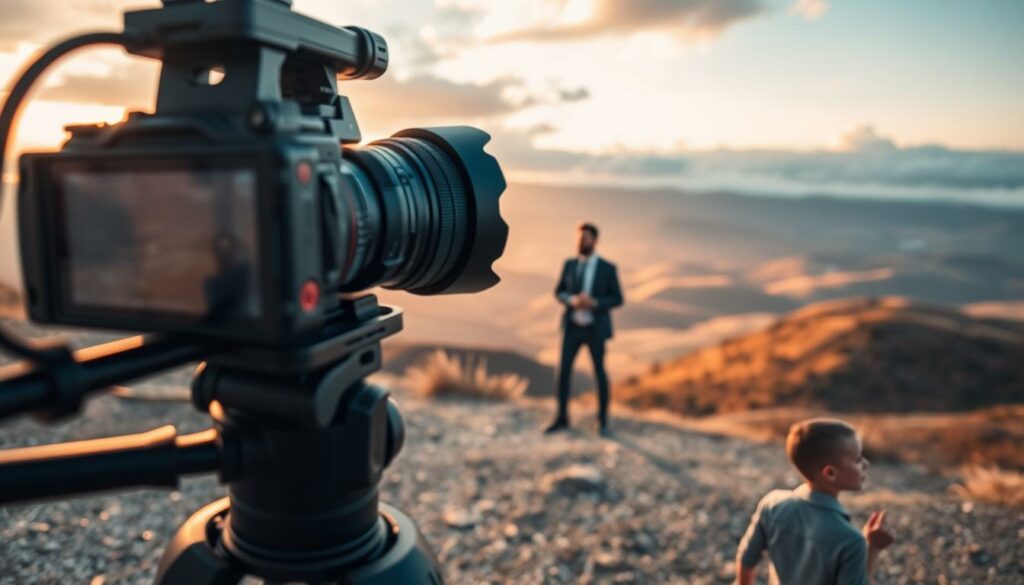
Understanding Camera Movement
In my experience, the quality of your orbiting shot depends heavily on movement mechanics. Whether using a gimbal, drone, or handheld approach, consistent motion is essential. Smooth camera movement separates professional results from amateur attempts.
I’ve found that different tools create distinct visual effects. Handheld work adds organic energy, while stabilised equipment offers polished precision. Each method serves different creative purposes in photography.
Planning Your Orbit
Careful preparation saves considerable time and ensures better results. I always scout locations to identify potential obstacles and determine the optimal radius from my subject. Visualising the starting and ending frame positions helps create cohesive movement.
The background deserves equal attention during orbit planning. As you circle your subject, different elements enter and exit the frame. This can either enhance or distract from your main composition.
| Orbit Approach | Best For | Key Considerations |
|---|---|---|
| Handheld | Organic, dynamic feel | Requires steady movement practice |
| Gimbal Stabilised | Professional smoothness | Needs equipment setup time |
| Drone | Aerial perspectives | Weather and regulation factors |
Testing different heights and distances before your final shot reveals how subtle adjustments affect the overall composition. This preparation ensures your orbiting technique showcases subjects effectively.
Mastering Reveal Techniques for Dramatic Shots
The art of revealing your focal element at just the right moment separates amateur work from professional storytelling. I find this approach builds wonderful anticipation that keeps audiences engaged throughout your visual narrative.
When I plan a reveal, I focus on controlling exactly when the main subject enters the viewer’s awareness. This careful timing creates those satisfying moments of discovery that make footage memorable.
Timing and Execution
In my experience, the most effective reveals happen when you understand the rhythm of audience attention. People need enough time to sense something is coming but not so much that they lose interest before the payoff.
I’ve discovered that camera movement speed is crucial for smooth execution. Whether using a slider or manual pan, consistent motion maintains the build-up that makes reveals work so well.
| Reveal Method | Best Application | Emotional Impact |
|---|---|---|
| Foreground Parting | Landscape and architectural work | Awe and wonder |
| Camera Pan | Character introductions | Surprise or romance |
| Obstruction Removal | Product photography | Delight and discovery |
Alfred Hitchcock mastered this approach beautifully. In Rear Window, he uses Jimmy Stewart’s perspective to gradually introduce Grace Kelly’s character. The delayed reveal builds wonderful tension while establishing expectations.
The way I approach these shots always considers what emotion I want the audience to experience. The background should provide meaningful context rather than just being generic filler behind the main subject.
Composition Principles and Camera Framing
Strong composition transforms good photography into memorable visual storytelling that resonates with viewers. I approach framing as a deliberate process that guides how people experience my work. The right arrangement creates visual harmony that feels instinctively correct.
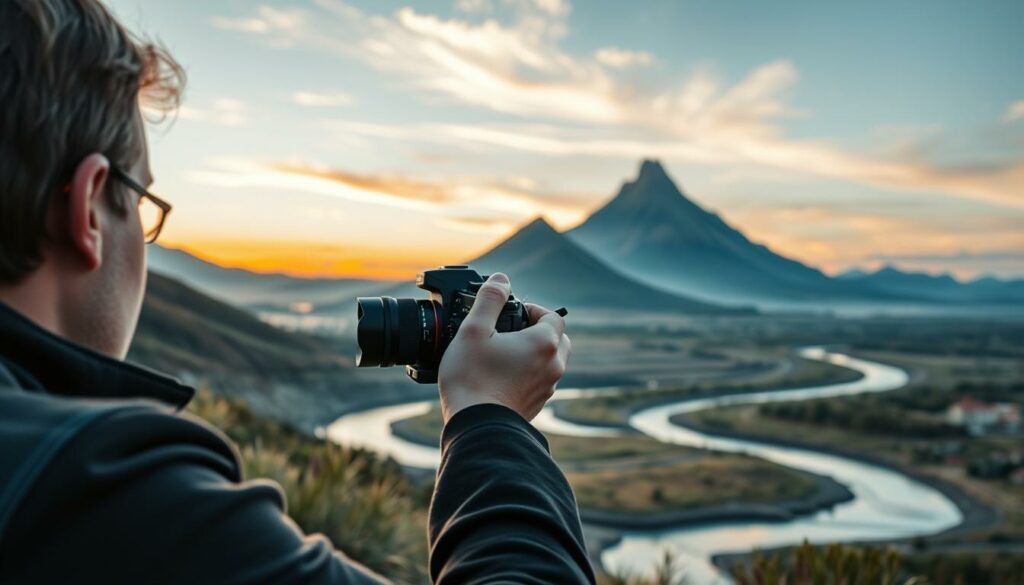
These techniques help me create images that feel balanced and engaging. They work beautifully with orbiting and reveal methods we’ve discussed. The principles adapt to various photography styles and subjects.
Rule of Thirds and Leading Lines
I mentally divide my frame into nine equal sections using two horizontal and two vertical lines. Placing key elements where these lines intersect creates natural balance. This approach feels more dynamic than centring your subject.
Leading lines guide the viewer’s eye through the image toward my main focus. Roads, fences, or architectural features work wonderfully for this purpose. They create a visual journey that keeps people engaged with the picture.
Fibonacci Spiral and Diagonals
The Fibonacci spiral offers an organic way to arrange elements in your composition. This mathematical pattern appears throughout nature, making images feel instinctively right. Viewers may not recognise why the photo appeals to them.
Diagonals add energy that horizontal and vertical lines cannot match. They draw the eye through the frame and create depth. This makes two-dimensional photos feel three-dimensional and dynamic.
| Composition Element | Visual Effect | Best Application |
|---|---|---|
| Rule of Thirds | Natural balance and dynamism | Subject placement in any genre |
| Leading Lines | Guides viewer attention | Creating visual journeys |
| Fibonacci Spiral | Organic, instinctive appeal | Complex scene arrangement |
| Diagonals | Energy and depth creation | Adding movement to static shots |
I consider balance carefully when framing each shot. Static balance uses symmetrical elements for calm stability. Dynamic balance employs asymmetrical placement for visual tension.
The most effective compositions layer multiple principles together. They create harmony while guiding the viewer’s experience. This intentional approach separates professional work from casual snapping.
Effective Camera Settings and Gear Selection
Your camera’s technical settings serve as the bridge between creative vision and final execution. I approach each photography session by first visualising the emotional impact I want to create.
The right equipment choices then support this artistic intention. This thoughtful preparation ensures consistent quality across different shooting scenarios.

Optimising Aperture and ISO
In my experience, aperture selection dramatically affects your shot’s emotional impact. A wide aperture like f/1.3 creates beautiful background blur that isolates your subject.
This shallow depth of field makes elements stand out powerfully. When context matters, I’ll use narrower apertures like f/8 to keep more details sharp.
ISO management is equally crucial for maintaining image quality. I always aim for the lowest possible setting, typically ISO 50-200. This approach preserves detail while managing exposure effectively.
| Setting Combination | Creative Effect | Best Application |
|---|---|---|
| 35mm, f/2.2, ISO 50 | Subject isolation with bokeh | Portrait and product work |
| 50mm, f/4, ISO 320 | Balanced focus with context | Environmental storytelling |
| 24mm, f/10, ISO 640 | Maximum depth of field | Landscape and architecture |
The way I select settings always starts with my creative goals. This ensures technical choices enhance rather than limit artistic expression.
Creative Angles and Perspectives
The perspective you choose fundamentally shapes how your audience connects with your subject. Moving beyond standard eye-level framing opens creative possibilities that surprise and engage viewers in fresh ways.
In my photography practice, I’ve discovered that camera angle dramatically changes emotional response. A low angle looking up makes subjects appear powerful. A high angle looking down can make them seem vulnerable.
Exploring Unique Perspectives
I frequently seek perspectives people don’t encounter daily. Getting down to ground level or climbing elevated positions creates that “I’ve never seen it that way before” reaction.
Every angle carries implicit meaning about the viewer-subject relationship. Shooting through foreground objects or choosing unusual heights creates compelling visual tension.
| Angle Technique | Emotional Impact | Best Application |
|---|---|---|
| Low Angle | Power, dominance | Architectural, heroic portraits |
| High Angle | Vulnerability, smallness | Intimate moments, child photography |
| Dutch Tilt | Unease, dynamic energy | Action sequences, creative portraits |
When creating orbiting or reveal shots, I incorporate ascending/descending motion. Starting low and rising during an orbit adds layers simple horizontal pans cannot achieve.
The most powerful perspective shifts combine angle changes with movement. An obscured angle clearing to eye-level at the reveal moment creates wonderful anticipation.
I encourage experimenting freely with angles during shoots. Reviewing options later often reveals unconventional perspectives tell your story more effectively than safe choices.
Integrating Technical and Artistic Skills
True photographic excellence happens at the intersection of precise technique and bold artistic expression. The most compelling work emerges when these elements support rather than compete with each other.
Balancing Focus, Depth and Contrast
I approach each composition by determining which elements deserve sharpness and which should recede softly. Depth of field becomes my creative tool for directing viewer attention exactly where I want it.
Contrast—whether tonal, colour, or textural—naturally draws the eye. I deliberately position my subject where contrast is strongest. This makes the focal element impossible to miss against its background.
Enhancing Viewer Engagement
Understanding limited attention spans means my composition must communicate its core message within seconds. I ruthlessly simplify, eliminating any element that doesn’t actively contribute to the story.
Background management proves just as crucial as subject selection. A cluttered background destroys even perfect technical work. I constantly ensure my subject separates cleanly from what’s behind it.
| Element | Technical Consideration | Artistic Impact |
|---|---|---|
| Focus | Sharpness and clarity | Directing viewer attention |
| Depth | Aperture settings | Creating dimensional space |
| Contrast | Exposure balancing | Emotional emphasis |
The finest photographs speak both to the technician’s precision and the artist’s soul.
I regularly review my work asking whether technical execution serves artistic intent. This integration requires practice but transforms good photos into memorable images.
Practical Tips and Expert Advice
Real-world experience has taught me that practical application separates theoretical knowledge from true mastery. Studying cinematic examples while avoiding common pitfalls creates a powerful foundation for growth.
Real-Life Shot Examples
I analyse films like Halloween where Carpenter’s POV work immerses viewers in the killer’s perspective. Tarantino uses similar techniques in Kill Bill to align audiences with The Bride’s journey. These examples show how camera perspective serves emotional storytelling.
Avoiding Common Mistakes
Many people forget to check frame corners for distracting elements before shooting. I always scan the entire picture systematically, ensuring my main subject separates cleanly from the background. Giving your focal element adequate breathing space prevents cramped compositions.
| Effective Technique | Common Error | Practical Solution |
|---|---|---|
| Systematic frame scanning | Missing edge distractions | Check all four corners methodically |
| Background separation | Busy backgrounds competing | Use depth of field creatively |
| Adequate breathing space | Cramped subject placement | Follow rule of thirds guidance |
| Multiple takes with variations | Settling for first attempt | Shoot 3-5 versions of each shot |
When photographing people, I’m particularly careful about background elements. Ensuring no trees appear to grow from heads maintains professional results. Taking that extra moment to review your composition saves considerable editing time later.
Conclusion
As we wrap up this guide, I hope you feel empowered to approach your photography with fresh perspective and creative confidence. These techniques represent a powerful part of your toolkit for creating compelling visual stories.
The most important fact to remember is that practice makes perfect. Don’t expect to master these shots in one session. Your unique vision as a creative person should always guide your composition choices.
I encourage you to keep experimenting and developing your personal style. The way you guide people’s attention through your work will become your signature. Keep pushing boundaries and enjoy the journey of growth in your photography.
FAQ
What exactly is a ‘point of interest’ in photography?
In my work, a point of interest is the main subject or area within my frame that immediately grabs the viewer’s attention. It’s the focal point that gives the picture its purpose and story. I always aim to make this element the strongest part of the composition.
How does the orbiting technique improve my shots?
Orbiting, which involves moving my camera around a static subject, allows me to explore different angles and backgrounds from a single spot. I find it brilliant for creating a sense of depth and discovering the most flattering perspective for my subject, making the final image much more dynamic.
What is the key to a successful reveal shot?
For me, timing is everything. A great reveal shot builds anticipation by initially hiding the main subject behind an object in the foreground. The movement—whether from my camera or the subject—must be smooth and deliberate to create that ‘wow’ moment for the person viewing the photo.
Which composition principles are most important for these techniques?
I rely heavily on the rule of thirds and leading lines. Placing my main subject off-centre using the rule of thirds creates a more balanced and engaging frame. Meanwhile, leading lines, like a path or a fence, naturally guide the eye directly towards my point of interest.
What camera settings should I prioritise?
I always start by optimising my aperture. A wider aperture (like f/2.8) beautifully blurs the background, making my subject stand out. For ISO, I keep it as low as possible to avoid grain, only increasing it when I need to maintain a fast shutter speed for sharpness during movement.
Can I create compelling point of interest shots with a basic camera?
Absolutely! While advanced gear offers more control, the principles of framing, composition, and timing are what truly matter. Some of my favourite pictures were taken with simple equipment. Focus on your creative vision and technique first.
What’s a common mistake to avoid?
A> One I see often is a cluttered background that distracts from the main subject. I always take a moment to scan the edges of my frame before pressing the shutter. Ensuring the background is clean and non-distracting makes your focal point much more powerful.