
Have you ever wondered why some aerial photographs feel so powerful, whilst others simply fall flat? It’s a question I’ve asked myself many times whilst flying my camera high above the ground. The answer, I’ve discovered, rarely lies in the equipment itself.
Instead, it’s about how we see the world from above. Mastering the art of arranging elements in your frame is what separates a casual snapshot from a compelling visual story. This unique perspective offered by flying cameras demands a fresh approach to creating images.
In this guide, I’ll share my approach to crafting stunning aerial shots. We’ll explore how proven principles of visual design can be adapted for the skies. My goal is to help you make intentional decisions about your camera’s position and what to include in your frames.
You’ll find that this is not about rigid rules, but a flexible framework. It empowers you to create more impactful pictures that truly stand out. Let’s begin this journey into elevating your photographic work.
Key Takeaways
- Mastering visual arrangement transforms ordinary aerial snaps into extraordinary stories.
- The elevated viewpoint requires a different way of thinking about your frames.
- Proven design principles can be successfully adapted for shooting from above.
- Creating powerful images is about intentional choices, not just following rules.
- A flexible framework helps you decide what to include and how to position your camera.
- The goal is to produce visuals that captivate viewers and distinguish your work.
Introduction: The Art and Science of Drone Photography
Many photographers are drawn to the sky, but few initially grasp the delicate interplay between art and science that defines successful aerial work. It’s a discipline where technical control meets creative vision in a truly unique way.
Why Composition Matters in Aerial Photography
From my experience, arranging elements in the frame is crucial when shooting from above. The bird’s-eye view can flatten a scene, making it difficult to show depth. Without careful planning, your picture might lack impact.
This perspective fundamentally changes how people see your image. It offers creative possibilities that ground-level shots simply cannot match. Intentional framing guides the viewer’s eye and tells a clearer story.
“The sky is not the limit; it is the starting point for a new way of seeing.”
Understanding the Unique Challenges of Shooting from Above
Flying a camera introduces a new layer of complexity. You now operate in three dimensions: height, distance, and angle all play a part. This freedom is fantastic, but it requires more thought.
You must consider how these factors work together to create a compelling scene. The relationships between objects change dramatically from this vantage point. Scale and distance can be perceived differently by the viewer.
| Aspect | Ground Photography | Aerial Photography |
|---|---|---|
| Camera Movement | Mostly lateral and vertical on a tripod or handheld. | Full 3D movement (up/down, left/right, forward/backward). |
| Perspective Control | Limited by physical position and lens choice. | Virtually unlimited control over viewpoint and angle. |
| Scene Depth | Often naturally created by foreground/midground/background. | Must be consciously created using altitude and object placement. |
This table highlights the key differences I’ve encountered. Mastering this medium means adapting old principles and inventing new ones suited to the skies.
Mastering Drone Composition Techniques
Elevating your camera changes everything about how you approach creating compelling visual stories. I’ve found that successful aerial work requires adapting classic principles to this unique perspective.
Applying the Rule of Thirds and Leading Lines
I always begin by visualising a 3×3 grid over my frame. Placing key elements along these lines creates balanced compositions that feel natural to the viewer’s eye.
When capturing landscapes, I position the horizon in the top or bottom third. This avoids the static feel of a centred horizon and adds visual interest.
Leading lines become incredibly powerful from above. I actively seek out roads, rivers, and other linear elements that guide the viewer through the image.
Effective Framing and Strategic Subject Placement
Natural frames like rock arches or tree branches create wonderful windows into your scene. They add depth and context to your main subject.
I consciously avoid centring my primary subject unless aiming for symmetry. Instead, I place it where natural lines converge or at rule of thirds intersections.
| Framing Approach | Best Use Cases | Visual Effect |
|---|---|---|
| Natural Frames | Landscapes with arches, trees, or architectural gaps | Creates depth and focuses attention |
| Leading Line Convergence | Scenes with roads, rivers, or pathways | Guides viewer eye and creates movement |
| Rule of Thirds Placement | Any aerial scene with distinct subjects | Provides balance and visual harmony |
Experimenting with different heights reveals how elements interact. Lower altitudes capture foreground frames, while higher views show how lines create patterns throughout the entire photo.
Adjusting Altitude and Perspective for Impactful Shots
One of the most exciting discoveries I’ve made is how dramatically different altitudes can reshape an ordinary scene into something extraordinary. Changing your camera’s height isn’t just about getting closer or farther away—it completely transforms the story your photograph tells.
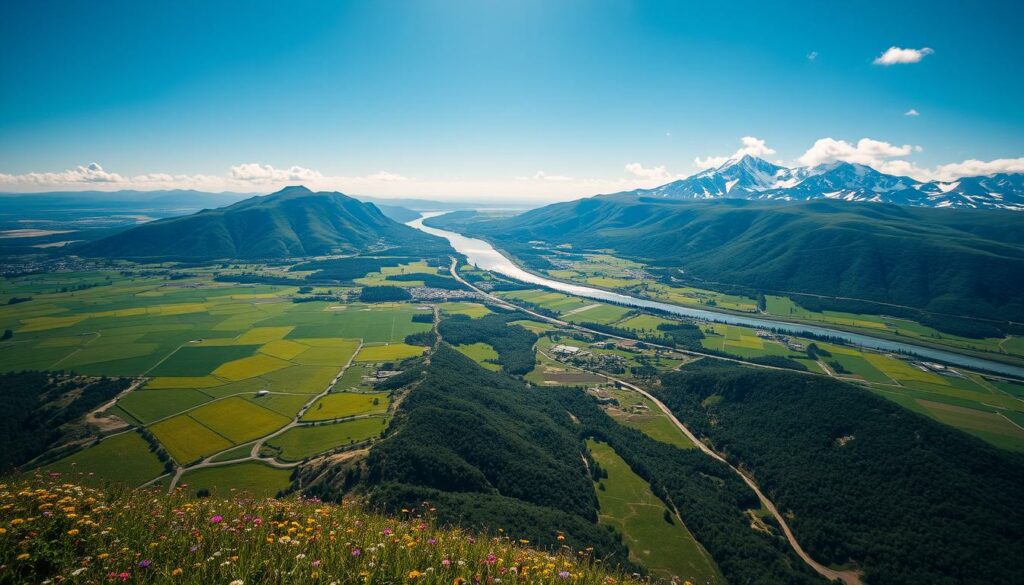
I constantly experiment with various heights to find the perfect viewpoint for each specific shot. This approach allows me to capture the most compelling version of every landscape I photograph.
Exploring Low Altitude for Intimate and Dynamic Views
Flying just a few metres above the ground creates wonderfully intimate perspectives. These low-angle shots make viewers feel like they’re part of the scene rather than observing from afar.
I find that lower altitudes produce longer leading lines that stretch dramatically across the frame. They also reveal richer backgrounds that provide essential context and depth to my images.
Utilising Diagonals and Symmetry to Create Depth
Diagonal lines have become my secret weapon for adding movement and dynamism to aerial work. Unlike static horizontal or vertical lines, diagonals guide the viewer’s eye through the frame with purpose.
When I spot rivers, roads, or tree lines converging toward a vanishing point, I know I’ve found a powerful compositional element. These converging lines create wonderful illusions of depth in otherwise flat scenes.
Symmetry and patterns revealed from above absolutely fascinate me. Positioning my camera directly above balanced subjects creates mesmerising compositions that showcase nature’s hidden geometry.
Creative Use of Natural Elements in Aerial Photography
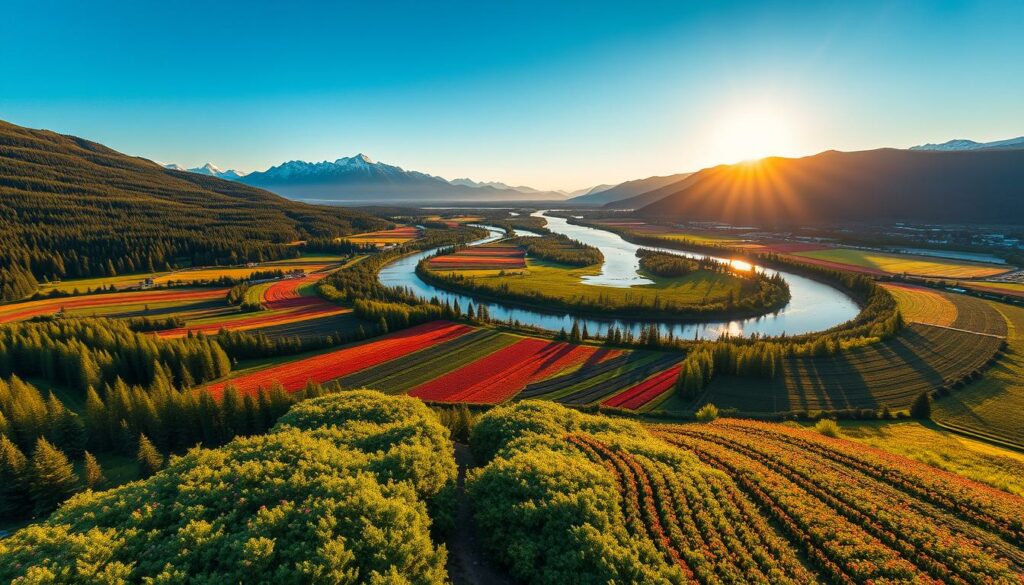
When I first started capturing landscapes from above, I quickly realised that the sky itself is a powerful compositional element that demands careful consideration. Its colours and cloud formations can either enhance or overwhelm your photographs depending on how you balance it with the terrestrial elements.
Balancing the Sky with the Landscape
I’ve learned that the sky carries its own visual weight in aerial shots. Unless I’m photographing spectacular sunset colours or dramatic cloud patterns, I generally tilt my camera downward to show more of the landscape I want to feature.
Finding the right balance between sky and ground is often an intuitive decision for me. It depends on the story I want to tell and the emotional impact I aim to create with each image.
| Sky-to-Landscape Ratio | Best Use Cases | Visual Effect |
|---|---|---|
| 10-30% Sky | Landscapes with strong foreground interest | Emphasises terrestrial elements and details |
| 30-50% Sky | Balanced scenes with interesting clouds | Creates harmony between earth and sky |
| 50-70% Sky | Dramatic weather or sunrise/sunset shots | Makes sky the dominant storytelling element |
Integrating Human Elements to Convey Scale and Context
One challenge I frequently encounter is conveying the vast scale of landscapes from an aerial perspective. Without reference points, viewers can struggle to understand the true size of features in my photos.
I solve this by deliberately including people, vehicles, or buildings in my frames. A lone walker on a beach or a car on a winding road immediately provides a sense of proportion that pure landscape shots often lack.
Trees and structures become valuable tools in my aerial photography toolkit. They help viewers grasp the perspective and add relatable context that makes images more engaging on a human level.
Enhancing Your Images with Advanced Techniques
The real magic happens when you begin manipulating light and colour to tell more compelling visual stories. These advanced approaches can transform your aerial work from technically competent to emotionally resonant.
Playing with High Key and Low Key Lighting for Mood
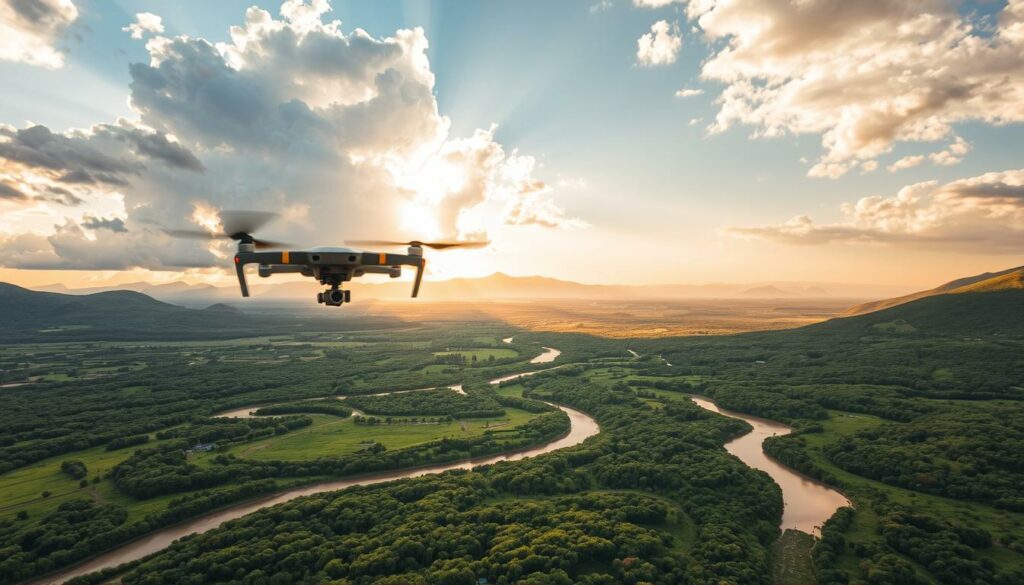
I love using high key and low key lighting to create specific moods in my photography. High key images feature bright, evenly lit scenes with minimal shadows. They convey optimism and simplicity.
For these shots, I look for uniform lighting conditions like overcast beaches. I slightly overexpose while preserving highlight detail. Low key work uses dramatic lighting with deep shadows.
I time my flights for golden hour to capture strong directional light. This creates long shadows that add mystery and drama to the scene.
Leveraging Colour Contrast and Patterns for Visual Impact
Colour contrast is incredibly powerful for creating depth in aerial photos. I actively search for areas where contrasting colours meet. A green field against a red building immediately draws the viewer’s eye.
Patterns mesmerise me when viewed from above. Whether geometric crop fields or organic tree canopies, they add visual rhythm. I experiment with different heights to find the perfect perspective.
The interplay between light, colour, and patterns creates layers of complexity. This invites viewers to spend more time exploring each image.
Conclusion
Developing your own visual voice in aerial work is an incredibly rewarding process. I’ve found that mastering these approaches requires consistent practise and a willingness to experiment with each flight.
The principles we’ve explored are starting points rather than rigid rules. Sometimes the most compelling shots come from intentionally breaking conventions. Let your creativity soar as high as your camera does.
Remember that your work continues after you land. Post-processing plays a crucial role in refining colours and contrast to bring your vision to life. It helps communicate your intended message effectively.
My final advice is simple: get out there and apply these ideas in various conditions. Review your images critically, learn from each session, and most importantly, enjoy the incredible journey of aerial photography.
FAQ
What is the most important rule for framing my aerial shots?
I find the rule of thirds is the best place to start. Imagine your frame is divided into a grid of nine equal squares. Placing your main subject or key horizon lines along these grid lines or at their intersections creates a much more balanced and engaging photograph than simply centring everything.
How can I make my pictures from above look less flat?
To add a wonderful sense of depth, I love to use leading lines. Roads, rivers, or even rows of trees can guide the viewer’s eye through the scene. I also recommend shooting at an angle rather than straight down, as this creates perspective and makes shapes and shadows more pronounced.
What is the best time of day for capturing stunning drone photos?
For the most beautiful light, I always aim for the golden hour—the period shortly after sunrise or before sunset. The sun is low in the sky, casting long, soft shadows that reveal texture and form. This warm light adds a magical quality to landscapes and buildings that you just don’t get in the harsh midday sun.
How do I effectively show scale in my aerial images?
Including a familiar object is my favourite trick. A person, a car, or a single house within a vast landscape immediately gives the viewer a reference point. This contrast between the known object and the expansive environment powerfully communicates the immense scale of the scene.
Can I use patterns to make my photos more interesting?
Absolutely! One of the joys of an elevated viewpoint is discovering patterns that are invisible from the ground. Look for repetitions in nature, like rows of crops, or in man-made structures, like the roofs of a housing estate. Framing these patterns can create incredibly striking and abstract images.