
Have you ever wondered how professional filmmakers capture those breathtaking, cinematic shots of athletes, vehicles, or wildlife moving at high speeds? What if I told you that achieving this level of footage no longer requires a dedicated camera operator or complex equipment setups?
I’ve watched this technology evolve from basic GPS following to sophisticated AI recognition systems. Modern autonomous filming capabilities have completely transformed aerial photography. Enthusiasts and professionals across the UK can now capture dynamic footage hands-free.
In this comprehensive guide, I’ll share why mastering these intelligent modes is essential for anyone serious about aerial videography. We’ll explore how these systems work, compare the best models available, and provide practical tips tailored for British enthusiasts.
Whether you’re filming mountain biking in the Peak District or capturing coastal scenes in Cornwall, finding the right equipment for your needs and budget is crucial. The evolution from simple following to complex environment navigation represents a genuine revolution in creative possibilities.
Key Takeaways
- Autonomous filming technology has evolved from basic GPS to advanced AI systems
- Mastering intelligent tracking modes is essential for professional-quality footage
- This guide provides detailed comparisons of the best models available
- Practical advice is tailored specifically for UK-based enthusiasts
- The technology enables hands-free capture of dynamic moving scenes
- Systems can now navigate through complex environments autonomously
- Finding the right equipment depends on individual needs and budget
Introduction to Follow-Me Drones
The ability to film yourself in motion from above has transformed from a complex production challenge to a simple automated process. These intelligent flying cameras revolutionise how we capture action footage, allowing me to focus entirely on my activity while the equipment handles the cinematography.
What makes these systems so remarkable is their capacity to function as an intelligent aerial cameraman. Using advanced recognition technology, they maintain perfect focus on moving subjects without requiring manual control. This hands-free operation is ideal for solo content creators, athletes, and adventurers across the UK.
I’ve found the core benefit lies in the creative freedom these tools provide. Professional-quality aerial footage is now accessible to everyday users, eliminating the need for dedicated pilots or expensive film crews. The technology captures natural, dynamic shots that feel genuinely cinematic.
Whether filming mountain bike descents in Wales or coastal runs in Cornwall, follow-me drones enable perspectives that were previously impossible. They’ve genuinely opened up creative possibilities for capturing life’s adventures from breathtaking angles.
Understanding Drone Subject Tracking
Modern aerial filming technology employs sophisticated methods to autonomously follow targets without manual intervention. I’ve found there are two primary systems that enable this remarkable capability.
GPS-based systems create a digital tether between the equipment and a transmitter. This approach uses satellite positioning to maintain consistent following distance. The connection remains reliable over considerable distances.
However, the camera framing can sometimes struggle with precise focus on the actual target. This is where active recognition technology truly shines.
Visual identification systems use cameras and sensors to lock onto moving objects with impressive accuracy. The software analyses the visual data to maintain perfect centring in the frame. This results in superior cinematic composition.
Each approach has distinct advantages. GPS excels at maintaining connection over long ranges. Active recognition provides better framing and focus control.
Leading manufacturers like DJI, Parrot, and Walkera have pioneered these technologies. They’ve set impressive standards for reliability and precision in autonomous filming.
Emerging equipment like the Skydio R1 represents the next generation of this capability. The accuracy of these newer systems is truly remarkable for creative filming.
How ActiveTrack and Follow Me Modes Work
The magic of hands-free aerial cinematography lies in two distinct technological approaches that power modern tracking capabilities. I’ve found understanding these systems crucial for choosing the right equipment.
GPS Tracking versus Active Recognition
GPS-based systems create a digital connection between your flying camera and a transmitter in your smartphone or dedicated controller. This method uses satellite positioning to maintain consistent following distance.
The key advantage is reliable connection over long distances in open environments. However, cameras can struggle with precise focus during close-up shots.
| Feature | GPS Tracking | Active Recognition |
|---|---|---|
| Technology Used | Satellite positioning | Camera sensors & algorithms |
| Best Environment | Open spaces with clear skies | Complex environments with obstacles |
| Subject Framing | Can struggle with close focus | Excellent centring and composition |
| Setup Complexity | Simple transmitter connection | Visual calibration required |
“The evolution from basic GPS tethering to intelligent visual recognition represents a genuine revolution in creative filming possibilities.”
Setting Up Autonomous Flight Modes
Most modern systems use dedicated smartphone apps for configuration. I typically start by selecting my preferred shooting mode through the application interface.
Leading manufacturers like DJI and Parrot offer various creative options. These include orbit, circle, profile, and their signature active track technology.
The setup process is surprisingly intuitive. You simply choose your subject through the app interface and select the desired filming style. The equipment handles the rest autonomously.
Evaluating Camera Quality and Flight Features
The heart of any successful aerial filming setup lies in the quality of its imaging capabilities and flight stability. I’ve found that superior camera specifications transform ordinary footage into cinematic masterpieces.
4K Video Capabilities and CMOS Sensors
Modern equipment offers impressive resolution options. The DJI Phantom 4 Pro V2.0 captures 4K video at 60FPS with its 1-inch 20MP CMOS sensor. This larger sensor size delivers exceptional image quality in various lighting conditions.
Higher frame rates like 60fps create smoother, more professional-looking footage. The DJI Air 2S takes this further with 5.4K recording capability. Its 1-inch CMOS sensor captures stunning 20-megapixel photos.
| Model | Sensor Size | Max Video Resolution | Special Features |
|---|---|---|---|
| DJI Phantom 4 Pro V2.0 | 1-inch CMOS | 4K/60fps | Mechanical shutter |
| DJI Air 2S | 1-inch CMOS | 5.4K/30fps | Compact design |
| Parrot Anafi | Standard CMOS | 4K HDR | 2.8x lossless zoom |
| DJI Mavic 3 Pro | 4/3-inch CMOS | 5.7K/60fps | Hasselblad camera |
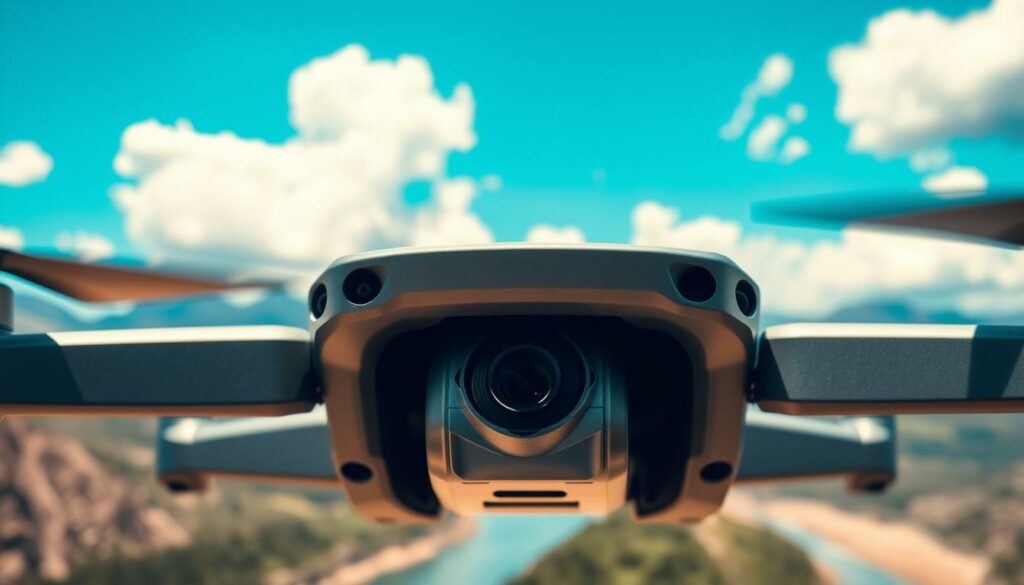
Image Stabilisation and Gimbal Technology
Smooth footage requires advanced stabilisation systems. Three-axis gimbals provide shake-free shots even during rapid movement. The DJI Mavic Pro’s precision hovering demonstrates this technology perfectly.
The Parrot Anafi combines mechanical and electronic stabilisation for excellent results. This dual approach ensures crisp footage in windy conditions. The lossless zoom feature allows me to maintain safe distances while capturing close-up shots.
For professional cinematography, the DJI Mavic 3 Pro’s Hasselblad camera delivers cinema-quality results. Its larger 4/3-inch CMOS sensor represents the pinnacle of current imaging technology.
The Role of Obstacle Avoidance in Safe Tracking
One of the most significant advancements in recent years has been the development of sophisticated collision prevention technology. When your equipment operates autonomously, its ability to navigate safely becomes absolutely critical.
I’ve found that obstacle avoidance systems are particularly vital during autonomous operation. The equipment focuses entirely on maintaining the perfect shot, potentially missing environmental hazards.
Omnidirectional Obstacle Sensing Systems
The evolution from basic forward-facing protection to comprehensive 360-degree coverage represents a major safety breakthrough. Modern systems use multiple sensors positioned around the equipment to detect potential obstacles from all directions.
DJI leads the industry with impressive configurations like the Air 3’s full omnidirectional sensing. This provides protection from forward, backward, left, right, top, and bottom directions simultaneously.
Different models offer varying levels of coverage. The Mini 3 Pro features tri-directional sensing, while the Phantom 4 Pro V2.0 offers five-direction avoidance using six cameras plus infrared and ultrasonic sensors.
It’s important to understand limitations too. Some models lack side sensors, creating blind spots during profile shots. Always check the specific sensing capabilities before purchasing.
While these systems are highly advanced, they’re not infallible. I always maintain awareness of my equipment’s environment, using the avoidance technology as an additional safety layer rather than complete reliance.
Battery Life and Flight Time Considerations
The difference between capturing mediocre footage and cinematic brilliance often comes down to one crucial factor: how long your equipment stays airborne. I’ve found that reliable battery life is absolutely essential for successful filming sessions across the UK’s diverse landscapes.
Comparing Flight Duration across Models
High-end models like the DJI Mavic 3 Pro and DJI Air 3 lead the pack with impressive 43-46 minute flight time. This gives me nearly an hour of continuous operation for capturing extended sequences.
Mid-range options offer excellent value. The DJI Air 2S provides 31 minutes of operation, while the compact DJI Mini 3 Pro surprisingly delivers 34 minutes. These are perfect for most recreational applications.

Budget-conscious choices have shorter endurance. The Holystone HS100 offers just 15 minutes, and the Hubsan H501s provides 20 minutes. The remarkable Bwine F7 stands out with 75 minutes of flight time, though its feature set targets specific users.
Transmission range works alongside battery life to determine operational flexibility. Models like the DJI Inspire 2 offer 7KM range, allowing extensive coverage during filming sessions.
I always carry spare battery packs for professional shoots. Actual flight time decreases when using power-intensive features like 4K recording. Flying in optimal conditions and avoiding aggressive manoeuvres helps maximise your equipment’s endurance.
Comparing Top Drone Models for Subject Tracking
The market offers an impressive range of intelligent flying cameras, each with unique strengths for different types of users and budgets. I’ve tested numerous models to help you find the perfect match for your filming needs.
Whether you’re capturing mountain adventures or coastal scenes, the right equipment makes all the difference. Let me guide you through the top choices available to UK enthusiasts.
High-End Models: DJI Mavic Pro and Phantom 4 Pro V2.0
The DJI Mavic Pro stands out as my top all-round recommendation. Its versatility with both GPS and ActiveTrack modes provides exceptional flexibility. The comprehensive shooting options include Spotlight, Trace, and Profile modes.
For those prioritising premium quality, the Phantom 4 Pro V2.0 delivers market-leading 4K at 60FPS. Its five-direction obstacle avoidance system offers superior safety during autonomous operation.
Value and Portability: DJI Mavic Air and Parrot Anafi
The compact DJI Mavic Air represents excellent value with its ability to follow up to 16 targets simultaneously. Its portable design makes it ideal for travellers across the UK.
The Parrot Anafi serves as a fantastic DJI alternative with competitive pricing. Its 2.8x lossless zoom and ultra-fast folding mechanism are particularly impressive features.
Professional Choices: Inspire 2 and Beyond
For professional cinematographers, the DJI Inspire 2 offers unparalleled performance. Its 6K video capability and 7KM range leave consumer models far behind.
Newer options like the DJI Air 3 and Mavic 3 Pro bring Hasselblad camera technology to more accessible price points. Their dual and triple camera systems provide creative flexibility.
| Model | Key Feature | Best For | Flight Time |
|---|---|---|---|
| DJI Mavic Pro | Versatile tracking modes | All-round enthusiasts | 30 minutes |
| Phantom 4 Pro V2.0 | 5-direction avoidance | 4K quality seekers | 30 minutes |
| DJI Mavic Air | 16-subject tracking | Value-conscious users | 21 minutes |
| Parrot Anafi | 2.8x lossless zoom | DJI alternatives | 25 minutes |
Each model serves different user profiles, from casual hobbyists to professional filmmakers. Consider your specific needs and budget when making your choice.
Tech Features and User Experience in Follow Me Drones
Behind every smooth, cinematic tracking shot lies a complex network of intelligent systems and sensors. I’ve found that the best equipment combines advanced technology with intuitive controls for a seamless filming experience.
Intelligent Tracking Systems and Sensors
Modern autonomous filming relies on sophisticated sensor arrays working together. Visual cameras, infrared sensors, and ultrasonic technology create a comprehensive understanding of the environment.
This multi-sensor approach enables remarkable precision. The DJI Mavic Air can follow up to 16 different targets simultaneously, perfect for cycling races or marathons.

Mobile App Integration and Controller Functions
Dedicated smartphone applications serve as the control centre for these advanced features. DJI’s Go 4 app and Parrot’s FreeFlight 6 platform offer extensive customisation options.
I can easily adjust flight paths, height, angles, and distances to achieve specific cinematic effects. The Autel Evo II Pro stands out with greater dynamic range and superior background noise suppression.
Controller functions complement mobile control beautifully. I prefer using dedicated controllers for precise adjustments while relying on apps for initial setup.
Tips for Maximising Drone Subject Tracking Performance
The real magic happens when you learn to work with your equipment’s capabilities rather than fighting against them. I’ve found that mastering these intelligent modes transforms ordinary footage into cinematic masterpieces.
Best Shooting Techniques for Cinematic Footage
Choosing the right filming mode makes all the difference. Orbit mode creates dramatic 360-degree reveals, while Circle provides full circular shots. Profile mode excels at side-tracking action sequences.
For hilly environments, Terrain following maintains consistent height above ground. This ensures smooth footage regardless of elevation changes.
| Filming Mode | Best Use Case | Key Feature |
|---|---|---|
| Orbit | Dramatic reveals | 360-degree rotation |
| Circle | Full circular shots | Continuous orbiting |
| Profile | Side-tracking action | Fixed angle maintenance |
| Terrain | Hilly landscapes | Height consistency |
GPS excels for high-altitude or long-distance shots. Active recognition delivers superior results for close-up work. Avoid losing lock by maintaining clear lines of sight.
Essential Safety Precautions and Local Regulations
Always maintain visual contact with your equipment. Check weather conditions before flying. Ensure obstacle avoidance systems are functioning properly.
In the UK, registration is mandatory for equipment over 250g. Respect 120m altitude limits and avoid restricted airspace. Privacy considerations are crucial when filming in public spaces.
Plan your shots to maximise limited flight time. Most models offer 20-30 minutes of operation. Pre-planning ensures you capture the best footage efficiently.
Conclusion
Bringing together all the insights from this guide, the key takeaway is that modern filming equipment has truly democratised professional-quality aerial cinematography. The evolution from basic following to intelligent recognition systems means stunning footage is now accessible to everyone.
Whether you choose GPS-based systems for open spaces or visual recognition for complex environments, the right technology depends on your specific needs. Consider camera quality, flight duration, and obstacle avoidance capabilities alongside your budget when selecting equipment.
My top recommendations remain the DJI Mavic Pro for versatility, Phantom 4 Pro V2.0 for premium quality, Mavic Air for value, and Parrot Anafi as an excellent alternative. Remember that safety and responsible flying should always come first.
While the technology is incredibly capable, achieving the best results still requires practice and understanding. The future looks bright as innovations continue to push creative boundaries in aerial filming.
FAQ
What is the difference between GPS tracking and visual recognition for a follow-me drone?
GPS tracking relies on a signal from a mobile device or controller you carry. It’s great for open spaces but can lose you if the signal drops. Visual recognition, like DJI’s ActiveTrack, uses the camera and sensors to actually see and follow you, which is much smarter for complex paths.
How important is obstacle avoidance for autonomous flight?
It’s absolutely crucial for peace of mind. Systems with omnidirectional obstacle sensing, found on models like the Mavic Air, create a safety bubble. This means the machine can navigate around trees or other hazards on its own, letting you focus on your activity.
What kind of flight time can I realistically expect?
Most consumer models offer between 20 to 30 minutes of battery life. High-end options might push closer to 40 minutes. I always plan for less than the advertised time to account for wind and active use of features like tracking, which can drain power faster.
Do I need a 4K camera for good tracking footage?
While 4K resolution and quality CMOS sensors deliver stunning detail, a steady shot is more important. Look for a model with a good gimbal for image stabilisation. Even 1080p footage from a stable platform will look far superior to shaky 4K video.
Can these machines follow a subject in all conditions?
They perform best in good light and with a clear visual contrast between you and the background. Low light, heavy rain, or very fast, erratic movements can challenge the technology. It’s a fantastic tool, but it’s not infallible.
How difficult is it to set up a ‘follow me’ mode?
It’s surprisingly simple! With my DJI products, I just select the subject on the mobile app screen and tap ‘go’. The intelligent tracking systems handle the rest. The key is reading the manual to understand the different modes, like Trace and Profile, for the best shots.