
Have you ever wondered how a flying machine can navigate a cluttered warehouse or a dense forest without a single bump? This question lies at the heart of modern aerial innovation. What was once a simple hobbyist’s gadget has transformed into a sophisticated industrial tool.
These aerial vehicles are now essential on construction sites, farms, and in logistics centres. They perform critical tasks like inspections and deliveries. This evolution demands a new level of intelligence and safety.
The key to this capability is a kind of electronic sixth sense. This technology prevents costly damage and protects both people and equipment. It allows these machines to sense and react to their surroundings autonomously.
In this guide, I’ll walk you through how this incredible collision avoidance capability functions. We will explore the sensors that make it possible and its real-world uses across various sectors. I will also cover the current limitations that every operator should understand.
Whether you’re a professional pilot or a weekend enthusiast, grasping these principles is crucial. It’s not just about preventing a collision; it’s about unlocking true autonomous potential. Let’s demystify the obstacle avoidance systems that are changing the game.
Key Takeaways
- Modern drones have evolved from simple gadgets to vital industrial tools.
- Obstacle avoidance acts as a critical safety feature to prevent accidents.
- This technology is essential for operations in complex environments like warehouses and construction sites.
- Understanding how these systems work is key to safe and effective flight.
- The guide will cover the underlying principles, real-world applications, and current limitations.
- This knowledge benefits everyone from commercial operators to hobbyists.
Core Principles of Drone Obstacle Avoidance Systems
What separates basic remote-controlled aircraft from sophisticated autonomous flying machines is their ability to perceive and respond to environmental challenges. This intelligent capability forms the foundation of modern aerial navigation.
Defining the Technology and Its Benefits
At its core, this technology enables an aerial vehicle to detect objects in its path and autonomously steer clear of them. Unlike manual piloting where human reaction time limits safety, the system provides constant environmental awareness.
When an object enters a predefined safety zone, the flight control makes instant decisions. It might stop, hover, or reroute to prevent contact. This split-second response happens without pilot intervention.
The benefits extend far beyond basic collision prevention. Smoother flight paths result in steadier footage for filmmakers. Surveyors collect more accurate data with fewer retakes. Mission success rates improve significantly across various applications.
Understanding the Role of Sensors and Software
Sensors act as the vehicle’s eyes, continuously scanning the surroundings. They feed real-time environmental data to the onboard computer system.
Sophisticated algorithms process this information to make intelligent navigation choices. The combination of hardware detection and software intelligence creates a robust safety system.
Operating environments influence sensor requirements. Outdoor missions can leverage GPS positioning. Indoor flights rely more heavily on high-resolution sensors with rapid refresh rates for precise navigation in confined spaces.
How Obstacle Avoidance Works: Sensors, Algorithms and Data Fusion
At the heart of autonomous flight safety is a complex system that blends multiple sensing methods with rapid computational analysis. This sophisticated approach allows aerial vehicles to perceive their environment and make intelligent navigation decisions in real time.
Exploring Sensor Types
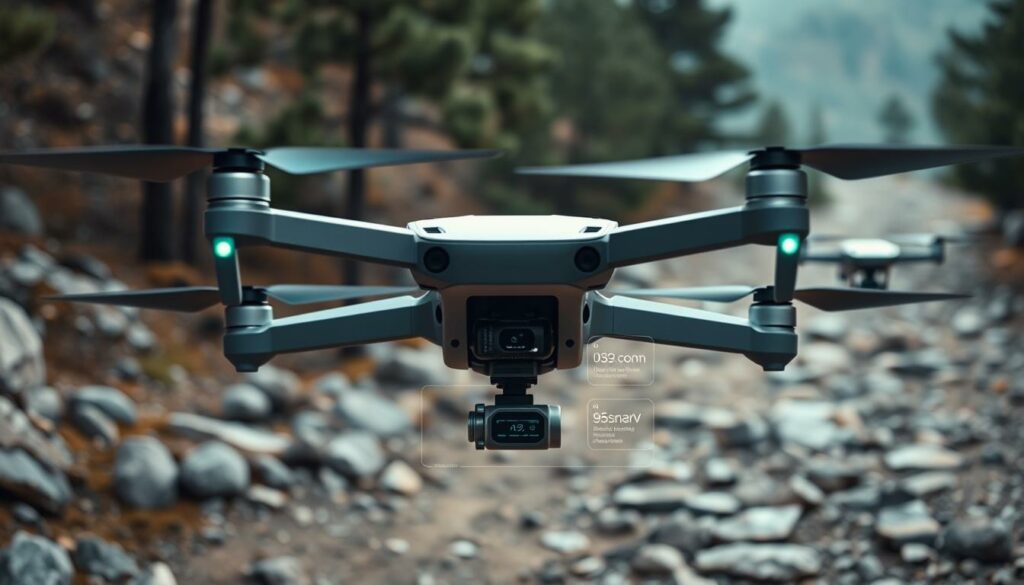
I find that modern systems employ various sensors working together. Ultrasonic units use sound waves to measure distance, while infrared sensors detect objects using light pulses.
Stereo vision cameras create 3D maps by comparing images from multiple angles. LiDAR technology uses laser pulses for highly precise distance measurements over longer ranges.
The Role of Algorithms in Real-Time Path Planning
These sensors generate massive amounts of data that require intelligent processing. Sophisticated algorithms analyse this information to determine the safest flight path.
The algorithms must work incredibly fast, processing information at high frame rates. They evaluate potential routes based on distance, risk, and energy consumption.
Enhancing Safety through Sensor Fusion
What makes modern collision avoidance so reliable is sensor fusion. This approach combines data from multiple detection technologies into a unified picture.
By leveraging the strengths of different sensors, the system compensates for individual limitations. This creates a more robust and accurate environmental awareness for safer autonomous operation.
Integrating Cutting-Edge Technologies for Safer Drone Flight
When multiple sensing technologies work together seamlessly, they create a safety net that’s far more reliable than any single approach. This integration represents the current frontier in aerial safety innovation.
Combining Vision, LiDAR and Infrared Technologies
I find that modern aerial vehicles achieve their impressive safety records by combining visual cameras, LiDAR, and infrared detection. Each technology brings unique strengths to the table.
Visual cameras excel in good lighting conditions, providing rich colour information. LiDAR systems offer precise distance measurements regardless of light levels. Infrared sensors detect heat signatures and function effectively in darkness.
This combination creates comprehensive environmental awareness. The system can operate safely in scenarios that would challenge single-sensor approaches.
Real-Time Feedback and Control Systems
The flight controller acts as the intelligent centre that processes all incoming data. It uses sophisticated algorithms to make instant navigation decisions.
These control systems maintain continuous feedback loops. Sensors update environmental information, algorithms recalculate optimal paths, and flight parameters adjust accordingly.
This dynamic approach balances safe clearance with mission objectives and power efficiency. The entire journey from takeoff to landing benefits from this integrated safety framework.
Real-World Applications and Operational Benefits
Across industries worldwide, intelligent aerial systems are revolutionising how we approach complex tasks and hazardous environments. The practical value of this technology extends far beyond basic safety, unlocking new levels of efficiency and capability.

Industrial and Commercial Use Cases
I’ve seen remarkable applications transforming agricultural practices. These systems enable precise crop monitoring and targeted spraying while maintaining a safe flight path close to vegetation. This approach significantly reduces chemical usage and environmental impact.
In construction and infrastructure inspection, the benefits are equally impressive. Aerial vehicles can safely navigate crowded sites and access difficult areas. They provide comprehensive surveillance and detailed progress documentation without putting human workers at risk.
Warehouse management has been revolutionised by autonomous navigation technology. These systems efficiently scan inventory in narrow aisles using advanced sensing methods. The result is faster stock counts and improved worker safety in challenging environments.
Search and rescue operations benefit tremendously from this capability. Navigating through debris-filled areas becomes feasible, enabling faster response times. Every second counts in critical missions where unexpected obstacles frequently appear.
What truly impresses me is how these applications demonstrate the technology’s versatility. From filmmaking to energy infrastructure inspection, the same core principles deliver tangible benefits across diverse sectors.
Challenges and Limitations in Modern Obstacle Avoidance
No safety system is perfect, and understanding the limitations of modern aerial collision prevention is crucial for responsible operation. While the technology has advanced significantly, real-world conditions present unique hurdles.
Environmental and Computational Constraints
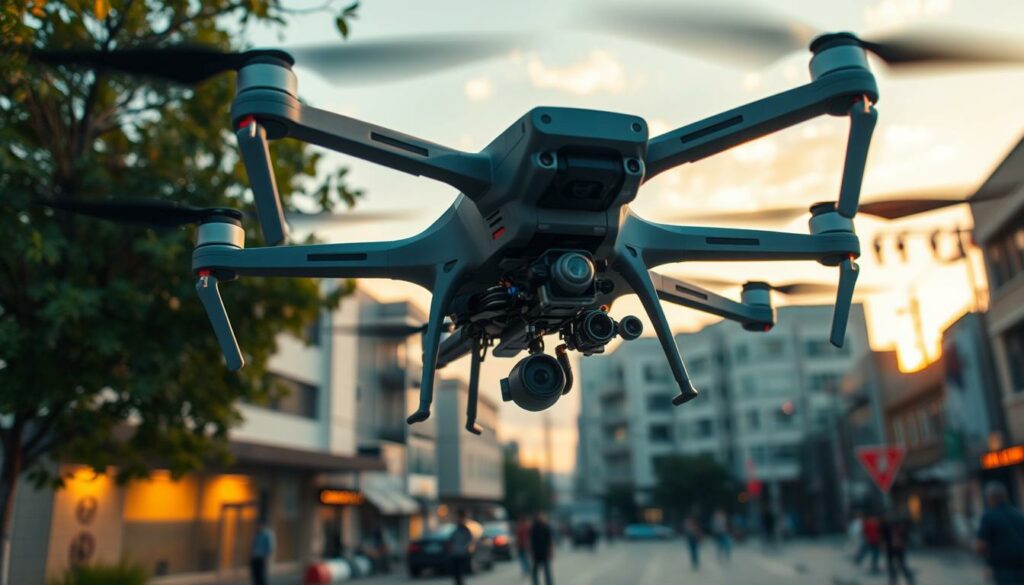
I’ve found that weather conditions significantly impact sensor performance. Heavy rain or fog can reduce detection range, while bright sunlight affects infrared sensors. Different environments demand careful sensor selection.
Processing power is another key consideration. Advanced algorithms require substantial computing resources, which can drain battery life. Balancing safety features with flight duration remains an engineering challenge.
| Sensor Type | Environmental Limitations | Performance Impact |
|---|---|---|
| LiDAR Systems | Heavy rain, fog, dust | Reduced range and accuracy |
| Infrared Sensors | Bright sunlight, high temperatures | Thermal interference issues |
| Stereo Cameras | Poor lighting, uniform surfaces | Depth estimation challenges |
| Ultrasonic Units | Sound-absorbing materials | Limited detection capability |
Considerations for Maintenance and Regulatory Compliance
Regular sensor calibration is essential for maintaining accuracy. Software updates must address algorithm improvements and bug fixes. Poor code quality can increase collision risk during autonomous flight.
Regulatory compliance adds another layer of complexity. Beyond-visual-line-of-sight operations often require special approvals. Communication latency and battery limitations affect mission planning for commercial operations.
Despite these challenges, ongoing research continues to improve the reliability of aerial navigation systems. Understanding current limitations helps pilots make informed decisions about safe flight operations.
Conclusion
The journey towards truly autonomous flight has been fundamentally reshaped by intelligent navigation capabilities. I believe this technology represents the backbone of safe operations across all sectors.
Various sensing methods work together to create comprehensive environmental awareness. Each technology brings unique strengths that enable aerial vehicles to navigate diverse conditions confidently.
Sophisticated processing frameworks transform raw data into intelligent decisions. This allows for dynamic path adjustments that prioritise safety while maintaining mission objectives.
The benefits are clear: dramatically reduced accident risk and expanded operational possibilities. What was once challenging terrain is now accessible for inspection and data collection.
While challenges around environmental factors and processing demands remain, ongoing improvements continue to enhance reliability. This technology has evolved from optional feature to essential standard.
Understanding these principles empowers operators to leverage this transformative capability fully. Whether for commercial applications or personal use, intelligent navigation ensures safer, more confident flight experiences.
FAQ
What are the main benefits of having an avoidance system on my aircraft?
The primary advantages are a significant boost in safety and a reduction in risk. This technology helps prevent collisions, minimising potential damage to your equipment and its surroundings. It also grants me greater confidence during autonomous missions, especially in complex environments.
How do the different sensing technologies, like LiDAR and cameras, work together?
They combine their strengths through a process called sensor fusion. For instance, a camera provides rich visual data, while LiDAR offers precise range information. By fusing this data, the system builds a more reliable and comprehensive understanding of the flight path, leading to better real-time decisions.
Can I rely on these systems to handle any flying environment?
A> While incredibly advanced, these systems do have limitations. They can struggle in certain conditions, such as poor lighting, adverse weather, or with very fine objects like wires. It’s crucial for me, as the pilot, to understand these constraints and maintain situational awareness during all operations.
What industries are using this collision avoidance technology most effectively?
We’re seeing fantastic applications across sectors like construction for site inspection, and in power line monitoring. These commercial uses benefit hugely from the ability to navigate safely close to structures, improving data collection and operational efficiency.
Does this technology require special maintenance or calibration?
Yes, to ensure optimal performance, the sensors need to be kept clean and properly calibrated. Regular checks are part of responsible ownership, as dust or misalignment can affect their sensing capabilities and compromise the aircraft’s safety features.