
What if the single most important piece of gear for your next adventure isn’t in your backpack, but soaring above it? For years, I chased the perfect shot across countless landscapes, and I discovered that the right aerial companion can utterly transform your visual storytelling.
Finding equipment that balances portability with professional-grade camera quality is the real challenge for creators on the move. This guide is born from my own experiences capturing photography and video content around the globe. I understand the need for a reliable piece of kit that won’t weigh you down.
Whether you’re just starting out or are a seasoned professional, I’ve compiled insights from hands-on use. We will explore options for every budget, focusing on what makes a model truly suitable for a life of exploration. This advice is tailored for UK-based creators, but the principles apply to adventurers everywhere seeking to elevate their content.
Key Takeaways
- Discover how the right aerial equipment can revolutionise your creative projects.
- Learn the essential balance between portability, camera performance, and ease of use.
- Gain insights from real-world experiences filming in diverse locations.
- Find options that cater to different skill levels and financial plans.
- Understand how to assess your specific needs as a content creator.
- This guide offers practical advice for capturing stunning footage whilst travelling.
Introduction: My Journey with Travel Drones
The moment I first sent a camera into the sky, I discovered an entirely new dimension for visual storytelling. After years of ground-based photography, aerial perspectives opened creative possibilities I never imagined.
My DJI Mavic Pro and DJI Mavic Air 2 became essential tools across continents. They captured stunning footage in challenging environments from Central Asia to mountain trails. The learning curve was manageable, though developing piloting skills took practice.
In Kyrgyzstan’s Sary Chelek National Park, my drones transformed how I documented adventures. Following horse riders through valleys and 4×4 vehicles across remote terrain added dynamic movement to my projects. Aerial views provided scale and perspective that ground shots simply couldn’t match.
“The sky became my new creative canvas, offering angles previously reserved for birds and dreams.”
| Drone Model | Primary Use | Key Strength | Location Tested |
|---|---|---|---|
| DJI Mavic Pro | Landscape Photography | Reliability | Central Asia |
| DJI Mavic Air 2 | Action Sequences | Tracking Features | Mountain Trails |
| Both Models | Adventure Documentation | Portability | Remote Terrain |
Choosing the right equipment proved more challenging than learning to fly. That’s why I created this guide—to help creators make informed decisions about their aerial gear.
Understanding the Needs of a Travel Vlogging Drone
My backpack has taught me that the most brilliant features mean nothing if the equipment is a burden to carry. A general consumer drone might boast impressive specs, but a model designed for life on the road addresses a different set of priorities. It’s about finding a harmonious blend of performance and practicality.
For creators, the core requirements are specific. The device must be compact enough to slip into a bag without sacrificing crucial capabilities. It’s a delicate balance that separates adequate gear from exceptional tools.
Identifying Essential Features
Through trial and error across different locations, I’ve pinpointed what truly matters. Portability is non-negotiable; a foldable design can be the difference between taking your drone somewhere incredible or leaving it behind.
Next is the camera system. Quality optics paired with a reliable gimbal are vital for smooth, watchable footage. Durability is another key factor, as adventures inevitably involve minor incidents.
Finally, consider the digital ecosystem. The software and companion app must be intuitive and compatible with your mobile device. Don’t overlook support services like the DJI Care plan, which offers peace of mind far from home.
| Essential Feature | Why It Matters on the Road | Personal Priority |
|---|---|---|
| Compact, Foldable Design | Saves crucial space in your luggage | Highest |
| Gimbal-Stabilised Camera | Ensures professional, shake-free video | Highest |
| Robust Construction | Withstands bumps from unpredictable environments | High |
| Intuitive Software & App | Simplifies operation when you need to focus on filming | Medium-High |
Personal Experiences on the Road
I learned the importance of app compatibility the hard way. Once, an urgent update failed on an older tablet, nearly ruining a shoot. Now, I always verify device requirements beforehand.
Similarly, investing in a good service plan saved a project in a remote area. Having a reliable repair option meant a quick turnaround, turning a potential disaster into a minor delay. These real-world lessons shape my understanding of essential features.
Key Features to Look Out For
When you’re miles from the nearest road, the physical burden of your gear becomes your most immediate concern. The right equipment should feel like a natural extension of your kit, not a compromise. I focus on three core areas that determine whether an aerial device earns its place in my backpack.
Portability and Weight Considerations
Every gram matters when you’re hiking mountain trails. I prioritise models under 250g for their regulatory advantages and practical lightness.
This low weight makes a huge difference after hours of walking. Your drone should slip easily beside your camera and essentials.
Camera and Sensor Quality
Image quality hinges on the camera and its sensor. A larger sensor captures more light, resulting in clearer footage.
Gimbal stabilisation is non-negotiable for smooth video. It separates amateur clips from professional content that holds viewers’ attention.
Durability, Battery Life and Software
Minor crashes are inevitable. Your equipment needs robust construction to survive mishaps without failing completely.
Good battery life—often 30+ minutes—directly impacts your creative options. I always carry spares.
Intuitive software with tracking modes makes operation simpler. These features let you focus on filming rather than complex controls.
In-Depth Product Roundup: An Overview of Options
Through collaborative testing sessions with videographer colleagues, I’ve identified the standout performers in portable aerial technology. This comprehensive analysis covers six distinct models that excel in different scenarios.
My selection methodology prioritises lightweight, foldable designs suitable for backpack carrying. I’ve excluded heavy cinema equipment that’s impractical for mobile creators. The current market offers impressive variety across price points.
High-End Models for Professionals
At the premium end, you’ll find advanced options like the DJI Mavic 3 Classic. These pro-level drones deliver exceptional camera performance with features like 10-bit colour and RAW photography.
The investment here buys superior image quality and robust construction. These models handle challenging conditions while providing creative flexibility that serious creators appreciate.
Budget-Friendly Choices for Backpackers
For those watching their budget, excellent choices start around £400. The DJI Mini 3 represents outstanding value without compromising essential features.
Even entry-level options now offer 4K resolution and reliable performance. The key is understanding which features matter most for your specific content creation needs.
Remember to research local regulations before purchasing. Some destinations have restrictions that could affect your equipment choice.
Review of the DJI Mini 3
The regulatory landscape makes the DJI Mini 3’s 248g weight a significant advantage for international creators. This specific weight keeps it just under the 250g threshold that triggers complex registration in many countries, including the UK.
It simplifies packing for trips abroad, removing a major bureaucratic hurdle.
Compact Design and Travel Friendliness
This model is incredibly portable. Its foldable design slips easily into a backpack without demanding dedicated space.
The plastic body contributes to its lightness, though it lacks the ruggedness of more expensive models. For creators prioritising a minimal load, its compact nature is a primary selling point.
Flight Time and Performance Insights
The advertised 38-minute battery life is impressive. In real-world use, I consistently achieved around 32-35 minutes of flight time, which is ample for capturing diverse shots.
You have a choice of controllers. The DJI RC with its built-in screen offers a more intuitive experience, despite the higher price.
The absence of obstacle avoidance is its main compromise. Pilots must rely on their own skills for navigation.
| Feature | Specification | Practical Implication |
|---|---|---|
| Weight | 248g | Avoids heavy registration in many regions |
| Max Flight Time | 38 minutes | Allows for extended shooting sessions |
| Camera Resolution | 12MP Photos / 4K Video | Sufficient quality for online content |
| Wind Resistance | Up to 38 mph | Requires caution in very windy conditions |
This dji mini is an excellent option for those starting out or on a tight budget. Its capable camera and user-friendly controller make it a solid first aerial device.
Exploring the Capabilities of Skydio 2+
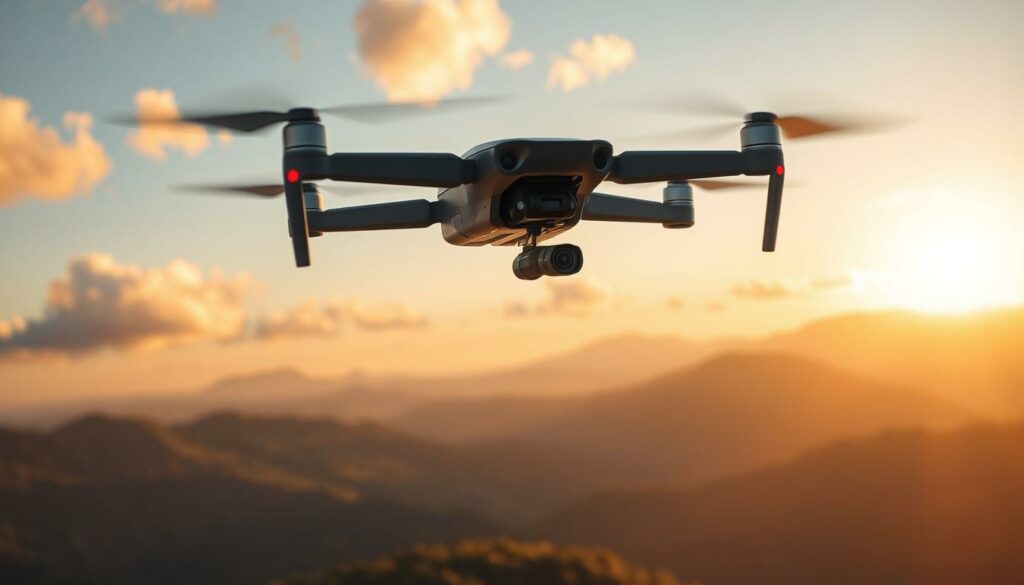
The Skydio 2+ represents a different approach to aerial photography, prioritising smart automation over manual control. This model excels where others might struggle, particularly for creators who film dynamic activities.
Advanced Tracking Features
What sets this device apart is its incredible tracking system. With a single button press, you can select your subject and let the technology handle the rest. The tracking capabilities work with people and vehicles from any direction.
It captures smooth 4K video at 60 frames per second while following your movement. This makes it perfect for solo creators who want professional-looking action sequences without an operator.
Obstacle Avoidance Technology
The 360-degree collision-avoidance system provides remarkable confidence. It uses multiple cameras to detect and navigate around obstacles in real time.
This feature is especially valuable in complex environments like forests or urban areas. Beginners can fly with peace of mind, knowing the device will avoid collisions automatically.
While the camera quality doesn’t match premium DJI models, the 12.3MP sensor still delivers acceptable results. The 6km transmission range is adequate for most scenarios though shorter than some competitors.
I recommend the Skydio 2+ for action-focused creators who value automated tracking and collision avoidance above ultimate image perfection.
Hands-On Experience with DJI Mavic Air 2
Navigating extreme altitudes and temperature ranges requires gear you can trust implicitly, which is why the DJI Mavic Air 2 became my go-to choice. Over two years of filming across Central Asia, this model proved itself as a true workhorse in challenging conditions.
Reliability in Varied Environments
Weighing just 570g, this equipment hits the sweet spot between portability and power. I’ve flown it at serious altitudes up to 5,000 metres above sea level, with temperatures ranging from -10 to 40 degrees Celsius.
The 34-minute flight time from its 3500mAh battery provides ample shooting opportunities. With a 10km transmitter range, it maintains solid connection even in remote locations.
Active Tracking and Autonomous Modes
The active track feature is incredibly useful for solo creators. Simply highlight your subject on screen, and the camera locks on to follow at parallel or constant distance.
This model captures stabilised 4K video at 60 frames per second with 48MP photo capability. The controller works seamlessly with your smartphone through the DJI app.
I strongly recommend the Fly More Bundle for extended expeditions. Having three batteries dramatically extends creative possibilities when charging isn’t available.
Highlighting the DJI Air 2S for Strong Camera Quality
Sometimes the difference between good footage and exceptional content comes down to the sensor capturing the light. The DJI Air 2S addresses this with its impressive 1-inch sensor, making it a standout choice for creators prioritising image quality.
Image and Sensor Excellence
This model’s 20MP resolution might seem modest compared to some 48MP competitors. However, the larger sensor size dramatically improves light capture and detail retention. The relationship between megapixels and sensor size is crucial for true image quality.
The Air 2S records stunning 5.4K video at 30fps, providing exceptional flexibility for post-production. This higher resolution future-proofs your footage as viewing standards evolve. The 4K option at 60fps offers smooth motion capture for dynamic scenes.
Performance Against Wind and Weather Challenges
DJI claims this equipment can handle winds up to 37km/h, though real-world performance varies. I’ve found it performs best in calmer conditions and flatter terrain. The upward-facing sensors enhance tracking stability during flight.
Remarkably quiet operation preserves the atmosphere of natural environments. The 8GB internal storage is minimal, but microSD expansion up to 256GB accommodates extended shooting sessions.
| Specification | DJI Air 2S | Practical Benefit |
|---|---|---|
| Sensor Size | 1-inch | Superior light capture and detail |
| Video Resolution | 5.4K at 30fps | Future-proof editing flexibility |
| Battery Life | 31 minutes | Extended shooting sessions |
| Wind Resistance | Up to 37km/h | Stable performance in mild conditions |
The Air 2S suits creators demanding premium image quality for larger screens or commercial projects. Its sensor advantage justifies the investment for serious visual storytellers.
Advanced Features in the DJI Mavic 3 Classic
For creators demanding uncompromising performance, the DJI Mavic 3 Classic represents the pinnacle of portable aerial technology. This premium model delivers professional-grade capabilities in a surprisingly compact package.
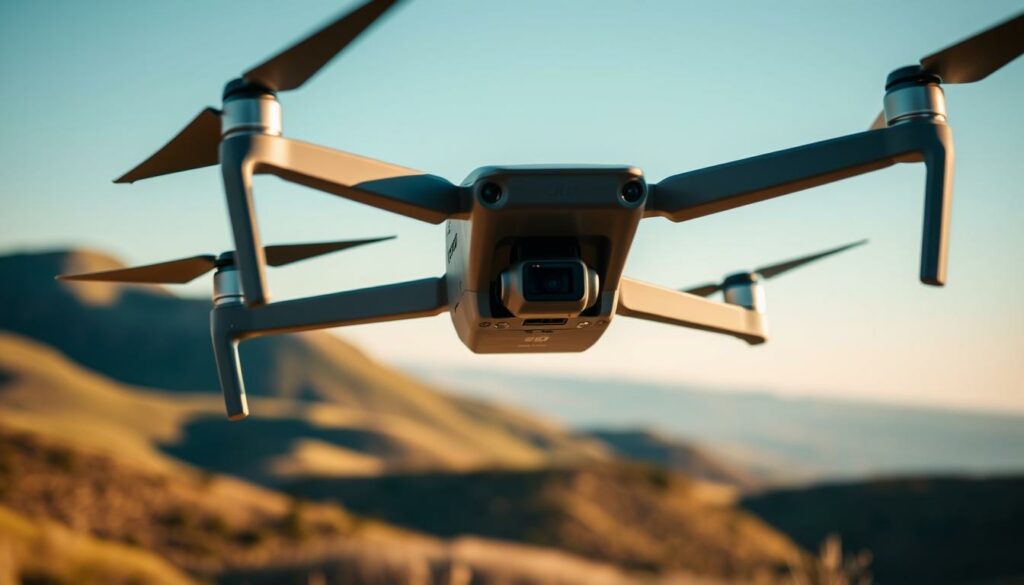
At approximately £1,500, the investment is significant but justified for serious content producers. The design balances advanced features with practical portability despite its 895g weight.
Professional Specifications and Hasselblad Partnership
The collaboration with Hasselblad brings legendary colour science to this aerial system. The 20MP Four Thirds sensor captures exceptional detail and vibrant colours.
This camera system records stunning 5.1K video at 50 frames per second. The quality surpasses most portable alternatives available today.
Eight sensors provide comprehensive obstacle avoidance for confident operation. The European C1 certification requires completing an online exam for legal operation.
Enhanced Battery Life and Speed
The 46-minute battery life provides nearly 50% more airtime than many competitors. This extended flight time dramatically reduces interruptions during shooting sessions.
With a maximum speed of 75kph, the dji mavic 3 Classic keeps pace with fast-moving subjects. The 5000mAh battery ensures consistent performance throughout each session.
This mavic pro level equipment suits experienced pilots and semi-professional creators. The performance justifies the price for those monetising their content.
Autel Evo Lite+: A Reliable Option for Windy Conditions
Weather conditions can make or break an aerial shoot, which is why I value equipment that handles wind confidently. The Autel Evo Lite+ stands out as a robust alternative for creators filming in challenging environments.
This model weighs 835g, making it heavier than some portable options. However, this weight contributes directly to its impressive stability in gusts up to 30mph.
Battery Life and Robust Construction
The 40-minute battery life is supported by a substantial 6175mAh power unit. This extended performance is crucial when working in unpredictable weather where multiple takes are often necessary.
Autel’s one-inch sensor matches the image quality of competing models while offering superior weather resistance. The camera captures 20MP stills and 5.4K video with excellent clarity.
With an 11.9km transmission range, this drone maintains solid connectivity even at distance. The package includes a capable controller for precise operation.
I recommend the Evo Lite+ for creators prioritising reliability over minimal weight. It’s particularly suited for coastal, mountain, or desert environments where lighter drones struggle.
Tips for Selecting the Best Travel Vlogging Drone
Before investing in any aerial system, I always recommend creators conduct a thorough self-assessment of their actual needs versus perceived wants. The ideal choice varies dramatically based on individual circumstances and filming habits.
Assessing Your Requirements for Portability and Features
Start by honestly evaluating your portability needs. Consider airline carry-on limits and how much backpack space you can realistically dedicate to your equipment. Even compact models require protective cases and accessories.
Next, distinguish between essential features and nice-to-haves. Do you truly need advanced tracking or would basic stabilisation suffice? Smaller drones struggle in windy conditions, while heavier options offer more stability.
Device compatibility is crucial. Verify that your smartphone or tablet works with your chosen model’s app before purchasing. Different systems require specific software with regular updates.
Research destination regulations thoroughly. Some countries like Uzbekistan and Morocco have strict bans, while others require complex registration. Your perfect option might be useless in your planned filming location.
Finally, budget for the complete system—not just the aircraft. Extra batteries, memory cards, and insurance add significant cost. The right drones balance performance with practical considerations for your specific content creation.
Guidelines for Drone Use and Regulations in the UK
Many creators overlook the legal side of aerial photography until they encounter restrictions firsthand. Understanding UK regulations ensures your filming sessions proceed smoothly without legal complications.
Understanding UK Drone Laws
All pilots must complete the free online CAA Drone and Model Aircraft Registration and Education Service training. This provides your flyer ID, which is mandatory before any flight.
The rules are straightforward but essential. You must maintain visual line of sight with your equipment at all times. Flying above 400 feet is prohibited for recreational use.
Stay clear of airports and restricted airspace. Avoid flying over groups of people or crowded events. Emergency response zones are strictly off-limits during incidents.
Safety, Registration and Compliance
Registration depends entirely on your equipment’s weight. Models under 250g benefit from simplified requirements after training completion.
Heavier drones require formal operator registration through the official CAA portal. You’ll receive a unique number that must be displayed on your aircraft.
I always check temporary flight restrictions using apps like NATS Drone Assist before planning any session. These no-fly zones change regularly based on events and emergencies.
When travelling internationally, research destination regulations thoroughly. Some countries like Morocco implement complete bans, risking equipment seizure at customs.
Comparing DJI and Competitor Brands
The drone market landscape has shifted dramatically in recent years, with clear winners emerging in the consumer space. DJI continues to dominate most creator conversations thanks to their comprehensive product range.
Pros and Cons of Leading Models
DJI’s advantages are substantial. Their cameras deliver exceptional quality even in entry-level equipment. The intuitive app interface and reliable flight performance make operation straightforward for creators.
However, regulatory concerns about potential bans in some markets create uncertainty. This has prompted many to explore alternatives like Potensic, whose Atom 2 receives positive reviews.
Former competitors like Autel and Skydio have pivoted away from consumer drones. This leaves a gap that emerging companies are starting to fill.
Market Trends and Future Prospects
The competitive field has narrowed considerably. Most major players now focus on industrial applications rather than consumer models.
Exciting developments are on the horizon though. Insta360 plans to release their Antigravity A1 next year with a unique 360-degree camera system.
While alternatives exist, they often involve compromises in camera quality or software polish. DJI remains the safest choice for most creators, but keeping an eye on emerging options makes sense given market dynamics.
Effective Strategies for Drone Content Creation
Creating memorable aerial footage involves a careful blend of technical execution and creative vision that serves your story. I’ve discovered that the most engaging content comes from thoughtful planning rather than random flying.
Professional equipment like the DJI Inspire 3 with its full-frame camera and interchangeable lenses opens incredible possibilities. Smaller models like the Avata 2 excel at navigating tight spaces for immersive one-take videos.
Creative Videography Techniques
Mastering movement patterns transforms basic footage into cinematic sequences. The classic reveal shot builds anticipation by starting close and pulling back to reveal the landscape.
Orbit shots circling a subject create dynamic energy. Active tracking features help maintain smooth following shots without manual control challenges.
FPV-style flying with Cinewhoop drones allows for fluid navigation through complex environments. These techniques work best when they serve the narrative rather than just showing off.
| Technique | Best Use Case | Skill Level Required |
|---|---|---|
| Reveal Shot | Landscape introductions | Beginner |
| Orbit Movement | Highlighting subjects | Intermediate |
| Tracking Shot | Action sequences | Intermediate |
| FPV Navigation | Immersive tours | Advanced |
Tips for Editing and Sharing Engaging Content
Colour grading aerial footage requires attention to atmospheric conditions. I adjust for haze and light variations to maintain consistent image quality across shots.
Speed ramping can emphasise dramatic moments in your video. Integrate aerial shots seamlessly with ground-based footage to create cohesive storytelling.
Platform optimisation matters for sharing. Vertical formats work well for social media, while landscape suits YouTube. Webinars offer excellent opportunities to learn advanced photography techniques.
Conclusion
As we’ve explored various options, the importance of matching your gear to your specific filming needs becomes clear. The right choice balances portability, camera quality, and reliable performance.
Whether you choose the lightweight Mini series or professional Mavic 3 Classic, consider long-term value beyond the initial price. Factor in accessories, insurance, and potential repairs.
Remember that regulations vary significantly between locations. Research local laws before purchasing or travelling with your equipment.
The most suitable option is the one you’ll actually use consistently. Start creating and learning—the creative possibilities make this investment worthwhile for serious content creators.
Stay informed about this evolving market as new models and regulations continue to shape the landscape of aerial photography and video production.
FAQ
What is the most important feature for a travel vlogging drone?
For me, portability is paramount. I need a model that’s lightweight and folds down small enough to fit in my backpack without taking up all the space. A compact design, like that of the DJI Mini series, is a game-changer for mobility.
How crucial is battery life when I’m out filming all day?
Extremely important. I always look for a model with a flight time of at least 25-30 minutes. It means less time swapping batteries and more time capturing footage. Carrying extra batteries is my top tip for longer shooting sessions.
Do I really need obstacle avoidance sensors?
As someone who films in unpredictable locations, I find obstacle avoidance incredibly valuable. It adds a layer of safety, especially when you’re focused on framing the perfect shot and not on the surrounding trees or buildings.
Is the camera quality on smaller drones like the DJI Mini Pro good enough for professional content?
Absolutely. The camera and sensor in models like the DJI Mini 3 Pro produce stunning 4K video. The image quality is more than sufficient for high-end online content, making it a fantastic choice for creators.
What should I know about drone laws in the UK before I fly?
It’s essential to understand the rules. In the UK, you must register your drone if it weighs over 250 grams and pass an online theory test. Always fly responsibly, respecting no-fly zones and privacy laws to ensure everyone’s safety.
How does the DJI Air 2S compare to the Mavic 3 for a traveller?
The DJI Air 2S offers a brilliant balance. Its larger sensor delivers excellent image quality in a more portable package than the Mavic 3. For my travels, its combination of performance and size often makes it the ideal choice.
Are there any good options from brands other than DJI?
Yes, definitely. The Autel Evo Lite+ is a strong competitor, particularly praised for its performance in windy conditions. It’s always worth comparing different brands to see which features best suit your specific needs.