
What if the secret to stunning YouTube vlogs isn’t about having the most expensive gear, but the right aerial companion that truly understands a creator’s needs? Having spent years filming from the skies for my own channel, I’ve realised that the perfect match makes all the difference.
I’m thrilled to share this complete guide, drawing from my hands-on experience analysing the latest models. The market for these flying cameras has evolved dramatically, with manufacturers now prioritising features that directly benefit content creators.
This guide will walk you through the current landscape, helping you select a model that aligns with your vlogging style, budget, and creative ambitions. Whether you’re starting your channel or upgrading your setup, my goal is to cut through the marketing noise.
I’ll provide honest, real-world insights from testing numerous options. By the end, you’ll have the knowledge to make a confident choice that elevates your video content and grows with your channel in 2026.
Key Takeaways
- This guide is based on years of practical experience creating aerial content for YouTube.
- The market for vlogging drones has significantly evolved to focus on creator-specific features.
- Learn how to select a model that matches your unique style, budget, and ambitions.
- Gain honest insights to help you navigate beyond manufacturer marketing claims.
- The aim is to help you invest in equipment that delivers exceptional quality and grows with your channel.
- You will finish this guide equipped to make a confident and informed purchasing decision.
Introduction: My Journey with Drones for Vlogging
My journey into the world of aerial filming started with a simple realisation: a sky-high view could completely change a story. I saw how ordinary scenes became epic when filmed from above. This fascination ignited my passion for using these flying cameras in my own projects.
I began with a very basic model. It was a steep learning curve, filled with more than a few crashes! Those early experiences taught me a crucial lesson. The right equipment is the difference between a frustrating flight and capturing smooth, professional-looking video.
Through countless hours of practice, I developed a deep understanding of what makes a model truly suitable for a creator. It is not just about aerial photography. It is about how the drone supports the entire content creation process. I have watched the industry shift its focus towards us, the creators.
Manufacturers now prioritise features we actually want. Think longer battery life and intuitive controls. My approach to reviewing these tools is always from a vlogger’s perspective. I test how they perform in real-world scenarios, not just on a spec sheet.
Over the years, connecting with fellow creators has been invaluable. Their feedback has shaped my understanding of what works. This guide is the culmination of that personal journey. It combines hands-on testing and a genuine desire to help you find the perfect flying camera.
Understanding the Vlogging Drone Market in 2026
As we look ahead to 2026, the ecosystem of aerial filming equipment presents both exciting opportunities and important considerations. The landscape for these flying cameras has matured significantly, with manufacturers now targeting specific creator needs.
DJI continues to lead this competitive space with an impressive range of models. Even their entry-level options now support professional-grade capabilities like 10-bit colour and 4K resolution. The company’s focus on aircraft design ensures excellent stability and battery performance.
However, regulatory concerns about DJI’s future availability in certain markets have created openings for alternatives. Brands like Potensic are gaining recognition for offering reliable performance at competitive price points. Their Atom series demonstrates that quality choices exist beyond the market leader.
The most exciting development comes from innovative newcomers. Insta360’s Antigravity A1, launching in 2026, features dual fisheye cameras for 360-degree capture. This could revolutionise how creators approach aerial perspectives.
I’ve observed clear market segmentation emerging. Budget-friendly options cater to beginners, while mid-range models suit serious hobbyists. Professional-grade equipment serves established creators with specific requirements. Understanding these dynamics helps you make an informed choice that grows with your channel.
Key Features to Look for in a Vlogging Drone
Having tested countless flying cameras over the years, I’ve identified several critical functions that separate mediocre equipment from exceptional tools for creators. The right combination of technical capabilities can transform your filming experience from frustrating to fluid.
While impressive specifications on paper might catch your eye, it’s the practical features that truly matter during actual use. Let me break down what I consider non-negotiable for serious content creation.
Flight Time and Battery Life
Flight time directly impacts your creative workflow. Manufacturers often advertise optimistic numbers, but real-world usage typically gives you 20-25% less time when actively recording and manoeuvring.
I always recommend investing in extra battery packs. Modern equipment offering 30-40 minutes of flight capability provides enough opportunity for multiple takes without constant interruptions. This extended battery life is crucial for maintaining productivity during shooting sessions.
Obstacle Avoidance and Sensors
Advanced obstacle avoidance systems have become game-changers. Basic models now include forward sensors, while premium options feature 360-degree detection that autonomously navigates around trees and other obstructions.
These intelligent sensors provide an essential safety net, especially when you’re focused on framing the perfect shot rather than navigation. GPS-assisted stabilisation is now standard, enabling perfect hovering and automatic return-to-home functions that prevent lost aircraft.
When selecting your equipment, don’t compromise on these core features. They’re the difference between anxiety-inducing flights and confident, creative sessions that produce outstanding footage.
A Closer Look at Camera and Video Specifications
Understanding camera specifications is crucial for creators who want their aerial shots to stand out in today’s competitive content landscape. The technical details behind the lens determine whether your footage looks amateur or professional.
I’ve tested numerous systems and found that resolution numbers alone don’t tell the full story. Sensor size, colour science, and dynamic range contribute equally to the final result.
4K Resolution and Image Quality
Modern equipment now offers 4K resolution as standard, with premium models pushing into 5.1K and even 6K60 territory. This provides exceptional detail for post-production editing.
I’m particularly impressed by how even entry-level options support 10-bit colour sampling. This captures significantly more colour information than standard 8-bit video.
The result is smoother gradients and greater flexibility during colour grading. Professional colour profiles like Hasselblad’s implementation reduce time spent in post-production.
Advanced Sensor Performance
Sensor size dramatically affects low-light performance and overall image quality. Larger Four Thirds format sensors deliver substantially better results than smaller alternatives.
Advanced sensor performance translates directly to better dynamic range. Your footage retains detail in both bright skies and shadowed areas simultaneously.
This is crucial for outdoor filming in challenging lighting conditions. Raw photography support is increasingly common, allowing maximum flexibility for post-processing.
Weight, Portability and Drone Design Considerations
Portability has emerged as one of the most practical considerations for modern content creators who are constantly on the move. The physical characteristics of your equipment can determine whether it becomes a trusted travel companion or stays at home.
I’ve found the 249g threshold represents a sweet spot for balancing capability with regulatory freedom. Equipment under 250g typically avoids registration requirements in many regions, offering tremendous flexibility for international travel.
Modern folding airframe design transforms what was once bulky gear into packable equipment. Even capable models now collapse to fit in a backpack or camera case, making them ideal for creators on the go.
The build quality and materials significantly impact durability during regular use. DJI’s higher-grade plastics withstand minor impacts better than competitors using lighter materials. However, brands like Potensic demonstrate that reliable performance can still be achieved with thoughtful engineering.
| Weight Category | Registration Required | Portability | Ideal Use Case |
|---|---|---|---|
| Under 250g | Typically exempt | Excellent | International travel |
| 250g – 500g | Usually required | Good | Local filming |
| Over 500g | Always required | Limited | Professional studio work |
When selecting your equipment, consider your typical filming scenarios. If you frequently travel by air, weight becomes critical for baggage allowance. For local shooting, a slightly heavier model with superior features might serve you better.
Navigating Drone Flight Safety and Regulations in the UK
Before you even think about taking to the skies with your new equipment, understanding the legal framework is absolutely essential for any responsible operator. I’ve learned through experience that knowing the rules actually enhances your creative freedom rather than limiting it.
The UK’s Civil Aviation Authority (CAA) governs all unmanned aircraft operations with regulations designed to protect public safety while allowing responsible recreational and commercial use. These rules vary significantly from other countries, so always research local requirements when travelling abroad.
Understanding UK Guidelines
Every operator in the UK needs an Operator ID, obtained through the CAA’s online system after completing a free theory test. This covers essential knowledge about airspace restrictions, safety protocols, and operational limitations.
Classification by weight is crucial here. Equipment under 250g enjoys more relaxed rules, while heavier models face stricter requirements regarding where and how you can fly. This is particularly important around people and built-up areas.
I always emphasise maintaining visual line of sight with your aircraft, staying below 400 feet altitude, and respecting privacy by avoiding flying directly over people or private property without permission. For creators monetising content, you may need a commercial pilot qualification (A2 CofC) as monetised channels can be considered commercial use.
Flight safety extends beyond legal compliance. Responsible pilots check weather conditions, assess wind speeds, and inspect equipment before each operation. I recommend using apps like Drone Assist to check airspace restrictions in real-time.
Understanding and respecting these regulations keeps you legal while protecting the broader community by demonstrating responsible use that helps prevent restrictive legislation.
In-depth Review: DJI Mini and Air Models
Many creators ask me which DJI model strikes the right balance between travel-friendly size and filming capability. Having tested multiple generations, I find the Mini series represents the gold standard for lightweight equipment.
The DJI Mini 4 Pro stands out as my top 249g recommendation. Its dual-aspect camera shoots both horizontal and vertical formats, while comprehensive obstacle sensors provide maximum safety. Despite its compact size, this model delivers exceptional 4K video quality that rivals larger equipment.
For budget-conscious creators, the DJI Flip offers remarkable value with prop guards and forward detection. It curiously omits the vertical camera flip feature, but remains the most affordable option with these safety features.
The tiny DJI Neo launches from your hand and excels at quick selfie-style content. It includes half a dozen automated flight paths perfect for social media creators.
Battery performance across the Mini range typically delivers 25-34 minutes of flight time. In real-world scenarios, this translates to about 20-25 minutes of usable recording video time.
The DJI Air series occupies the middle ground between ultra-portable Mini models and professional equipment. If you prioritise maximum portability, the Mini series is unbeatable. However, if you can accommodate slightly more weight, DJI Air models deliver noticeably superior camera performance.
Comparing the Mavic Pro and Other High-end Options
Stepping into the premium segment of aerial filming equipment requires careful consideration of how DJI’s Mavic Pro models compare with other high-end options available to UK creators.
I’ve found the Mavic Pro series represents DJI’s premium consumer line, delivering professional-grade performance that justifies the investment for serious content creators. The combination of exceptional camera quality and robust flight performance consistently places these models at the top of my recommendations.
Performance and Flight Stability
During my testing, the Mavic 3 Pro impressed with its 5.1K video capability and Hasselblad colour profile. The newly released Mavic 4 Pro builds on this foundation with 6K60 recording and innovative spinning effect shots.
Flight stability is where the Mavic Pro truly distinguishes itself. I’ve flown these drones in moderate wind conditions where lighter models struggled, yet the Mavic Pro maintained rock-solid stability throughout.
The extended range capabilities provide creative freedom for capturing sweeping landscape shots. Battery performance typically exceeds 40 minutes, giving you genuinely usable 30-35 minute recording sessions.
When comparing the Mavic Pro to other high-end options, the superior camera quality becomes most apparent in challenging lighting conditions. The larger sensor delivers clean footage where smaller drones produce noisy results.
My Personal Experience with Drone Flight and Vlogging Practice
Mastering aerial content creation requires more than just quality equipment; it demands dedication to developing your piloting skills. I remember my first flight vividly—a mix of excitement and nerves as I lifted off, acutely aware that one wrong move could end badly.
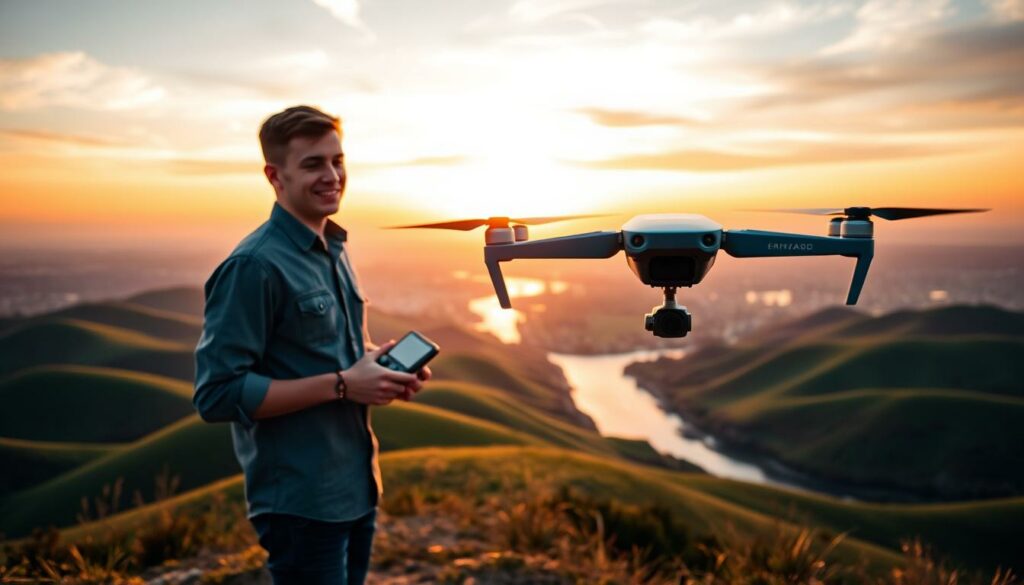
Practice became my foundation for improvement. I spent dozens of hours in open spaces before attempting complex shots. This disciplined approach prevented many potential accidents.
One particularly valuable lesson came from a near-miss with a tree. It taught me to always prioritise safety over capturing the perfect video clip. No shot is worth risking your equipment or legal standing.
I developed a strict pre-flight routine that I follow religiously. This includes checking weather conditions, inspecting propellers, ensuring full battery charge, and surveying the area for hazards.
My approach to filming has evolved significantly. I now carefully plan shot sequences rather than flying randomly. Time management during sessions is crucial since even drones with good battery life offer limited shooting windows.
The way I compose shots has improved through studying cinematic techniques from other creators. I’ve learned that sometimes the most compelling content comes from spontaneous moments when you’re comfortable enough with your drone to react quickly.
My Top Pick: The Best Drone for Vlogging
The moment of truth has arrived—after evaluating countless models side by side, one particular flying camera consistently outperformed all others in real-world vlogging scenarios. This choice represents the perfect balance of quality, portability, and intelligent features that creators actually need.
My recommendation focuses on what matters most for YouTube content creation. The selected option delivers exceptional video quality that seamlessly blends with ground-level footage. You won’t experience jarring differences between your aerial shots and other content.
What truly sets this model apart is its real-world performance. It works brilliantly when you’re tired or racing against fading light. The intuitive controls make quick setup possible, capturing those spontaneous moments that elevate your content.
This choice offers genuine value for money. While not the cheapest option available, it provides substantially better results than budget alternatives. The camera system produces professional-grade footage without professional-grade costs.
The versatility across different shooting environments impressed me most. From travel adventures to local filming, this equipment delivers consistent excellence. It appears regularly on respected recommendation lists, confirming its status as a top-tier tool for vlogging.
This particular drone strikes that ideal balance I wish I’d had when starting out. It’s capable enough for advanced cinematography yet forgiving for beginners. Modern drones like this make aerial content creation accessible to all skill levels.
Exploring Additional Competitive Models in the Market
While my top recommendations often feature DJI equipment, I believe it’s crucial for creators to understand the full spectrum of options available in the 2026 market. Exploring alternative models is particularly important if you face regional availability challenges or simply want different features.
I’ve been impressed by Potensic’s emergence as a credible competitor. Their Atom 2 earned a solid four-star rating in my tests, delivering reliable performance at a competitive price point. This drone demonstrates that quality choices exist beyond the mainstream brands.
The most exciting development comes from Insta360’s new Antigravity sub-brand. Their A1 model, launching in 2026, features innovative dual fisheye lenses for 360-degree capture. It maintains the desirable 249g weight while including built-in Remote ID and a unique one-handed controller.
However, the competitive landscape has contracted significantly. Several former players have exited the consumer drone space entirely:
- Autel Robotics now focuses on industrial applications
- Parrot, Skydio, and Yuneec have abandoned the market
- GoPro and Sony have also discontinued their consumer lines
This consolidation means fewer choices, but the remaining options from brands like Potensic show that quality alternatives persist. When considering these drones, I recommend researching spare parts availability and software update commitments. These factors significantly impact long-term satisfaction with your camera equipment.
The limited competition could allow newer entrants like Antigravity to bring fresh innovation to drone design. Their approach might challenge established conventions in this evolving market.
Enhancing Your Vlogging Content with Advanced Drone Features
The real magic happens when your equipment becomes an extension of your creative vision, thanks to sophisticated automation and intuitive controls. Modern features have transformed aerial filming from a technical challenge into a seamless creative process.

Controller Ease of Use and Remote ID
I appreciate how controller design has evolved to suit different preferences. DJI’s slick app interface allows control through your phone or tablet, while dedicated controllers with physical sticks offer more precision.
Remote ID broadcast is now mandatory for commercial operations. This system transmits identification and location data that authorities monitor. Licensed pilots must ensure their equipment includes this feature for monetised content.
| Control Method | Precision Level | Learning Curve | Ideal User |
|---|---|---|---|
| Phone/Tablet App | Good | Low | Beginners |
| Dedicated Controller | Excellent | Medium | Experienced users |
| One-handed Design | Fair | Very Low | Social media creators |
Innovative Flight Modes
Automated paths like orbit, dronie, and follow-me enable complex cinematic movements. These features are invaluable when filming alone, letting you focus on presentation while the equipment handles navigation.
The DJI Neo includes half a dozen pre-programmed flight paths that make impressive results accessible to beginners. Emerging innovations like the Antigravity A1’s one-handed controller suggest exciting possibilities for more intuitive operation.
Subject tracking is particularly transformative for action content. The equipment autonomously follows and frames moving subjects, capturing dynamic perspectives that would otherwise require a camera operator.
Budget Considerations and Value for Money Analysis
Budgeting for aerial content creation requires a comprehensive approach that accounts for accessories, registration, and maintenance expenses. The initial purchase price is just the starting point of your investment.
Equipment costs vary significantly across categories. Entry-level options start around £300-400, while mid-range models occupy the £600-900 bracket. Premium equipment commands £1,200-2,000+.
| Category | Price Range | Capability Level | Ideal User |
|---|---|---|---|
| Entry-Level | £300-400 | Basic filming | Beginners |
| Mid-Range | £600-900 | Advanced features | Serious creators |
| Premium | £1,200-2,000+ | Professional quality | Established channels |
Additional costs quickly add up. Spare battery packs cost £80-150 each, while carrying cases range from £30-100. UK registration with the CAA costs £10.33 annually.
Value for money means finding equipment that delivers needed capabilities without paying for unused professional features. My recommendation list prioritises models offering the best performance-to-price ratio.
Consider total ownership costs over 2-3 years. This comprehensive view helps justify spending more initially for better long-term value. The right choice balances your budget with creative needs.
Innovative Drone Features to Look Forward To in 2026
Looking ahead to 2026 reveals some genuinely exciting developments in aerial filming technology that will transform how creators approach their craft. The industry continues evolving at a remarkable pace, with innovations designed to expand creative possibilities while making operation more intuitive.
I’m particularly excited about Insta360’s Antigravity A1 launching next year. This remarkable piece of technology features dual fisheye cameras capturing a complete 360-degree field of view. The approach means you can reframe footage after landing rather than committing to compositions during flight.
The A1’s one-handed controller represents a significant departure from traditional designs. It could make operation more intuitive for creators accustomed to smartphone interfaces. At 249g with built-in Remote ID, it maintains that crucial regulatory advantage.
Battery technology continues advancing impressively. Manufacturers are working on cells promising 50+ minute flight times without weight penalties. This would transform workflow by reducing constant battery management interruptions.
AI-powered subject tracking is becoming increasingly sophisticated. Future drones will recognise specific individuals in crowded environments. They’ll maintain perfect framing through complex movements for smoother tracking.
Improved low-light camera performance through larger sensors will expand shooting beyond golden hour limitations. We’re also likely to see continued miniaturisation with sub-200g drones offering professional video quality.
These emerging features demonstrate how drone manufacturers are listening to creator needs. The focus is clearly on making aerial content creation more accessible and rewarding. 2026 looks set to be a breakthrough year for this exciting technology.
Tips for Maximising Battery Life and Flight Time
Over the years, I’ve developed a systematic approach to extending flight duration that consistently delivers more usable filming time. Proper management of your equipment’s power source can significantly impact your creative workflow and productivity.

Temperature plays a crucial role in battery performance. I always store my batteries at room temperature and warm them to 20-25°C before each flight. Cold conditions can trigger premature low-voltage warnings and reduce overall capacity.
Pre-flight Checklists and Maintenance
My pre-flight routine includes inspecting propellers for damage and checking motor mounts for tightness. I also verify the gimbal moves freely and confirm all firmware is current. These checks ensure optimal efficiency and safety.
Flying style dramatically affects power consumption. Smooth, gentle movements drain energy far more slowly than aggressive manoeuvres. Avoiding strong wind conditions also preserves battery life, as your equipment works less to maintain stability.
| Factor | Impact on Battery Life | Recommended Action |
|---|---|---|
| Temperature | High impact | Warm to 20-25°C before flight |
| Flying Style | Medium impact | Use smooth, gentle movements |
| Wind Conditions | High impact | Avoid flying in strong winds |
| Battery Storage | Medium impact | Store at 50-60% charge |
I’ve learned to plan shot sequences efficiently, grouping locations and avoiding unnecessary backtracking. Landing at 25-30% remaining power prevents pushing the battery to its limits. The Find My Drone feature provides peace of mind if power runs critically low unexpectedly.
Regular maintenance extends equipment lifespan significantly. I clean motors, check for loose screws, and calibrate sensors regularly. This ensures your aerial tool operates efficiently throughout its operational life.
Conclusion
Finding the perfect aerial companion for your YouTube channel is about more than just technical specifications—it’s about discovering a tool that truly understands your creative vision.
Throughout this guide, I’ve shared my honest reviews and real-world testing experiences. The key difference between adequate and exceptional equipment comes down to how it supports your unique content creation style.
Remember that becoming a skilled pilot requires practice and patience. Your equipment choice should match your current skill level while allowing room for growth.
Safety and responsible flying should always come first. I hope my insights help you select a camera system that brings your aerial photography dreams to life.
The world of flying drones offers incredible creative possibilities. With the right approach, your content will truly resonate with audiences.
FAQ
What is the most important feature for a vlogging drone?
For me, the combination of excellent camera quality and portability is paramount. You need a device that captures stunning 4K video but is also light enough to carry all day. Flight time is a very close second, as it dictates how long you can film in a single session.
How does the DJI Mini series compare to the Mavic Pro for a YouTube creator?
Having used both, I find the Mini models, like the Mini 4 Pro, are fantastic for their compact design and weight, which keeps them under certain regulatory limits. The Mavic Pro offers more advanced features and superior wind resistance, making it a powerhouse for professional-grade projects where ultimate image quality is the goal.
Is obstacle avoidance necessary for a beginner?
Absolutely. As a beginner myself once, I can say that comprehensive sensors are like a safety net. They help prevent costly crashes while you’re learning to pilot and focusing on framing your shot. It’s one feature I wouldn’t recommend skipping, even on an entry-level model.
What is a realistic flight time I should expect?
Most modern consumer drones offer between 25 to 35 minutes of airtime on a single charge. In my experience, you should always plan for less, around 20-25 minutes, to account for factors like wind resistance and filming manoeuvres that drain the battery faster.
Are there specific UK laws I need to know about before I fly?
A> Yes, definitely. The UK has specific guidelines, especially concerning where you can fly and drone registration. Any craft over 250 grams must be registered with the CAA, and you need to pass an online theory test to get a flyer ID. It’s crucial to check the latest rules on the CAA website before your first flight.
Can I get good video quality without spending a fortune?
A> You certainly can. The market has become very competitive. Many models, including some from the DJI Air line, offer superb 4K resolution and impressive image stabilisation at a mid-range price point. It’s about balancing your budget with the camera specifications that matter most for your content.
How important is the controller’s design?
A> I’ve found that a well-designed controller makes a huge difference. A comfortable grip, intuitive button layout, and a reliable connection all contribute to a smoother flying experience, allowing you to concentrate on capturing great footage rather than fighting with the controls.