
What if the sky above your next creative project is no longer a free and open space? The rules governing our airspace are set for their most significant transformation in years.
From 1st January 2026, the UK Civil Aviation Authority (CAA) will implement a new class marking system. This change affects the Open Category, which covers many leisure and low-risk commercial flights. As the UK’s Market Surveillance Authority, the CAA will ensure manufacturers and distributors meet these required standards.
For filmmakers, photographers, and other visual artists, understanding these updates is critical. This guide is designed to help you navigate the new landscape. I will break down the complex legal language into clear, practical steps.
We will explore the new class markings, Remote ID requirements, and operational categories. My goal is to ensure you can prepare your equipment and maintain compliance without disrupting your creative process. Let’s demystify the future of aerial content creation together.
Key Takeaways
- Major regulatory changes for unmanned aircraft are coming into effect in 2026.
- The UK’s CAA will oversee a new class marking system starting 1st January.
- These updates will impact both hobbyists and professionals using aerial technology.
- Preparation is essential to ensure continued compliance and creative freedom.
- This guide provides actionable information on class markings and operational categories.
- Understanding the changes now helps avoid disruptions to your projects.
Introduction to the New Drone Regulatory Landscape
The rapid growth of aerial technology usage demands a fresh approach to how we manage our shared airspace. Our skies are becoming busier than ever before.
As unmanned aircraft become more common in creative industries, the risks of conflict increase. The Civil Aviation Authority’s new framework addresses this challenge head-on.
Emerging Trends and Future Changes
I see several key trends driving these regulatory updates. The proliferation of flying devices in commercial sectors creates new opportunities. But it also requires improved airspace management.
Our crowded skies need smarter systems. The integration of unmanned craft demands clear guidelines. These changes represent a necessary evolution.
Why the 2026 Update Matters
This regulatory shift matters deeply for content creators like us. It establishes baseline safety standards through class marks. It also ensures traceability via Remote ID systems.
The January 2026 changes professionalise our industry. They provide clearer operational guidelines that benefit everyone. Rather than limiting creativity, they enhance our freedom to operate safely.
Compliance is shifting from policing behaviour to embedding it directly into aircraft. This makes it easier for operators to know their equipment meets required standards.
Understanding UK and EU Regulatory Overhaul
Britain’s departure from the EU has led to distinct approaches in unmanned aircraft regulation. While the UK’s class marking framework stems from retained EU law, our civil aviation system has adapted it to serve domestic needs. This creates a unique regulatory environment for operators.
The UK Civil Aviation Authority developed this framework to balance international alignment with sovereign airspace control. Our system maintains safety while reflecting British requirements.
Key Differences in the Approach
The UK never adopted EASA’s C-class markings previously. Instead, we operated with criteria for non-class-marked aircraft. Now we’re implementing our own UK-class system (UK0-UK6).
While similar to EASA’s C0-C6 structure, the UK version incorporates specific British aviation authority standards. This ensures our framework meets local operational needs.
Implications for the UK Market
As Market Surveillance Authority, the Civil Aviation Authority ensures manufacturers and distributors meet UK-specific standards. This affects all unmanned aircraft sold in Britain.
Existing EU C-class drones remain recognised until 31 December 2027 as equivalent UK classes. This transitional period helps content creators adapt gradually.
| Feature | UK System | EU System |
|---|---|---|
| Governing Body | UK Civil Aviation Authority | EASA |
| Class Structure | UK0-UK6 | C0-C6 |
| Transition Period | Until 31 Dec 2027 | Varies by member state |
| Market Surveillance | UK CAA as MSA | National authorities |
This overhaul positions the UK market for growth while maintaining robust safety standards. The aviation authority’s framework ensures both compliance and innovation.
Overview of Drone Class Marking System
At the heart of the upcoming changes lies a simple yet powerful concept: the class identification label. This system transforms complex regulations into clear, visual indicators that anyone can understand.
Defining Class Markings and Their Purpose
A class marking acts as a certification label confirming that your equipment meets specific safety and performance standards. Think of it as a quality seal that tells you exactly what you’re working with.
This practical system helps content creators quickly determine operational capabilities. You no longer need to decipher complex technical documents. The class mark provides instant clarity about where and how you can legally operate your aircraft.
Criteria for Each Drone Class
The UK system ranges from UK0 to UK6, with each class having distinct requirements. UK0 covers the lightest drones under 250g, offering maximum operational freedom with minimal restrictions.
UK1 class marks apply to equipment under 900g but require advanced safety features. These include low-speed mode and built-in remote identification systems.
Heavier equipment falls into higher classes with corresponding operational limitations. UK2 and UK3 cover progressively larger aircraft, while UK4 serves model aircraft and DIY builds.
The physical label must appear on compliant equipment. This visible class marking ensures both operators and authorities can verify compliance at a glance.
Exploring the Open Category for Drone Operations
For most aerial content creators, the open category will be your primary operational space. This framework offers a balanced approach to creative freedom and safety compliance.
The open category covers leisure activities and low-risk commercial work like photography. Understanding its three subcategories helps you plan successful operations.
Subcategories A1, A2 and A3 Explained
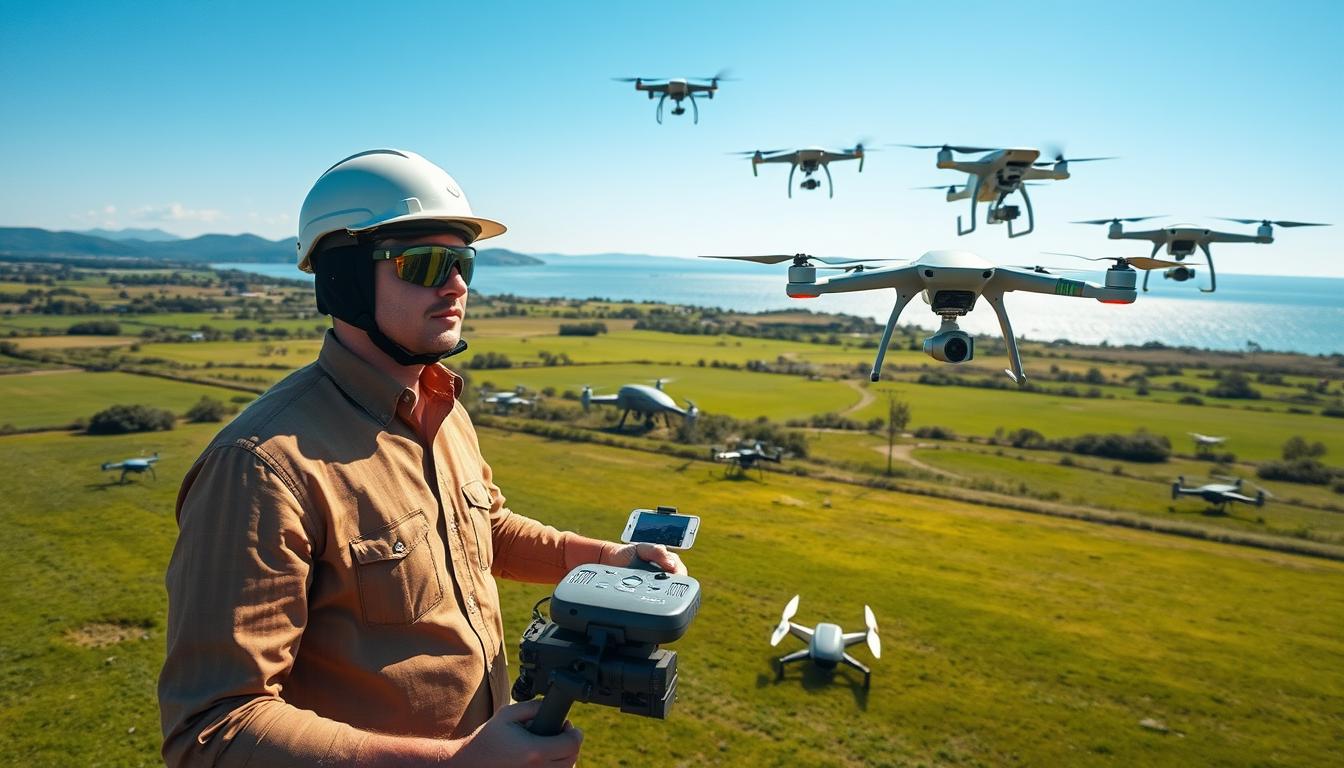
A1 operations allow flight over individual uninvolved people but not over assemblies of people. This is perfect for filming in parks or urban areas with scattered individuals.
A2 operations permit flying closer to people with UK2 class-marked equipment. Certified operators can work within 30 metres, reducing to 5 metres in low-speed mode.
A3 operations require maintaining distance from residential areas and individuals. This subcategory suits rural filming where you can stay 150 metres from zones and 50 metres from uninvolved people.
All open category activities must maintain visual line sight during flight. Your visual line of the aircraft ensures safe operations and compliance with regulations.
Baseline rules apply across all subcategories. You must fly below 120 metres, yield to manned aircraft, and avoid carrying dangerous items. Maintaining clear line sight is fundamental to safe flying.
Remote ID: The Future of Drone Identification
Imagine every aircraft in our skies carrying its own digital licence plate. This is the essence of Remote ID technology. It requires your equipment to broadcast real-time identification and location data during flight.
This system fundamentally changes how authorities monitor and trace operations. It promotes accountability while maintaining privacy for content creators.
Timeline and Implementation Deadlines
The rollout happens in two key phases. From 1st January 2026, class-marked UK1, UK2, UK3, UK5 and UK6 drones must broadcast Remote ID during all flights.
A second deadline follows on 1st January 2028. This extends the requirement to all remaining aircraft 100g or heavier with cameras. This includes legacy equipment, UK0 class, homebuilt, and model aircraft.
| Implementation Phase | Start Date | Affected Equipment |
|---|---|---|
| Phase 1 | 1st January 2026 | Class-marked UK1, UK2, UK3, UK5, UK6 drones |
| Phase 2 | 1st January 2028 | All drones 100g+ with cameras (legacy, UK0, homebuilt) |
How Remote ID Enhances Traceability and Safety
The transmitted data includes the aircraft’s serial number, operator identification number, and current location. Importantly, it doesn’t share personal details or camera feeds.
This technology allows authorities to identify and trace equipment mid-flight. It helps distinguish compliant operators from those engaging in unsafe operations.
Operating without Remote ID after the deadline becomes a criminal offence. Compliance is essential for all operators using affected equipment.
The technical standards ensure reliable transmission of identification data. This builds public trust and reduces security concerns about aerial operations.
Insights into drone laws europe 2026
These updates represent more than just new rulesâthey’re designed to unlock opportunities. I want to explore the strategic thinking behind these changes and how they benefit everyone involved.
Regulatory Objectives and Stakeholder Benefits
The Civil Aviation Authority’s primary goal is enhancing safety through the class marking framework. This approach establishes clear standards that benefit manufacturers, operators, and the public alike.
Manufacturers gain precise design specifications to work towards. Pilots receive clearer operational privileges with certified equipment. The public enjoys enhanced accountability and airspace safety.
Comparisons with EASA and Legacy Systems
While similar to EASA’s C0-C6 system, the UK’s approach maintains distinct national requirements. The European framework became fully applicable in 2024, providing a tested model.
The previous weight-based rules for non-class-marked drones offered less clarity. Legacy drones purchased before the changes remain fully legal under transitional conditions.
| Aspect | UK Class System | EASA Framework | Legacy Approach |
|---|---|---|---|
| Implementation | January 2026 | 2024 | Pre-2026 |
| Classification | UK0-UK6 | C0-C6 | Weight-based |
| Operational Freedom | Enhanced privileges | Standardised across EU | Basic categories |
| Transition Period | Until end 2027 | Varies by state | Immediate adaptation |
This modernisation brings the UK closer to international standards while respecting existing legacy equipment. Understanding both systems helps operators make informed choices about their drone investments.
Implications for Content Creators
As a content creator myself, I see these regulatory changes bringing both exciting opportunities and important responsibilities. The new framework could significantly expand what’s possible with aerial filming.
Opportunities for Greater Operational Freedom
The class marking system promises more flexible operations for qualified pilots. Currently, flying certain equipment near people requires specific certifications and distance restrictions.
Under the new system, class-marked drones like the DJI Air 3S could operate closer to individuals without needing an A2 Certificate of Competency. This opens up creative possibilities that were previously limited by strict distance requirements.
| Equipment | Current Restrictions | Future Possibilities |
|---|---|---|
| DJI Air 3S | 50m from people (with A2 CofC) | Closer proximity without A2 CofC |
| Mavic 3 Pro | A2 subcategory limitations | 30m from people (5m in low-speed mode) |
| UK1 Class | Basic operational privileges | Enhanced flight near people |
Compliance Challenges and Safety Considerations
While operational freedom increases, so does the responsibility for safety. Content creators must understand their equipment’s class mark and follow corresponding requirements.
Proper training remains essential, even when formal qualifications aren’t mandatory. As one experienced pilot shared,
Greater privileges mean greater responsibility to operate safely around people and property.
Balancing creative ambitions with safety restrictions will be key. All operators should prioritise understanding their drone’s capabilities and limitations before planning complex operations.
Preparing for the Regulatory Transition
Navigating regulatory changes requires understanding key dates and preparation steps. I want to help you create a clear roadmap for staying compliant while maintaining your creative workflow.

The transition period gives us valuable time to adapt. From now until 31 December 2025, existing rules continue to apply. Your EU-class marked equipment remains recognised during this phase.
Transition Timelines and Key Deadlines
January 2026 marks the beginning of significant changes. The UK class mark regime officially starts, bringing new registration thresholds. Remote ID becomes mandatory for certain class-marked drones.
The registration requirement lowers to 100g from this date. You’ll need both Flyer ID and Operator ID for camera-equipped aircraft meeting this weight threshold.
Throughout 2026-2027, EU class marks remain valid as equivalent to UK classes. This transitional period allows content creators to continue operating without immediate equipment changes.
31 December 2027 represents a critical cutoff. After this date, unconverted EU C-class aircraft revert to legacy status with operational restrictions.
January 2028 brings the final major deadline. Remote ID becomes mandatory for nearly all aircraft 100g or heavier with cameras. This includes legacy drones, homebuilt, and model aircraft.
Practical preparation steps make the transition smoother. Register equipment that will meet new thresholds. Research Remote ID solutions for legacy aircraft. Plan upgrades for equipment that will become less operationally viable.
Scheduling training for enhanced certifications ensures you’re ready for expanded operational privileges. These preparations help maintain compliance while maximising your creative opportunities.
Role of the Civil Aviation Authority in New Regulations
With new powers granted by the Chancellor, the CAA now oversees the entire lifecycle of unmanned aircraft from production to operation. This civil aviation body has become the UK’s Market Surveillance Authority, bringing significant changes to how equipment reaches our market.
The aviation authority ensures manufacturers and distributors meet strict requirements before products become available. This upstream approach protects all operators by verifying equipment meets necessary standards from the start.
Ensuring Compliance and Market Surveillance
The CAA conducts regular market surveillance to monitor equipment quality. They investigate complaints, test products, and take action against non-compliant manufacturers. This proactive approach maintains high safety levels across the sector.
When the authority detects violations, it can remove unsafe equipment from the market. This enforcement protects both airspace security and consumer interests. The focus remains on preventing problems before they occur.
Support for Drone Operators and Safety Standards
Beyond enforcement, the CAA provides valuable support resources for content creators. They publish guidance documents and maintain online platforms for regulatory questions. This helps operators understand their compliance requirements clearly.
The authority balances its regulatory role with educational support. They work to establish best practices that benefit everyone in the industry. This dual approach promotes both innovation and safety in equal measure.
Adapting to the New Drone Class Mark System in the UK
Managing your aerial equipment portfolio now involves understanding the operational differences between pre-regulation and certified aircraft. This transitional period means you’ll likely work with both types of equipment.
Managing Legacy Drones Versus Class-Marked Drones
Your existing equipment remains fully legal to use. Legacy drones purchased before the changes operate under transitional conditions based on weight and pilot qualifications.
Sub-250g legacy aircraft can continue under A1 rules with minimal restrictions. Heavier legacy equipment from 250g to 25kg defaults to A3 operations unless you hold appropriate certification.
If you have an A2 certificate competency, you may operate drones under 2kg in A2 category indefinitely. However, these aircraft must maintain 50m separation from people.
Class-marked drones offer enhanced privileges. UK2 class equipment allows operators with A2 certificate competency to fly 30m from people, or just 5m in low-speed mode.
The strategic decision involves weighing operational freedom against equipment investment. Understanding each aircraft’s class mark or legacy status ensures proper compliance.
How the Changes Enhance Drone Safety and Flexibility
Safety and flexibility often seem like opposing forces, but the new framework beautifully balances both. The class marking system introduces standardised technical requirements that ensure every aircraft meets baseline safety criteria before use.
For uninvolved people on the ground, the changes bring significant protection. Clear separation distances based on equipment class, impact energy limitations, and features like low-speed mode create safer environments for close-proximity operations.
Improvements in Operational Privileges
The framework dramatically enhances what qualified pilots can achieve. UK2 class aircraft, for example, allow flight within 30 metres of people, reducing to just 5 metres in low-speed mode. This flexibility unlocks creative possibilities previously limited by strict restrictions.
Transparency is another major benefit. Knowing your equipment’s class immediately clarifies which operational rules apply. This eliminates confusion and makes compliance straightforward for all operators.
The balanced approach establishes clarity without rendering existing equipment obsolete. Proper training and responsible use become the hallmarks of professional pilots, building public trust in our shared airspace.
Conclusion
Looking ahead, this regulatory evolution marks a significant step forward for the creative community. The comprehensive overhaul creates a clearer framework where every operator can easily understand which rules apply to their specific equipment.
Rather than seeing these changes as limitations, I view them as genuine opportunities to professionalise our work. The transition period gives us valuable time to plan upgrades and pursue additional training.
The system beautifully balances safety with operational freedom. This ensures our aerial work can grow while protecting everyone sharing the airspace.
Staying informed through official channels and community engagement will be crucial. Those who embrace these changes with proper equipment and responsible practices will find themselves well-positioned for the enhanced privileges ahead.
The future of aerial content creation has never looked brighter for prepared and compliant operators.
FAQ
What is the most important change I need to know about for 2026?
The biggest shift is the full implementation of the class marking system. From January 2026, if you want to fly in the Open category with fewer restrictions, you’ll generally need to use a class-marked drone (C0 to C4). This is a key part of the new framework designed to standardise safety across Europe.
I have an older drone without a class mark. Can I still fly it after 2026?
Yes, you can! These are often called legacy drones. However, the rules you must follow will be different. Your operations will be limited to the A3 subcategory, meaning you must keep your aircraft far from uninvolved people. It’s a good idea to check the specific requirements with your national aviation authority.
What exactly is Remote ID and why is it being introduced?
Think of Remote ID as a digital licence plate for your aircraft. It’s a system that broadcasts your drone’s identification, location, and other details during flight. This enhances safety and security by making it easier for authorities to identify operators and manage airspace effectively. It’s a cornerstone of the new regulatory framework.
How do the new rules affect me as a content creator?
They offer both new freedoms and new responsibilities. For instance, flying a class-marked drone (like a C1) could allow you to operate closer to people under the A2 subcategory, opening up creative possibilities. But this will likely require you to obtain a certificate of competency through additional training. It’s about balancing flexibility with safety.
Who is responsible for enforcing these new regulations in the UK?
In the UK, the Civil Aviation Authority (CAA) is the national body overseeing all civil aviation matters, including drones. They ensure compliance, manage the registration of operators, and uphold safety standards. It’s essential to follow their guidance directly for the most accurate UK-specific information.
What happens if I fly my drone without complying with the new standards?
Non-compliance is taken very seriously by aviation authorities. You could face significant penalties, including fines, and your operator registration could be revoked. More importantly, flying outside the rules jeopardises public safety and could lead to restrictions on all drone operations. Staying informed and compliant is crucial for everyone’s safety.